Waterbuck behaviour is shaped by water, territory, and size. These are not wide-ranging nomads like some plains antelopes; they are sedentary residents of river and lake corridors, with territorial males, fluid female groups, and bachelor herds of young bulls. Understanding that social structure transforms a shoreline sighting from "another antelope" into a readable story — especially on Kazinga Channel cruises and Murchison Nile boats. Explore habitat, diet, and where to see waterbuck in Uganda.
Social Organisation
Waterbuck society combines three typical group types: territorial adult males, female–juvenile associations, and bachelor herds of immature males. Unlike Uganda kob, waterbuck do not lek. Males defend fixed lakeshore or riverbank territories rather than clustered display grounds on open plains.
Female groups average roughly five to ten animals but are fluid — individuals may graze alone, in pairs, or in temporary aggregations that reflect overlapping home ranges rather than rigid herd hierarchy. Within female groups, rank order is weak compared to buffalo or elephant societies.
Territorial Males
Mature bulls establish territories along favourable shoreline — stretches with reliable water, shade, and quality grass. A territorial male patrols boundaries, marks with scent glands, and chases rival males. Dominant bulls may tolerate subordinate males on peripheries but defend core grazing areas aggressively during breeding periods.
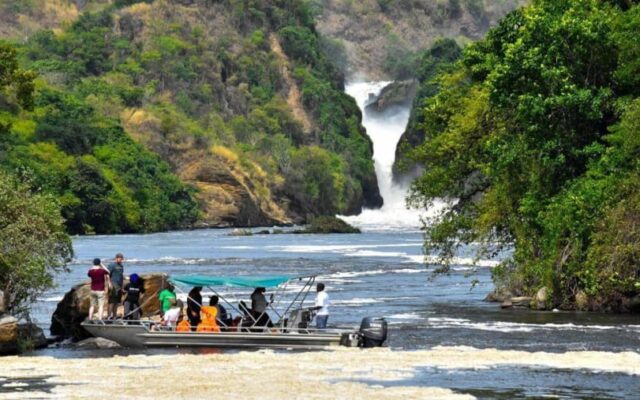
Territorial display includes horn presentation, stiff postures, parallel walking with rivals, and occasional horn clashes. On Queen Elizabeth channel cruises, standing bulls on promontories are often territorial males surveying their stretch of bank.
Bachelor Herds
Young males leave female groups when horns begin developing around eight to nine months. They join bachelor herds of five to ten animals, sorted loosely by age and seniority. These groups roam within the broader water corridor, learning social skills until individuals are strong enough to challenge for territory — usually after several years.
Bachelor herds are common on Murchison north-bank drives — multiple horned adolescents grazing together without the rigid spacing of territorial bulls.
Daily Activity Pattern
Waterbuck are primarily diurnal, with peaks at dawn and dusk. Midday heat drives rest in riverside shade; animals ruminate and reduce movement. Night activity occurs but is less typical than crepuscular feeding — most boat safaris and game drives align naturally with visible grazing behaviour.
Activity levels respond to season, predator pressure, grazing quality, and distance from water. In dry, hot conditions, waterbuck rest more and drink frequently — concentrating predictable behaviour near launch points.
Alarm and Communication
When disturbed, waterbuck adopt a stiff-legged stance, raise the head, and emit snorts or alarm barks that alert herd mates. Tail flicking and ear orientation signal vigilance. Because shoreline groups often include mixed species — waterbuck, buffalo, kob nearby on plains — alarm ripples can foreshadow predator movement visible to patient guides.
Flight Into Water
The waterbuck's signature defensive behaviour is flight into water. When lions or hyena press an attack, adults may plunge into rivers or lakes and swim — using habitat as barrier. Lions occasionally hunt successfully at banks, but water refuge gives waterbuck a survival advantage unavailable to strict plains grazers. Crocodile risk exists but does not prevent the behaviour; the trade-off favours immediate escape from terrestrial predators.
Breeding Behaviour
Waterbuck breed year-round in equatorial Uganda with possible peaks tied to rainfall and grass quality. Territorial males mate with females crossing their ranges. Courtship involves following, sniffing, and gentle horn contact. After roughly nine months gestation, females isolate briefly to calve in riverside cover.
Calves lie hidden while mothers graze nearby — a strategy vulnerable to leopard and hyena. Mothers return to suckle; bonding is strong through the first months.
Interactions With Other Species
Waterbuck share shoreline habitat with hippo, crocodile, buffalo, elephant, and numerous birds. They tolerate vehicle and boat presence on established routes more readily than deep-forest species, though guides still maintain respectful distance during territorial displays or calving season.
On open plains adjacent to wetlands, waterbuck appear near Uganda kob and topi — but remain closer to the drainage line, illustrating subtle habitat partitioning on the same game-drive loop.
Human Observation Ethics
Do not crowd animals entering water as escape refuge. Boats should not block shoreline exit routes. During territorial clashes, keep distance to avoid stressing bulls. Responsible behaviour on Kazinga and Nile cruises protects the relaxed tolerance that makes waterbuck such a rewarding species for tourism.
Behaviour and Safari Timing
Dawn: active grazing, territorial patrols, predator ambush risk. Late afternoon: second feeding peak, soft light for photography. Midday: resting animals, still photographable but less dynamic. Pair timing guidance on our best time to see waterbuck page with safari routes that include boat components.
Quick Behaviour Summary
- Social units: Territorial males, female groups, bachelor herds
- Not lek breeders: Males defend shoreline territories
- Activity: Diurnal; dawn and dusk feeding peaks
- Defence: Alarm snorts; flight into water
- Best viewing: Channel and Nile boat safaris