Topi facts — expert Uganda safari guide from local planners who know permits, parks, and realistic routing.
The topi combines alcelaphine power with a coat pattern unlike any other antelope on a Uganda game drive. Whether you encounter a sentinel animal on a termite mound in Ishasha or a hundred-strong herd drifting across Murchison's Nile savannah, topi define the visual rhythm of the country's open plains. This guide covers the essential habitat, biology, and field identification of Damaliscus lunatus jimela — with links to where to see topi and safari experiences across Queen Elizabeth and Murchison Falls.
East Africa's Stately Savannah Antelope
Among African antelopes, the topi stands out for colour and posture. Purple-brown flanks catch dawn light in a way redder kob cannot match; black patches on the face and thighs create a mask-like profile visible at distance; and the habit of climbing termite mounds for surveillance gives guides an instant focal point on otherwise flat grasslands. For many visitors, the first topi on a mound is the moment a game drive shifts from checklist ticking to genuine wildlife theatre.
In Uganda, topi share the ecological stage with Uganda kob, buffalo, elephant, and lion — but retain a distinct identity that experienced safari-goers learn to recognise within a single morning.
Scientific Classification
The East African topi is the subspecies Damaliscus lunatus jimela, named within the broader topi species Damaliscus lunatus. It belongs to the alcelaphine lineage — a group of grazing specialists adapted to open savannah and characterised by high shoulders, long faces, and endurance running.
Close relatives include tsessebe (D. lunatus southern forms), hartebeest (Alcelaphus), and wildebeest (Connochaetes). Topi occupy a middle ground in build — more compact than hartebeest, more angular than kob.
Physical Description
Coat Colour and Markings
Topi are noticeably darker and more purple-toned than Uganda kob. The upper body carries a rich rusty to purple-brown hue; underparts are paler. Black patches appear on the face, upper legs, thighs, and hips, framed by a distinctive pale rump band above the dark upper legs. These markings help observers separate topi from kob, waterbuck, and hartebeest in mixed-species aggregations on Ishasha and Murchison plains.
Horns and Sexual Dimorphism
Unlike kob — where only males are horned — both topi sexes carry horns. Male horns are substantially larger, sweeping up and back in a lyrate crescent that can exceed 50 centimetres along the curve. Female horns are shorter and slimmer but visible at binocular range. During the rut, male horn size and symmetry influence dominance on territorial breeding grounds.
Body Size
Males typically reach 100 to 130 centimetres at the shoulder and weigh roughly 110 to 130 kilograms. Females stand around 90 to 100 centimetres and weigh about 70 to 90 kilograms. The build is athletic and long-legged — designed for sustained running on open terrain rather than forest dodging.
Speed and Senses
Topi rely on sharp eyesight, herd vigilance, and explosive speed on open plains. When alarmed, they can reach speeds approaching 70 kilometres per hour — enough to outrun many ambush attempts if the warning comes early. Sentinel animals on termite mounds extend the herd's collective sightline, giving grazers below extra seconds to react.
Range and Distribution
The topi species ranges across sub-Saharan savannah from West Africa eastward to Ethiopia and southward through East Africa. The subspecies D. l. jimela — East African topi — occurs in Kenya, Tanzania, and Uganda.
Inside Uganda, the overwhelming majority of topi occur in Queen Elizabeth National Park (especially the Ishasha sector) and Murchison Falls National Park on north-bank savannah circuits. These two parks anchor both tourism access and conservation protection for the subspecies within Uganda's borders.
Termite Mounds — More Than a Photo Prop
Topi did not evolve termite mounds for photographers — though Ishasha mornings often suggest otherwise. Mounds provide elevation in landscapes with few natural ridges, improving detection of stalking lions and hyenas. Herds rotate sentinel duty, allowing most members to graze heads-down while one animal scans from above. This cooperative vigilance is a textbook example of how prey species manage predation risk on exposed plains.
Territorial Breeding
Topi males defend territories on traditional breeding grounds during the rut — clustered arenas where females visit to assess displays and mate. The system parallels lek breeding in Uganda kob but with larger individual territories and a more dispersed geometry. Displays include upright posturing, horn presentation, and clashes with rivals.
Ecological Role
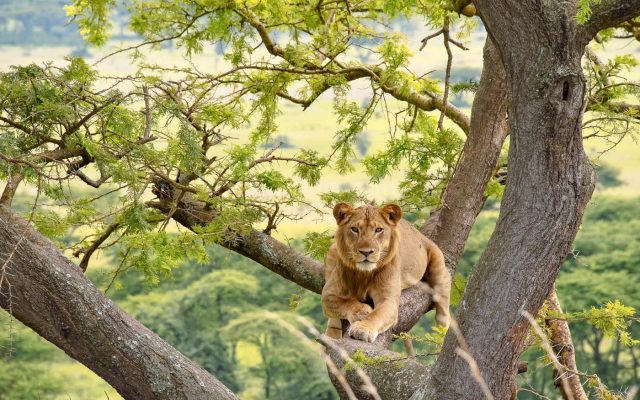
As medium-height grazers, topi influence savannah grass structure and share prey status with kob and buffalo in lion diet. High topi density in Ishasha supports the lion prides that make the sector famous — including the tree-climbing lions that hunt open grassland antelope. Remove topi from the equation and Uganda's savannah parks would lose both prey abundance and one of their most photogenic species.
Lifespan and Reproduction
Wild topi may live into their mid-teens, though predation limits most individuals. Females usually produce a single calf after roughly eight months of gestation, often calving as rains ease and grass quality peaks. Calves remain hidden in grass for their first vulnerable weeks while mothers graze nearby.
IUCN Conservation Status
The topi species is classified Least Concern globally. Uganda populations remain stable inside national parks, though the subspecies depends almost entirely on protected savannah — a reminder that park integrity and anti-poaching work remain essential.
How Topi Compare to Similar Antelopes
- Uganda kob: Redder, smaller, males only horned; famous lek breeding on Kasenyi Plains
- Jackson's hartebeest: More angular shoulder hump; largely confined to Kidepo in Uganda
- Waterbuck: Larger, shaggier, white rump ring; more tied to wetland edges
- Impala: Smaller, elegant leaper; Uganda population only in Lake Mburo
Why Safari Travellers Love Topi
Topi reward patience and early starts. Sentinel postures on termite mounds create natural composition for photography; purple-brown coats glow in golden-hour light; and herds on Ishasha fig-tree savannah deliver the wide-angle Africa scene many travellers carry in their imagination. They are the antelope that makes experienced guides slow the vehicle and say, "Watch this one on the mound."
Quick Reference Facts
- Scientific name: Damaliscus lunatus jimela
- Signature behaviour: Sentinel on termite mounds
- Both sexes horned: Male horns lyrate and larger
- Top speed: ~70 km/h
- Gestation: ~8 months
- IUCN: Least Concern (species)
- Key parks: Queen Elizabeth (Ishasha), Murchison Falls