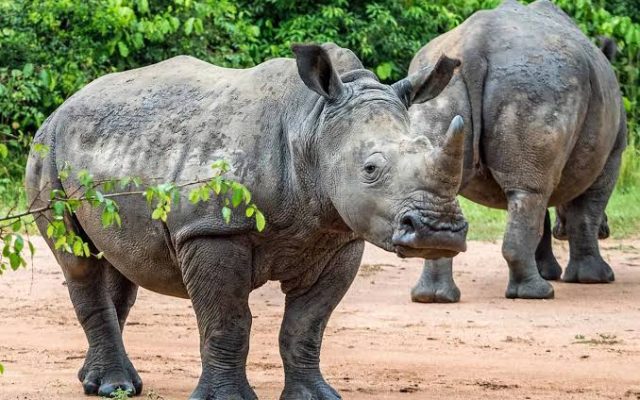
Southern white rhino behaviour combines methodical grazing, scent-based communication, territorial displays, and explosive speed when alarmed. For visitors, understanding these patterns transforms a tracking walk from a simple wildlife sighting into an interpretive experience — one where every snort, head lift, and horn scrape carries meaning. At Ziwa Rhino Sanctuary, armed rangers read rhino behaviour in real time, guiding groups safely to observations en route to Murchison Falls National Park. Explore white rhino facts and diet for supporting biology.
Daily Activity Rhythm
White rhinos follow a loose daily schedule shaped by temperature, feeding needs, and social dynamics. Cooler morning and late-afternoon hours typically bring active grazing in open areas. Midday heat often pushes animals into woodland shade or mud wallows. Tracking walks at Ziwa are scheduled around these peaks, maximising the chance of finding rhinos visible and active rather than bedded down in thick cover.
A typical day may include:
- Dawn grazing in open glades
- Mid-morning movement between feeding sites
- Midday wallowing or resting in shade
- Afternoon feeding before dusk
- Evening scent marking and territorial patrol by bulls
Social Structure and Grouping
White rhinos are more social than black rhinos. Females, subadults, and calves often form loose aggregations — not tight herds, but tolerable company that may graze within sight of one another. Adult territorial males maintain defined areas that overlap with female ranges. Seeing multiple rhinos together during a Ziwa walk is common and offers insight into social tolerance rare among rhino species.
Territorial Bulls
Dominant males defend territories using scent marks, dung middens, urine sprays, and horn scrapes. They may challenge rivals with snorts, bluff charges, and physical confrontation. Bulls are the individuals most likely to display aggressive posturing if they feel their space is invaded — which is why rangers maintain strict approach protocols during tracking.
Female and Calf Groups
Cows with calves are generally less territorial but highly protective. Mothers position themselves between calves and perceived threats. Observers who watch a mother-calf pair during a sanctuary walk often note how the calf mirrors the mother's head movements — learning vigilance through imitation.
Communication Systems
White rhinos communicate through vocalisations, scent, and body language. Their poor eyesight makes scent the dominant long-distance channel.
Vocalisations
Rhinos produce snorts, bellows, squeaks, and panting sounds. Calves call to mothers with high-pitched cries. Bulls may snort during territorial disputes. Many vocalisations are subtle — experienced rangers at Ziwa identify sounds visitors might miss entirely.
Scent Marking
Dung middens function as communal message boards. Rhinos defecate in the same locations repeatedly, and other individuals investigate these piles to gather chemical information about identity and reproductive status. Urine spraying on vegetation and horn scraping on the ground reinforce territorial claims.
Body Language
Ear position, head angle, and foot stamping signal mood. A rhino that stops grazing and orientates both ears forward may have detected something unfamiliar. Rangers interpret these cues to decide when to halt a tracking group or adjust approach angle.
Mud Wallowing Behaviour
Wallowing is among the most photogenic white rhino behaviours. Rhinos roll in mud to cool body temperature, protect skin from ultraviolet radiation, and coat themselves against biting flies and ticks. They revisit favourite wallows, sometimes deepening them over years. Wallow sites are reliable tracking landmarks — rangers check them first when searching for animals on hot afternoons.
Feeding and Movement
White rhinos graze methodically, moving slowly across lawns while cropping grass. When a patch is depleted, they walk to the next — sometimes covering several kilometres daily. Movement paths create track networks that rangers follow during tracking walks, reading footprint size, direction, and freshness to close distance on animals.
Defensive and Aggressive Behaviour
White rhinos are generally less aggressive than black rhinos toward non-threatening stimuli, but they are dangerous when startled, wounded, or protecting calves. Defensive behaviours include:
- Snorting and head raising
- Mock charges stopping short of contact
- Full charges at up to 50 km/h
- Horn lowering and lateral head sweeps
Poor eyesight means rhinos may charge objects they cannot clearly identify — including vehicles or humans who approach from the wrong angle. This is the historical reason rhinos joined the Big Five and why on-foot tracking demands professional ranger leadership.
Reproductive Behaviour
Bulls court females through proximity, scent investigation, and vocal contact. Mating is brief but may recur over several days. After a 16-month gestation, cows isolate slightly during calving, then rejoin loose social groups with the calf. Breeding behaviour at Ziwa is monitored closely by sanctuary staff, as every successful birth advances Uganda's reintroduction timeline.
Behaviour on Tracking Walks at Ziwa
Guided rhino tracking is behaviour observation under expert supervision. Rangers locate animals using tracks, dung, and wallow signs, then position visitor groups downwind at respectful distances. The experience differs fundamentally from a game drive: you feel terrain underfoot, hear grass rustle, and watch rangers negotiate rhino tolerance in real time.
Tracking Etiquette
Visitors are briefed before walks to speak quietly, avoid sudden movement, and follow ranger instructions without exception. Bright clothing is discouraged. Cameras are welcome, but flash photography is typically prohibited. These rules protect both visitors and rhinos — habituated animals remain wild, and stress from careless approach can affect breeding success.
Typical Walk Duration
Walks usually last one to two hours, depending on how far rhinos have moved from the base and how long observation lasts once animals are found. Terrain is generally manageable for moderate fitness levels, though sun exposure and distance can be taxing in midday heat.
Behavioural Differences From Black Rhinos
Black rhinos are more solitary, more browse-dependent, and generally more unpredictable. White rhinos tolerate groups, graze openly, and often allow longer observation if approached correctly. Uganda's program focuses exclusively on southern white rhinos — travelers seeking black rhino encounters must visit other East African destinations such as Kenya or Tanzania.
Behaviour and Conservation
Behavioural monitoring at Ziwa informs breeding decisions, health assessments, and future release candidacy. Rhinos that display natural grazing circuits, appropriate social responses, and stress tolerance under guided observation are better candidates for eventual wild translocation to Murchison Falls National Park. Tourism behaviour — quiet groups, consistent rules — directly supports this preparation.
Planning Your Behaviour-Focused Visit
Morning walks often reward visitors with active feeding and social interaction. Afternoon sessions may showcase wallowing and scent marking. Combine behavioural insight with seasonal planning on our best time to see white rhinos page, and build a full itinerary through white rhino safaris and conservation guides.