
Secretary Bird FAQs and Answers — quick answers on identification, snake hunting, Murchison and Kidepo viewing, Queen Elizabeth plains drives, and safari planning. Explore where to see secretary birds, behaviour, best time to visit, and safari experiences.
- What is a secretary bird?
The secretary bird (Sagittarius serpentarius) is a large African raptor famous for hunting on foot across open savannah. With long legs, a crest of quill feathers, grey-and-black plumage, and powerful stomping feet, it is the only species in the family Sagittariidae. In Uganda it is a highlight of dawn game drives in Murchison Falls, Queen Elizabeth, and Kidepo Valley.
- Why is it called a secretary bird?
The name likely comes from the bird's crest of long quill-like feathers, thought to resemble quill pens tucked behind a clerk's ear, combined with the dark "coat" of body feathers. An older folk etymology linked "secretary" to the Arabic saqr-et-tair (hunter bird), though the quill-pen explanation is the most widely cited in field guides.
- Where can I see secretary birds in Uganda?
Top sites include the north bank plains of Murchison Falls National Park, Kasenyi and Ishasha sectors of Queen Elizabeth National Park, and the Narus Valley of Kidepo Valley National Park. See our full where to see secretary birds guide.
- Do secretary birds really hunt snakes?
Yes. Secretary birds are renowned snake hunters, using rapid stomping blows with their feet to kill venomous and non-venomous species. The scientific name serpentarius reflects this reputation. They also take insects, rodents, lizards, and small birds. Watch hunting detail on our behaviour page.
- How does a secretary bird kill prey?
Unlike most raptors, secretary birds hunt primarily on foot. They spot prey while walking, then deliver fast, forceful kicks and stomps with their feet — blows powerful enough to crush snake skulls and break rodent spines. Once subdued, prey is swallowed whole or torn apart with the hooked beak.
- How big is a secretary bird?
Adults stand roughly 1.2–1.5 metres tall — among the tallest birds of prey. Body length is about 112–150 cm with a wingspan of 191–220 cm. Despite large wings, secretary birds spend most daylight hours walking rather than soaring.
- What does a secretary bird look like?
Secretary birds wear grey body plumage, black flight feathers and thighs, white undertail coverts, orange-red bare skin around the eyes, and a distinctive crest of 20–30 black quill feathers. Long bare legs and a hooked raptor beak complete a silhouette unmistakable on open plains.
- Can secretary birds fly?
Yes — secretary birds are strong fliers despite their terrestrial habits. They soar on thermals to commute between feeding areas, perform aerial courtship displays, and roost in trees at night. On game drives you will most often see them walking; flight is common at dawn and dusk between roosts and hunting grounds.
- What is the scientific name of the secretary bird?
Sagittarius serpentarius — the sole species in the family Sagittariidae and order Accipitriformes. The genus name derives from Latin sagittarius (archer); serpentarius refers to snake hunting.
- Are secretary birds endangered?
The IUCN classifies the secretary bird as Endangered, with populations declining across much of Africa due to habitat loss, poisoning, and infrastructure collision. Uganda's national parks protect important grassland habitat. Read more on our conservation page.
- What habitat do secretary birds need?
They require open savannah grassland with short to medium grass for walking hunts, scattered acacia or other trees for nesting and night roosts, and abundant small prey. Uganda's northern savannah parks provide ideal conditions. Explore habitat ecology for detail.
- What do secretary birds eat besides snakes?
Secretary birds are generalist carnivores. Diet includes insects (beetles, grasshoppers, locusts), rodents, lizards, small birds, eggs, and occasionally dead animals. Seasonal abundance of locusts and rodent outbreaks can attract family groups to specific plains. Full detail on our diet page.
- When is the best time to see secretary birds in Uganda?
Secretary birds are visible year-round in Murchison, Queen Elizabeth, and Kidepo. Dry seasons (June–September and December–February) shorten grass for clearer views. Dawn game drives catch birds leaving roosts and beginning hunts. See best time to see secretary birds.
- Which Uganda park is best for secretary birds?
Kidepo Valley and Murchison Falls are often rated highest for open-plains secretary bird encounters. Queen Elizabeth adds reliable sightings on Kasenyi and Ishasha drives within busier western circuits. Park choice depends on your broader itinerary.
- Do secretary birds live in pairs?
Yes. Secretary birds form long-term pair bonds and are usually seen in pairs or family groups. Both parents build the nest, incubate eggs, and feed chicks. Territorial pairs patrol the same grassland areas year after year when habitat remains intact.
- Where do secretary birds nest?
Nests are large platform structures built of sticks in the flat tops of acacia trees or other scattered savannah trees — typically 5–15 metres above ground. Nesting occurs during dry months at many East African sites; chicks remain dependent for months after hatching.
- How long do secretary birds live?
Wild secretary birds may live 10–15 years, with longer lifespans recorded in captivity. Survival depends on territory quality, prey availability, and freedom from persecution or poisoning on farmland margins.
- Can I photograph secretary birds on a game drive?
Yes. Open savannah sightings often allow telephoto photography (200–500 mm) from a vehicle. Walking birds on short grass are excellent subjects when light is low at dawn. Patience matters — birds may walk away if approached too fast; let the guide manage distance.
- Are secretary birds related to eagles?
Secretary birds belong to the order Accipitriformes alongside hawks and eagles, but they occupy their own family, Sagittariidae. Their long legs and terrestrial hunting are unique among African raptors — closer in habit to ground hornbills than to fish eagles.
- Which Uganda safaris include secretary bird viewing?
Most Murchison Falls, Queen Elizabeth, and Kidepo Valley game-drive itineraries include secretary bird potential. Northern circuit routes (Murchison–Kidepo) and western routes (Queen Elizabeth–Ishasha) both deliver sightings. Browse secretary bird safaris and Uganda safari packages.
- Can secretary bird viewing be combined with birding safaris?
Absolutely. Secretary birds complement savannah raptors, bustards, and grassland species on dedicated birding circuits. Uganda's 1,000+ species lists reward combining Murchison or Queen Elizabeth plains drives with forest or wetland birding elsewhere. See birding safaris for routed options.
- How can tourists help secretary bird conservation?
Visit Uganda's parks on licensed safaris, pay official fees, avoid supporting poisoned-bait pest control on farmland, and choose operators committed to habitat protection. Tourism revenue funds Uganda Wildlife Authority rangers who manage the savannah ecosystems secretary birds depend on. More on our conservation page.
Safari packages to see Secretary Bird
Bookable itineraries below include parks and activities where you are most likely to encounter Secretary Bird in the wild.
 Best
Seller
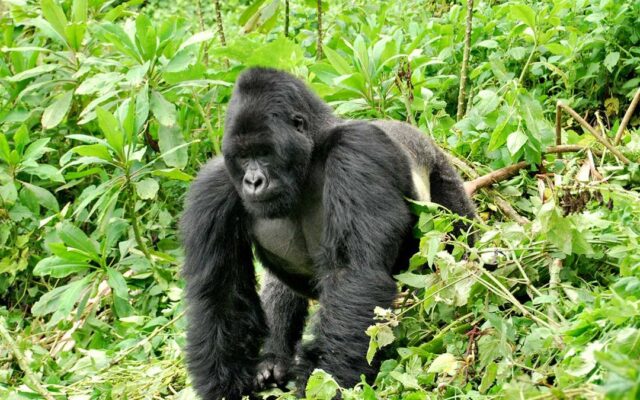
7 Day Uganda Gorilla and Wildlife Safari
You visit
Murchison Falls, Kibale Forest, Queen Elizabeth NP, Bwindi Forest, Entebbe
Seven days with gorillas: the wildlife tour above plus Bwindi trekking on Day 6 — the single most booked private itinerary for Uganda Safari Tours guests who want chimps, savannah and gorillas in one…
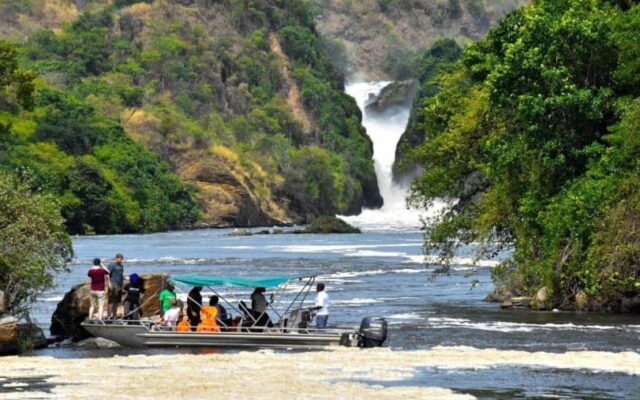
3 Day Murchison Falls Safari
You visit
Murchison Falls, Entebbe
Our classic 3-day Murchison Falls safari follows the park’s most proven circuit: dramatic falls, savannah game drives north of the Nile, and the famous boat trip where the river narrows below the casc…
 Best
Seller
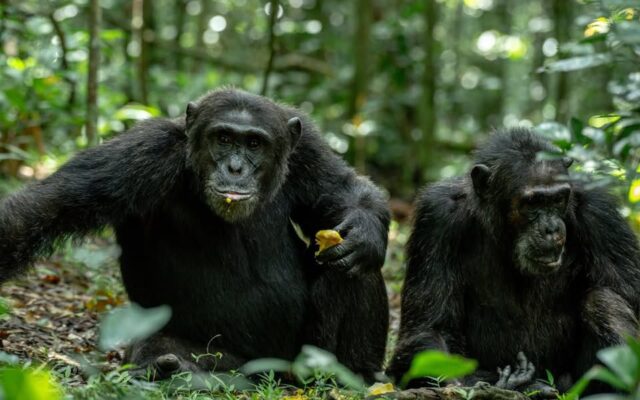
6 Days Uganda Gorillas, Chimpanzees & Wildlife Safari
You visit
Kibale Forest, Queen Elizabeth NP, Bwindi Forest, Entebbe
Primates plus plains in six days: Kibale chimps, Queen Elizabeth savannah, Bwindi gorillas and a Lake Mburo finale for zebra — the full Uganda highlight reel without rushing Kidepo or Murchison.
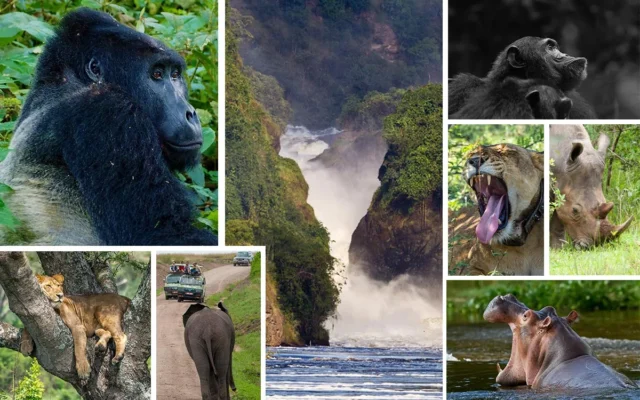
18 Days Uganda Wildlife Safari
You visit
Entebbe (Start, End)
The ultimate 18-day Uganda wildlife safari — every savannah park, both chimp forests, gorillas, and the remote northeast. After Murchison and Kidepo, the route sweeps through Kibale, Queen Elizabeth,…