The roan antelope diet reveals a large savannah grazer built for grassland rather than woodland. Hippotragus equinus selects medium to tall grasses, favouring fresh growth after fire or rain — a specialisation that supports herds in Kidepo Valley National Park and Pian Upe Wildlife Reserve. Understanding what roan eat explains where guides position vehicles on game drives and why roan share plains with eland and hartebeest but not impala or bushbuck. Explore habitat ecology, feeding behaviour, and where to see roan antelope.
Dedicated Grazers
Ecologists classify roan antelope as grazers — animals whose diet is overwhelmingly grass-based, with browse playing only a minor supplementary role in dry months. Unlike impala or eland, roan rarely switch to woody plants when grasses decline; instead they move to areas where fire, rain, or lighter grazing has produced fresh shoots. This dietary focus is a competitive advantage on tall grass plains and a constraint in short-grass or heavily browsed landscapes.
Roan select grass of intermediate height — avoiding the shortest turf that warthog and some gazelle prefer, and the rank tallest stands that offer poor nutrition. Carbon isotope and field studies across Africa confirm a grass-dominated diet with strong selectivity for protein-rich species.
Preferred Grasses
During wet seasons and immediately after fire opens fresh growth, roan favour palatable tropical grasses such as Hyparrhenia, Themeda, and other medium-height species common on Kidepo's Narus grasslands. They graze methodically, moving through herds with heads lowered, pausing frequently to scan for predators.
Herbs and forbs supplement the grass diet in small quantities, adding minerals during transitional seasons.
Seasonal Diet Shifts
The annual rhythm at Kidepo follows northeastern Uganda's rainfall pattern:
- Wet season (April–October): Heavy grazing on fresh grass; herds spread across Narus Valley plains
- Early dry season (November–January): Grazing concentrates near the Narus River and permanent waterholes
- Late dry season (February–March): Selective grazing on remaining green shoots; increased movement between water and best forage patches
- Post-fire regrowth: Rapid return to burned areas when fresh shoots flush — productive viewing windows
Guides familiar with these shifts know which Narus circuits to favour in a given month — open valley floors after rains, river margins as dryness intensifies.
Water and Hydration
Roan antelope drink regularly from rivers, springs, and pools when surface water is available. Their grass-rich diet produces substantial digestive water, but northeastern Uganda's semi-arid climate makes daily drinking typical during dry months. At Kidepo, Narus River visits are common — a behaviour that makes afternoon drives along watercourses productive.
Feeding Behaviour and Daily Rhythm
Roan feed most actively during cooler morning and late-afternoon hours, resting in shade or standing vigil during midday heat. Herds graze loosely, with individuals raising their heads frequently to scan for predators. Mixed-species associations with eland, hartebeest, and Uganda kob improve collective vigilance on Kidepo drives.
Calves learn forage preferences from mothers and herd context, gradually shifting from milk to grass over their first months.
Nutritional Strategy and Body Condition
Selecting high-protein grass supports the roan antelope's powerful frame — sustained galloping, territorial activity during the rut, and gestation in females. Diet quality directly influences breeding success, which is why rainfall timing and grass flushes correlate with calving peaks.
Competition and Niche Overlap in Kidepo
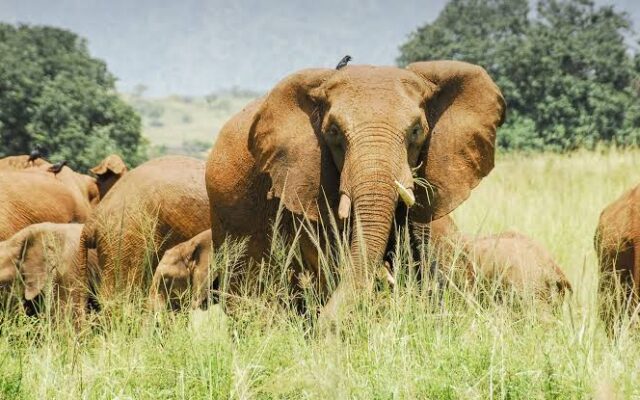
Kidepo holds zebra, buffalo, eland, Jackson's hartebeest, Uganda kob, oribi, and several smaller antelopes. Roan coexist by exploiting medium to tall grass niches — less specialised than zebra (short-grass grazers) or bushbuck (browsers). Where grasses are intermediate in height, roan and eland may feed in the same valley; as grass height shifts, species redistribute across the Narus mosaic.
Diet and Predator Ecology
Roan feeding in open grassland expose themselves to lion pursuit, cheetah sprint, and leopard ambush from woodland margins. The same plains that deliver nutrition deliver risk — which shapes vigilance behaviour covered on our behaviour page. Predators time hunts around waterhole visits and dawn feeding sessions when roan are predictable.
Human and Livestock Interface
Around Kidepo and Pian Upe, roan occasionally move beyond park boundaries into Karamojong pastoral rangeland. Diet overlap with cattle on improved grasses can increase conflict when roan are perceived as competing for forage — one reason community conservation programmes around northeastern reserves matter for long-term population stability.
What This Means for Safari Viewing
After rains, scan Narus Valley plains for grazing herds. In dry months, work river margins and waterholes where grass and water concentrate activity. Pair diet knowledge with seasonal timing and Kidepo safari routes for the strongest sightings.
Quick Diet Summary
- Primary mode: Dedicated grazer of medium to tall grasses
- Wet season: Fresh grass growth across Narus Valley plains
- Dry season: Selective grazing near Narus River and waterholes
- Water: Daily river and pool visits typical
- Selection: Protein-rich, intermediate-height forage preferred
- Kidepo: Hyparrhenia and Themeda grasses dominate intake