Martial eagle habitat is open country. Unlike fish eagles tied to water or crowned eagles confined to tall forest, martial eagles need rolling savannah, acacia woodland, and grassland mosaics with scattered large trees for nesting and hunting perches. Uganda's northern and eastern savannah parks — Murchison Falls, Queen Elizabeth, Lake Mburo, and Kidepo Valley — provide the visibility, prey base, and perch trees this Endangered raptor requires. Pair this guide with where to see martial eagles, behaviour, and game-drive experiences when planning a Uganda safari.
Core Habitat Requirements
Three elements define martial eagle habitat: open or semi-open terrain for hunting visibility, abundant medium-sized prey (guineafowl, hares, small antelope, reptiles), and tall sturdy trees for nesting and perching. Remove nest trees or poison prey through baited carcasses and pairs cannot persist — even inside park boundaries.
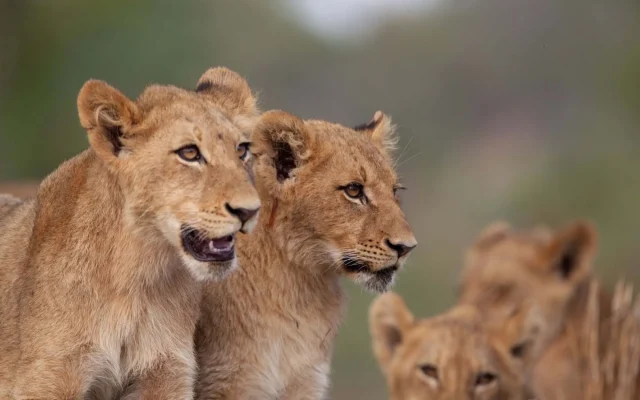
Martial eagles avoid dense forest. In Uganda they occupy the same savannah matrix as lions, Uganda kob, and elephants — a shared landscape that makes raptor watching a natural extension of classic game drives.
Savannah and Woodland Types
Open Grassland Plains
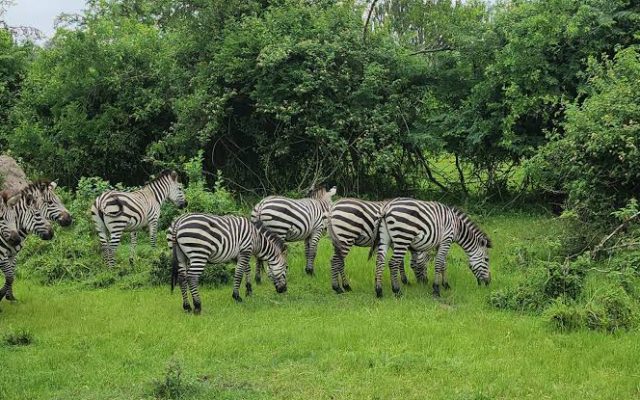
Kasenyi Plains in Queen Elizabeth and Narus Valley in Kidepo offer the wide horizons martial eagles patrol from thermals. Guineafowl, oribi, and hares thrive in short-grass areas — reliable prey where visibility favours both eagle and safari vehicle.
Acacia Woodland
Lake Mburo's rolling acacia hills and Murchison's woodland edges combine grassland openings with perch trees. Martial eagles hunt woodland edges where francolins and scrub hares flush into the open.
Riverine Gallery Forest Edges
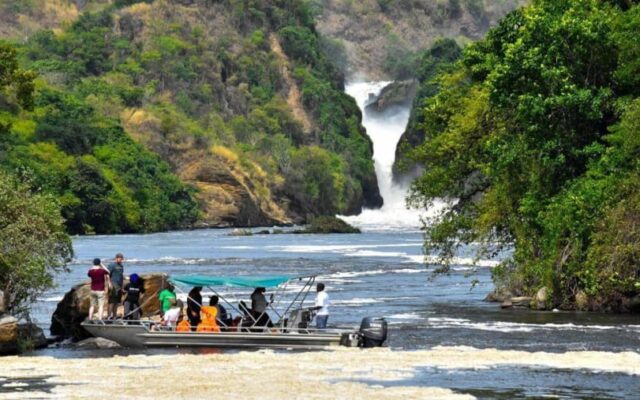
Along the Victoria Nile and Kazinga shoreline, gallery forest meets savannah. Eagles use tall riparian figs and mahoganies as nest sites while hunting adjacent plains — a mosaic visible on Murchison Buligi drives.
Nest Tree Ecology
Nests require the tallest, sturdiest trees in a territory — often emergent acacias, figs, or eucalypts on park margins. Platforms exceed two metres across after years of reuse. A standing giant in otherwise open savannah may host generations of martial eagles; its removal for charcoal or lodge landscaping eliminates breeding for the entire territory.
Active nests are visible from some game-drive tracks. Responsible operators maintain buffers during breeding — see conservation for disturbance risks.
Territory Size
Pairs defend enormous home ranges — often hundreds of square kilometres depending on prey density. Sparse populations mean sightings are never guaranteed on a single drive; repeated dawn circuits and sky scanning improve odds. Kidepo's vast valleys and Murchison's northern bank offer the scale this species needs.
Altitude and Climate
In Uganda martial eagles occur from lowland Nile plains near 600 metres to Kidepo's semi-arid valleys around 900 metres. They tolerate seasonal rainfall shifts provided prey remains accessible. Dry seasons concentrate mammals and birds near water — indirectly benefiting eagle hunting on Queen Elizabeth plains.
Relationship with Other Raptors
Martial eagles share airspace with bateleurs, tawny eagles, and African fish eagles near water. They dominate kleptoparasitism encounters through size and aggression. Crowned eagles occupy forest — complementary rather than competing niches within Uganda's diverse raptor community.
Habitat Threats in Uganda
- Loss of large nest trees to firewood collection and land clearing
- Poisoning of predators and scavengers with baited carcasses
- Electrocution on poorly insulated power lines near park edges
- Habitat fragmentation outside protected areas
- Declining prey from snaring and bushmeat trade
Protected savannah parks safeguard core habitat — but edge effects from community land remain a concern. Tourism revenue supporting park rangers and anti-poisoning programmes directly benefits martial eagle persistence.
Why Uganda Excels for Martial Eagle Habitat
Uganda combines multiple large savannah reserves within a compact safari circuit. Murchison, Queen Elizabeth, Lake Mburo, and Kidepo each offer distinct open-country character — acacia hills, Rift Valley plains, Nile woodland, or remote semi-desert. Few East African itineraries pack this diversity into drives reachable on a two-week route.
Safari Habitat Tips
Scan thermals on every savannah drive — martial eagles often appear as distant specks before banking into view. Ask guides about known nest trees in sector briefings. Dawn departures align with hunting activity and raptor lift-off. Our best time to see guide aligns seasonal planning with habitat productivity.