The best time to see martial eagles in Uganda aligns with classic savannah safari timing: dry seasons for visibility, dawn and dusk for hunting activity, and calm mornings when thermals lift birds into view above acacia woodland. Breeding season brings nest attendance and food deliveries — unforgettable if encountered at respectful distance. Use this guide with where to see martial eagles, safari experiences, and behaviour when planning dawn drives in Murchison, Queen Elizabeth, Lake Mburo, or Kidepo.
Year-Round Residents
Martial eagles do not migrate out of Uganda's savannah parks. Territorial pairs remain on home ranges throughout the year. Any month can produce sightings if your itinerary includes savannah game drives with sky scanning — the fundamental requirement is timing drives for raptor activity, not picking a single magic month.
Best Time of Day
Early Morning
The single most productive window. Cool air generates thermals by mid-morning; dawn itself brings perch hunting and territorial soaring as guineafowl, hares, and francolins become active. Request the first vehicle out of Paraa, Mweya, or Apoka when possible — guides share overnight raptor reports and reach open plains before heat haze softens distant silhouettes.
Morning light from the east flatters dark upperparts and flashing white-spotted underwing coverts when a bird banks across the windscreen.
Mid-Morning Thermals
Between roughly 09:00 and 11:00, martial eagles often appear as distant specks circling slowly on thermals — the classic scan-with-binoculars moment. Patient guides pause when a speck resolves into Africa's largest eagle.
Late Afternoon
Second hunting peak before dusk roosting. Eagles may stoop on guineafowl flocks returning to woodland edges. Golden side-lighting enriches plumage tones for photography when birds perch on tall acacias.
Midday
Less dynamic for hunting but reliable for perched adults in nest-tree shade. Useful for identification and portrait work under even light. Combine with mammal viewing when raptors rest.
Seasonal Patterns in Uganda
Dry Seasons (June–September and December–February)
Traditionally the peak safari season. Advantages for martial eagle viewing include:
- Shorter grass improving visibility of hunts and flushed guineafowl
- Prey concentrating near water — indirectly supporting eagle territories
- Passable roads for dawn departures across all four major savannah parks
- Clearer skies for thermal soaring and silhouette identification
June to August often coincides with breeding activity at many sites — nest attendance, food deliveries, and chick provisioning visible from respectful distances at known trees.
Wet Seasons (March–May and October–November)
Lush grass spreads prey across plains — sometimes reducing strike visibility but maintaining healthy guineafowl and hare populations. Afternoon showers may delay drives; morning departures become even more important.
Fewer tourists mean quieter tracks and exclusive eagle encounters. Dramatic cloud backdrops suit editorial raptor photography.
Monthly Overview
- January–February: Dry, hot — excellent dawn hunting; busy tourism period
- March–May: Long rains — plan morning drives; tall grass may hide ground hunts
- June–August: Dry, breeding season — nest activity and food passes peak
- September–October: Transition — reliable soaring; moderate crowds
- November: Short rains — flexible scheduling, dramatic skies
- December: Holiday dry window — book dawn drives early in popular parks
Breeding Season Timing
Many East African pairs nest during the dry season when prey is accessible and nest trees are visible from tracks. In Uganda expect nest activity roughly June through September in northern and western parks, with some variation in Kidepo's semi-arid calendar. Signs include adult attendance at enormous stick platforms, food deliveries by the hunting male, and white droppings beneath habitual nest trees.
Maintain generous distance from active nests — breeding disturbance can cause abandonment. See our conservation page for nest etiquette.
Photography Timing
Golden hour — first and last hour of daylight — delivers warm tones on dark plumage without losing underwing spot detail. Overcast days reduce harsh contrast on soaring birds. Telephoto lenses (400–600 mm) and binoculars are essential; burst mode helps capture stoop sequences when luck aligns.
Soaring birds are easier than perched portraits — learn the silhouette (broad wings, short tail, heavy head) before the trip so recognition is instant.
Combining with Other Wildlife Seasons
Martial eagle viewing integrates seamlessly with broader safari timing:
- Lion and leopard drives — Kasenyi and Buligi dawn circuits target predators and raptors simultaneously
- Gorilla trekking — dry seasons ease forest trails; add Lake Mburo acacia drives en route
- Boat safaris — pair morning savannah drives (martial eagle) with afternoon African fish eagle Nile or Kazinga cruises
- Birding circuits — combine savannah raptors with forest and wetland specials via birding safaris
See Uganda safari packages for routed combinations.
Park-Specific Timing Notes
Murchison Falls
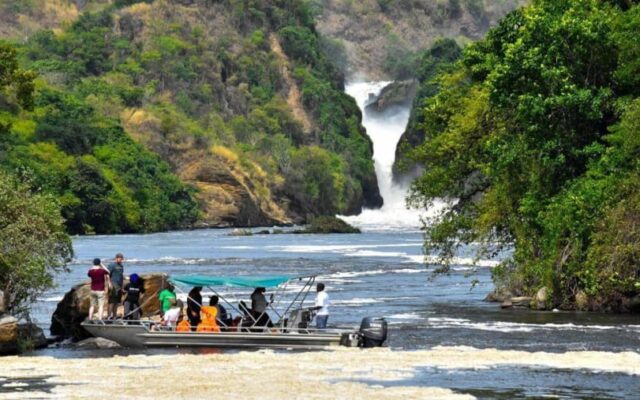
Buligi Peninsula dawn drives before heat haze — pair with afternoon Nile launch for a complete raptor day.
Queen Elizabeth
Kasenyi departures at first light; Ishasha woodland edges productive in late afternoon.
Lake Mburo
Compact park suits half-day dawn loops — ideal for short itineraries between Entebbe and the southwest.
Kidepo Valley
Allow multiple Narus Valley dawn drives — vast territories mean eagles may appear on day two or three rather than day one.
Booking Tips
- Tell your operator raptors are a priority — guides adjust routes and pacing
- Schedule at least two dawn drives per savannah park
- Carry binoculars even on mammal-focused itineraries
- Request front-row seating for unobstructed upward views
- Never approach active nests on foot — observe from vehicle distance only
With year-round presence and predictable daily hunting rhythms, the martial eagle rewards planners who prioritise dawn drives, sky scanning, and dry-season visibility over a single lucky afternoon.