Seeing grey crowned cranes in Uganda is one of the most rewarding and accessible birding experiences in East Africa. Unlike elusive forest specialists, crested cranes walk openly across savannah plains, wetland margins, and farmland — often visible from standard safari vehicles without specialist equipment. This guide covers the best parks and wetlands nationwide, from Murchison Falls and Queen Elizabeth to community marshes, with tips for respectful observation. Plan timing via best time to see and itineraries on safari experiences.
Why Uganda Is the Best Country to See Grey Crowned Cranes
Uganda is the only country where the grey crowned crane serves as the national bird and appears on the national flag. The country holds one of Africa's largest remaining crested crane populations — approximately 13,500 individuals — distributed across every region rather than confined to a single park. This nationwide distribution, combined with excellent savannah parks and accessible wetlands, makes Uganda the premier destination for crested crane encounters.
Murchison Falls National Park
Murchison Falls National Park is one of Uganda's top locations for grey crowned crane sightings. The park's northern savannah — Buligi, Albert, and Queen's tracks — provides classic open grassland where pairs walk visibly during game drives.
Where to Look in Murchison
- Northern savannah plains: Pairs and family groups forage on short grass during morning and afternoon game drives
- Nile delta wetlands: The Victoria Nile delta where the river enters Lake Albert supports wetland breeding habitat
- Paraa and lodge grounds: Cranes occasionally appear near the Nile at Paraa and along the southern bank
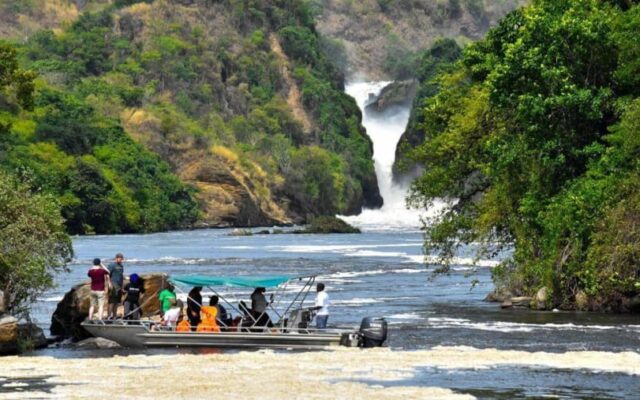
- River cruise margins: Bottom-of-the-falls and delta boat trips reveal cranes at wetland edges
Combine crested crane watching with Big Five game drives, Nile boat cruises, and the top-of-the-falls viewpoint for a comprehensive Murchison itinerary.
Queen Elizabeth National Park
Queen Elizabeth National Park offers exceptional crested crane viewing across diverse habitats — open savannah, crater lakes, Kazinga Channel margins, and Ishasha grasslands.
Where to Look in Queen Elizabeth
- Kasenyi Plains: Open savannah near the Kazinga Channel — reliable for pairs on game drives
- Mweya Peninsula: Grassland and wetland margins around the park headquarters
- Kazinga Channel: Boat cruise shorelines where cranes forage at the water's edge
- Ishasha sector: Southern grasslands famous for tree-climbing lions also support crested cranes
- Katwe and crater lakes: Wetland margins around explosion craters attract breeding pairs
- Maramagambo Forest edges: Transitional grassland-forest habitat in the southern sector
Queen Elizabeth's biodiversity means crested crane sightings often accompany buffalo, elephant, hippo, and prolific birdlife on the same drive.
Lake Mburo National Park
Lake Mburo National Park — Uganda's most accessible savannah park from Kampala — supports healthy crested crane populations on open plains and lake margins. The park's compact size and walking safari options allow close observation of crane behaviour.
Where to Look in Lake Mburo
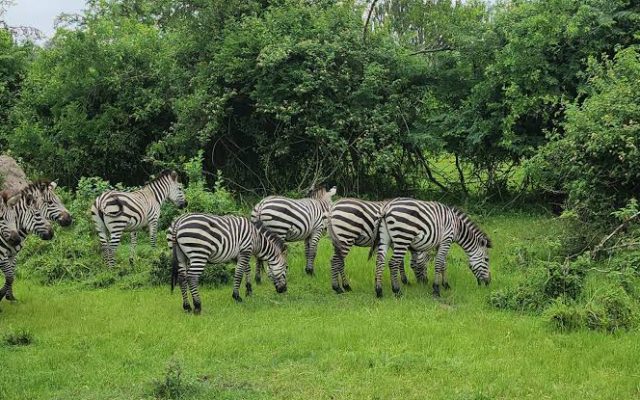
- Open plains: Zebra and impala grazing areas where cranes forage among ungulates
- Lake shores: Wetland margins along Lake Mburo itself
- Walking trails: Guided bush walks offer ground-level crane encounters
Wetlands Nationwide — Community Strongholds
Many of Uganda's most important crested crane breeding sites lie outside national parks on community wetlands. These areas are critical for population recovery and offer authentic cultural context for conservation-minded travellers.
Southwestern Uganda — Lwengo and Isingiro
Districts in the River Rwizi catchment hold some of Uganda's highest crested crane densities. The UBF-ICF wetland restoration project is active here, and community custodians monitor breeding sites.
Lake Victoria Basin
Marshes around Entebbe, the Ssese Islands approaches, Mpigi, and Wakiso support breeding populations. The Mabamba Swamp area — famous for shoebill stork — also hosts crested cranes in adjacent grassland and papyrus margins.
Eastern Uganda
Wetlands in the Mpologoma, Manafwa, and Sipi catchments, plus Lake Kyoga margins around Soroti and Pallisa, support significant crane populations in agricultural-wetland mosaics.
Kigezi Highlands
Terraced farmland around Lake Bunyonyi, Kabale, and Kisoro supports crested cranes in highland grassland — a scenic setting combining crane watching with volcano and lake landscapes.
Other Notable Locations
- Entebbe Botanical Gardens and lake shore: Casual sightings for travellers beginning or ending trips at Entebbe
- Ziwa Rhino Sanctuary: En route to Murchison — open grassland with crane pairs among rhino tracking habitat
- Kidepo Valley National Park: Remote northeastern savannah with crane sightings on the Narus Plains
- Semuliki National Park: Lowland grassland and wetland margins in the Albertine Rift
- Roadside wetlands across Uganda: Crested cranes are frequently visible from main highways — always stop safely before observing
How to Watch Grey Crowned Cranes
From Safari Vehicles
The easiest method — pairs are commonly seen during game drives in Murchison, Queen Elizabeth, and Lake Mburo. Ask your guide to pause when cranes are spotted for photography and behavioural observation.
Boat Cruises
Kazinga Channel and Nile delta boat trips reveal cranes at wetland margins from the water — a different perspective showing foraging and wading behaviour.
Birding Walks and Community Wetland Visits
Guided walks at Lake Mburo, Mabamba margins, and community wetlands in the Rwizi catchment offer ground-level encounters. Dedicated birding safaris combine crested cranes with shoebill, African fish eagle, and hundreds of other species.
Photography Tips
- Early morning and late afternoon light flatters the golden crown and red wattle
- A 200–400mm telephoto lens captures detail without approaching too closely
- Courtship dance displays are best photographed from a stationary vehicle on open plains
- Include savannah landscape context to show the crane in its habitat
Responsible Viewing Guidelines
- Never approach nesting wetlands — disturbance causes nest abandonment
- Maintain respectful distance from pairs with chicks
- Do not feed wild cranes
- Stay on established roads and trails in national parks
- Report nesting sites to guides or crane custodians on community walks
- Never purchase crane products, eggs, or chicks
Combining Crested Cranes with Other Wildlife
Grey crowned crane sightings integrate naturally into Uganda's classic safari circuits. A typical 7–10 day itinerary visiting Murchison Falls, Ziwa Rhino Sanctuary, and Queen Elizabeth will likely produce multiple crested crane encounters alongside lions, elephants, hippos, giraffes, and — with a Mabamba extension — shoebill stork. Explore safari experiences and Uganda safari packages for curated routes.
Where to See Grey Crowned Cranes — Summary
- Best parks: Murchison Falls, Queen Elizabeth, Lake Mburo
- Best wetlands: River Rwizi catchment, Lake Victoria basin, Mabamba margins
- Best method: Savannah game drives, boat cruises, guided birding walks
- Accessibility: Visible year-round without specialist permits
- Combine with: Big Five safaris, shoebill trekking, primate trekking