Understanding grey crowned crane habitat explains why this endangered national bird is both widespread and vulnerable. Crested cranes depend on the intersection of wetlands, open grassland, and woodland — ecosystems that are disappearing rapidly across Uganda. From Murchison Falls savannah to community marshes and Queen Elizabeth grasslands, wetland health determines whether Uganda's emblem survives. Pair this guide with where to see grey crowned cranes and our conservation page.
Where Do Grey Crowned Cranes Live?
Grey crowned cranes occur across eastern and southern Africa, from the Democratic Republic of Congo and Uganda through Kenya, Tanzania, Rwanda, Burundi, Mozambique, Zimbabwe, and South Africa. Uganda holds one of the largest remaining national populations and is the country where the crested crane carries the greatest cultural significance as national bird.
Within Uganda, crested cranes are distributed nationwide — not confined to a single park or region. They appear in protected savannah parks, Ramsar wetlands, river catchments, lake margins, and agricultural landscapes from the Lake Victoria basin to the Albertine Rift valleys.
Core Habitat Types
Wetlands and Marshes
Wetlands are the ecological foundation of grey crowned crane survival. Papyrus swamps, sedge marshes, river floodplains, seasonal wetlands, and lake margins provide nesting platforms, chick shelter, aquatic food, and the moisture regime that triggers breeding behaviour.
Key wetland characteristics cranes require include:
- Tall emergent vegetation for nest construction
- Floating vegetation mats for platform nests
- Shallow water margins for aquatic feeding
- Vegetation cover shielding chicks from aerial predators
- Seasonal flooding and drying cycles maintaining productivity
When wetlands are drained for agriculture, rice cultivation, or settlement, breeding habitat disappears — the primary driver of Uganda's 80 percent population decline since the 1980s.
Savannah and Open Grassland
Outside the breeding season and throughout much of the daily foraging cycle, crested cranes use open savannah grasslands, lightly wooded plains, and grazed meadows. In Murchison Falls National Park and Queen Elizabeth National Park, pairs are commonly seen walking gracefully across game-drive plains, picking seeds and insects from short grass.
Savannah habitat provides:
- Open visibility for predator detection
- Abundant grass seeds and insect prey
- Space for courtship dancing displays
- Connectivity between wetland breeding sites and feeding areas
River and Lake Margins
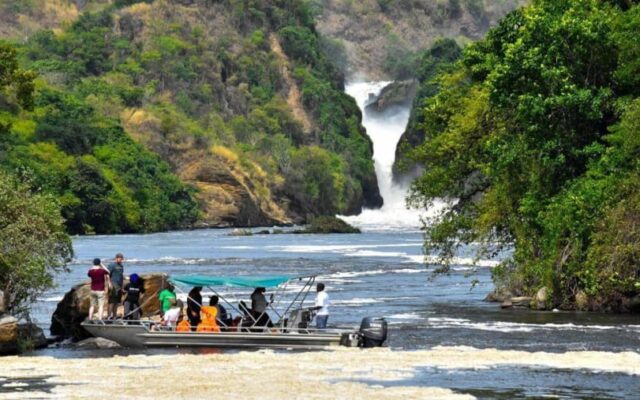
Riverbanks, dam shorelines, and lake edges throughout Uganda support crested crane populations. The Nile delta in Murchison, the Kazinga Channel margins in Queen Elizabeth, and the shores of Lake Victoria, Lake Kyoga, and Lake Bunyonyi all provide foraging and roosting opportunities within easy reach of wetland nesting sites.
Farmland and Cultivated Landscapes
Agricultural grasslands, grazed cattle pastures, and cereal fields attract crested cranes seeking grain, fallen seeds, and insects. This habitat overlap creates the human-wildlife conflict that threatens the species — farmers may poison cranes perceived as crop pests, while pesticide use on fields cranes forage in causes direct mortality.
Roosting Habitat — Trees at Night
One of the grey crowned crane's most distinctive ecological traits is nocturnal tree roosting. At dusk, cranes fly to tall trees — often isolated acacias, figs, or eucalyptus near wetlands — where they perch safely above ground predators.
Tree roosting requirements include:
- Tall, sturdy trees within flying distance of foraging areas
- Woodland patches or scattered trees on savannah plains
- Relatively open perches allowing group roosting
- Proximity to wetlands without requiring nests in trees
Loss of woodland near drained wetlands forces cranes to roost farther from nesting sites, increasing energy costs and predation risk during transit.
Breeding Habitat — Wetland Nests
Grey crowned cranes breed exclusively in wetland environments. Pairs construct large platform nests from grass, sedges, and other wetland plants, positioned in tall emergent vegetation or on floating mats surrounded by shallow water.
Nest Site Fidelity
Mated pairs frequently return to the same nesting location annually, making the protection of individual wetland parcels disproportionately important. Destroying a single breeding marsh can eliminate a pair's reproductive capacity for years.
Chick Shelter Requirements
Newly hatched chicks depend on dense wetland vegetation for concealment from eagles, monitor lizards, and other predators. Conservationists report that chicks in wetlands stripped of protective cover suffer dramatically higher predation rates — a direct consequence of habitat degradation.
Geographic Range Within Uganda
Western Uganda
Queen Elizabeth National Park, Lake Mburo, the Kigezi highlands around Lake Bunyonyi, and the Albertine Rift valley wetlands support significant crested crane populations. Open savannah in Queen Elizabeth and highland grasslands in Kabale and Kisoro districts provide excellent viewing.
Northern Uganda
Murchison Falls National Park's northern savannah and Nile delta wetlands are prime crested crane habitat. The park's combination of open plains and riverine marshes mirrors the dual habitat the species requires.
Central and Eastern Uganda
The Lake Victoria basin, Lake Kyoga wetlands, and river catchments including the Mpologoma, Manafwa, and Sipi systems support cranes in agricultural-wetland mosaics. Community wetlands in districts such as Wakiso, Mukono, and Jinja remain important strongholds.
Southwestern Uganda
Districts including Lwengo and Isingiro — part of the River Rwizi catchment — hold some of Uganda's highest district-level crested crane densities. The Uganda Biodiversity Fund's wetland restoration project in this region targets a 10 percent population increase over five years.
Altitude and Climate
Grey crowned cranes inhabit elevations from lowland Lake Victoria basin wetlands (around 1,100 metres) to highland grasslands above 2,000 metres in Kigezi. They tolerate a wide temperature range but depend on reliable water availability and seasonal rainfall patterns that maintain wetland productivity.
East African breeding is timed around rainfall geography — in Uganda and Kenya, breeding occurs year-round but peaks during drier periods when wetland vegetation structure is optimal for nest construction. In southern Africa, breeding aligns with the rainy season.
Habitat Connectivity
Crested cranes are non-migratory but make local movements of tens of kilometres following water and food. Habitat connectivity — continuous corridors of wetland, grassland, and woodland between breeding marshes and foraging plains — is essential for population persistence.
Habitat fragmentation from roads, farms, and settlements isolates wetland patches, trapping crane pairs in degraded areas without access to alternative feeding or nesting sites.
Threats to Grey Crowned Crane Habitat
- Wetland drainage: The dominant threat — conversion of marshes to agriculture and settlement
- Overgrazing: Cattle and goat grazing degrades wetland vegetation needed for nesting
- Pesticide pollution: Chemical runoff from farmland poisons cranes and their food sources
- Eucalyptus plantation: Replacing native wetland and woodland vegetation with commercial plantations
- Climate variability: Altered rainfall patterns affecting wetland flooding cycles
- Power infrastructure: Transmission lines crossing open foraging and flight corridors
Protected Areas and Habitat Corridors
Uganda's national parks and wetland reserves provide the most secure crested crane habitat. Key protected areas include Murchison Falls, Queen Elizabeth, Lake Mburo, and Ramsar-designated wetlands. However, because cranes also depend on unprotected community wetlands for breeding, conservation must extend beyond park boundaries into catchment-scale wetland restoration.
Why Habitat Protection Matters
The grey crowned crane is a flagship species for wetland conservation. Protecting crested crane habitat simultaneously safeguards water filtration, flood regulation, fisheries, and the livelihoods of communities that depend on healthy wetlands. Every hectare of restored marsh in the River Rwizi catchment or Entebbe peninsula supports not only cranes but the broader ecological infrastructure on which Uganda's development depends.