
Grey Crowned Crane FAQs and Answers — use the questions below for quick answers on biology, courtship dance, cultural significance, where to see crested cranes, and safari planning. Explore best time to visit, safari experiences, and Uganda safari packages for deeper guides — or request a quote for a tailored itinerary.
- What is a grey crowned crane?
The grey crowned crane (Balearica regulorum) is a large, elegant crane native to sub-Saharan Africa and the national bird of Uganda. Known locally as the crested crane, it is recognised by its stiff golden crown, grey body plumage, white cheek patches, and vivid red throat pouch. See our grey crowned crane facts page for full biology and classification details.
- Why is the grey crowned crane Uganda's national bird?
Uganda adopted the grey crowned crane as its national emblem because of its beauty, elegance, and strong association with the country's wetlands and lakes. The crested crane appears on the national flag and coat of arms, and Uganda's national sports teams are nicknamed The Cranes. Its colours — black, gold, and red — echo the national flag palette.
- What is the scientific name of the grey crowned crane?
The scientific name is Balearica regulorum. The East African subspecies found in Uganda is Balearica regulorum gibbericeps, commonly called the crested crane or East African crowned crane. It belongs to the crane family Gruidae.
- Are grey crowned cranes endangered?
Yes. The grey crowned crane is listed as Endangered on the IUCN Red List. Uganda's population has declined by more than 80 percent over the past 25 years, from roughly 35,000 birds in the 1980s to approximately 13,500 in a 2023 national census. Learn more on our grey crowned crane conservation page.
- How many grey crowned cranes are left in Uganda?
A national census conducted in 2023 estimated approximately 13,500 grey crowned cranes remaining in Uganda, down from around 35,000 in 1986. Without deliberate wetland protection and community engagement, conservationists warn the national symbol could face further decline.
- Where do grey crowned cranes live?
Grey crowned cranes inhabit wetlands, savannah grasslands, river margins, and farmland across Uganda and eastern Africa. They are found in Murchison Falls National Park, Queen Elizabeth National Park, and wetlands nationwide. See our where to see grey crowned cranes guide for the best locations.
- What do grey crowned cranes eat?
Grey crowned cranes are omnivores. Their diet includes grass seeds, grains, insects, frogs, worms, small fish, snakes, and the eggs of aquatic animals. They frequently forage in wetlands and on farmland, which sometimes leads to conflict with farmers. See our grey crowned crane diet guide for seasonal feeding patterns.
- What is the grey crowned crane courtship dance?
The courtship dance is one of the most famous behaviours of grey crowned cranes. Pairs perform synchronised displays involving bowing, jumping, wing-flapping, and running. Both males and females dance, and immature birds often join in. Dancing strengthens pair bonds and can occur at any time of year, not only during breeding season. Explore more on our grey crowned crane behaviour page.
- How tall is a grey crowned crane?
Grey crowned cranes stand approximately 1 metre (3.2 feet) tall, with a wingspan of around 2 metres. Despite their height, they are relatively lightweight for their size, weighing roughly 3 to 4 kilograms, which allows agile dancing and jumping during courtship displays.
- Do grey crowned cranes mate for life?
Grey crowned cranes are generally monogamous, forming long-term pair bonds. A mated pair defines and defends a territory together, returns to the same nesting area annually, and shares incubation and chick-rearing duties. Their fidelity has contributed to cultural beliefs linking crane parts to faithfulness in traditional medicine — a practice that threatens wild populations.
- How many eggs do grey crowned cranes lay?
Grey crowned cranes typically lay two to five eggs per clutch, though two to three is most common. Both parents incubate the eggs for approximately 28 to 31 days. Chicks are precocial — they can run soon after hatching and fledge within 10 to 14 weeks.
- Where do grey crowned cranes nest?
Crested cranes build large platform nests of grass and wetland vegetation, often positioned in tall marsh grasses or on floating vegetation in swamps. Pairs frequently return to the same nesting location each year. Nest success depends heavily on intact wetland cover to shield chicks from aerial predators such as eagles.
- Do grey crowned cranes migrate?
Grey crowned cranes are non-migratory but make short local movements — typically within tens of kilometres — following water availability and food resources. Seasonal flooding and drying of wetlands influence their local distribution across Uganda.
- Do grey crowned cranes roost in trees?
Yes. Although they forage and nest in wetlands and grasslands, grey crowned cranes roost in tall trees at night for safety from ground predators. This arboreal roosting habit distinguishes them from many other wetland birds and makes intact woodland near wetlands important for their survival.
- What sounds do grey crowned cranes make?
Grey crowned cranes produce a distinctive booming call created by inflating their red gular throat sac, along with honking sounds quite different from the trumpeting of larger crane species. Vocalisations serve territorial defence, pair communication, and group coordination.
- What threatens grey crowned cranes in Uganda?
Major threats include wetland drainage and encroachment, pesticide poisoning on farmland, illegal capture of chicks and eggs, collision with power lines, and habitat loss from overgrazing. Without protective wetland cover, chicks are more vulnerable to eagle predation. Read our conservation guide for recovery efforts.
- Are grey crowned cranes protected by law in Uganda?
Yes. The grey crowned crane is protected by law in Uganda. It is illegal to capture, kill, trade, or keep crested cranes without authorisation. Conservation organisations including the International Crane Foundation and Uganda Biodiversity Fund work with communities to enforce protection and restore breeding habitats.
- Where is the best place to see grey crowned cranes in Uganda?
Top locations include Murchison Falls National Park (savannah and Nile delta wetlands), Queen Elizabeth National Park (grasslands and Kazinga Channel margins), Lake Mburo National Park, and community wetlands in districts such as Lwengo and Isingiro. Compare all options on our where to see grey crowned cranes page.
- Can I see grey crowned cranes on a regular safari?
Yes. Grey crowned cranes are frequently spotted during game drives in Murchison Falls and Queen Elizabeth, often in pairs or family groups on open grassland. You do not need a dedicated birding permit to observe them, though a knowledgeable guide and binoculars improve the experience. Browse grey crowned crane safari experiences for itinerary ideas.
- What is the best time to see grey crowned cranes?
Grey crowned cranes can be seen year-round across Uganda. The dry seasons (June–September and December–February) generally offer easier access to wetlands and clearer photography conditions. Breeding displays are most visible when pairs are establishing territories. See our best time to see grey crowned cranes guide for monthly tips.
- How can tourists help conserve grey crowned cranes?
Responsible tourists can help by observing cranes from a respectful distance, never disturbing nesting pairs, supporting lodges and operators that fund conservation, choosing itineraries that include wetland parks, and spreading awareness about the species' endangered status. Tourism revenue that supports protected areas and community livelihoods indirectly benefits crested crane habitat.
- What is the difference between grey crowned crane subspecies?
There are two subspecies. Balearica regulorum gibbericeps (East African crowned crane) occurs in Uganda, Kenya, and eastern Africa and has a larger area of bare red facial skin. Balearica regulorum regulorum (South African crowned crane) breeds in Angola and southern Africa and has a smaller red facial patch.
- Why are grey crowned cranes found on farmland?
Crested cranes are attracted to farmland because crops and grazed grasslands provide abundant seeds, insects, and open foraging areas similar to their natural savannah habitat. This overlap creates human-wildlife conflict when farmers use pesticides or view cranes as crop pests, making community-based conservation essential.
- How long do grey crowned cranes live?
Grey crowned cranes can live 22 to 25 years in the wild, and longer in protected captive conditions. Longevity depends on habitat quality, food availability, predation pressure on chicks, and freedom from poisoning and illegal capture.
- Are grey crowned cranes aggressive?
Mated pairs can be highly territorial and aggressive when defending their nesting area from intruders, including other crane pairs. Outside the breeding season, they are generally calm and approachable at a respectful distance, often seen walking gracefully in pairs or family groups across grassland.
- What conservation projects protect grey crowned cranes in Uganda?
Key initiatives include the International Crane Foundation custodian programme, the Uganda Biodiversity Fund's River Rwizi wetland restoration project targeting a 10 percent population increase, government wetland conservation campaigns, and community education programmes. These efforts focus on habitat restoration, sustainable livelihoods, and monitoring breeding grounds.
- Can beginners identify a grey crowned crane easily?
Yes. The grey crowned crane is one of the easiest birds for beginners to identify in Uganda. Its golden crown, red wattle, grey body, and tall stature make it unmistakable even without binoculars. It is often visible from safari vehicles, hotel lawns, and roadside wetlands — making it an ideal entry point for birding safaris in Uganda.
- How do grey crowned cranes feature in Ugandan culture?
Beyond the flag and coat of arms, the crested crane is a clan totem for some Ugandan communities and carries names in multiple languages — Ng'aali in Luganda, O'welo in Acholi, and Muraaho in Kinyarwanda. Its elegance and monogamous pair bonds have made it a enduring symbol of national identity and natural beauty.
- What safari packages include grey crowned crane sightings?
Most Uganda safari packages visiting Murchison Falls, Queen Elizabeth, or Lake Mburo offer excellent chances of crested crane sightings. Dedicated birding safaris and combined wildlife-birding itineraries provide the most focused experience. Explore our safari experiences page or request a quote for a tailored plan.
Safari packages to see Grey Crowned Crane
Bookable itineraries below include parks and activities where you are most likely to encounter Grey Crowned Crane in the wild.
 Best
Seller
Best
Seller
7 Day Uganda Wildlife & Gorilla
You visit
Murchison Falls, Kibale Forest, Queen Elizabeth NP, Bwindi Forest, Entebbe
Seven days with gorillas: the wildlife tour above plus Bwindi trekking on Day 6 — the single most booked private itinerary for Uganda Safari Tours guests who want chimps, savannah and gorillas in one…

3 Day Murchison Falls Safari
You visit
Murchison Falls, Entebbe
Our classic 3-day Murchison Falls safari follows the park’s most proven circuit: dramatic falls, savannah game drives north of the Nile, and the famous boat trip where the river narrows below the casc…
 Best
Seller
Best
Seller
6 Days Uganda Gorillas, Chimpanzees & Wildlife Safari
You visit
Kibale Forest, Queen Elizabeth NP, Bwindi Forest, Entebbe
Primates plus plains in six days: Kibale chimps, Queen Elizabeth savannah, Bwindi gorillas and a Lake Mburo finale for zebra — the full Uganda highlight reel without rushing Kidepo or Murchison.
1 Day Lake Mburo Safari
You visit
Uganda Equator, Kayabwe, Lake Mburo, Kampala or Entebbe
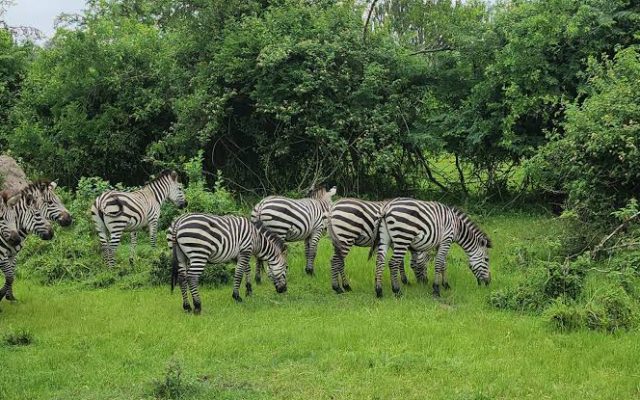
This compact 1-day Lake Mburo safari is the closest national-park wildlife experience to Kampala and Entebbe. Lake Mburo is Uganda’s smallest savannah park but one of the most rewarding for a short tr…