
Forest Elephant FAQs and Answers — use the questions below for quick answers on biology, species differences, gorilla trekking, chimpanzee tracking, conservation, and safari planning. Explore where to see forest elephants, best time to visit, and safari experiences for deeper guides — or request a quote for a custom forest elephant itinerary.
- What is a forest elephant?
The African forest elephant (Loxodonta cyclotis) is a distinct elephant species adapted to life in tropical rainforests. Smaller and shyer than the savannah elephant, forest elephants have straighter downward-pointing tusks, rounder ears, and a frugivorous diet that makes them critical seed dispersers. In Uganda they occur in Bwindi, Kibale, and Semuliki. Explore our forest elephant facts guide for full details.
- How are forest elephants different from savannah elephants?
Forest elephants (Loxodonta cyclotis) and savannah elephants (Loxodonta africana) are now recognised as separate species. Forest elephants are smaller, have straighter tusks pointing downward, rounder ears, slower reproduction, and a more frugivorous diet. They are far shyer and inhabit dense rainforest rather than open savannah. See our forest elephant facts page for a full comparison.
- Where do forest elephants live in Uganda?
Uganda’s forest elephants inhabit the country’s western rainforest parks, especially Bwindi Impenetrable National Park, Kibale National Park, and Semuliki National Park. Uganda lies at the eastern edge of the forest elephant range, connected to larger populations in the Democratic Republic of Congo. Read our where to see forest elephants guide for park-by-park details.
- Are forest elephants endangered?
Yes. The African forest elephant is listed as Critically Endangered on the IUCN Red List. Populations have declined by more than 80% over three generations, primarily due to poaching for ivory and habitat loss. Uganda’s protected forests provide important refuge. Learn more on our forest elephant conservation page.
- How big are forest elephants?
Forest elephants are the smallest of the three living elephant species. Adult males reach an average shoulder height of roughly 2.2 metres and weigh significantly less than savannah bulls. Females are smaller still. Their compact build helps them move through dense forest undergrowth.
- What do forest elephant tusks look like?
Forest elephant tusks are straighter and point downward, unlike the more curved tusks of savannah elephants. Both males and females grow tusks, beginning at around one to three years of age. Forest elephant ivory is denser and has a pinkish hue, which historically made it especially targeted by poachers.
- What do forest elephants eat?
Forest elephants eat fruits, leaves, bark, roots, herbs, and mineral-rich soil. They are especially important frugivores, consuming dozens of tree species and dispersing seeds across long distances. See our forest elephant diet guide for seasonal feeding patterns and ecological impact.
- Why are forest elephants called megagardeners of the forest?
Forest elephants consume large quantities of fruit and deposit seeds in their dung far from parent trees. Many rainforest tree species depend on elephants for germination and dispersal. Without forest elephants, forest composition and regeneration would change dramatically. This role is central to our conservation and diet guides.
- Are forest elephants shy?
Yes. Forest elephants are far more elusive than savannah elephants. They typically retreat at the sound of humans and remain hidden in thick vegetation. Visitors are more likely to see footprints, broken branches, feeding trails, and fresh dung than the animals themselves. Our behaviour guide explains what to expect.
- Can you see forest elephants during gorilla trekking?
Occasionally, yes. Bwindi Impenetrable National Park hosts both mountain gorillas and forest elephants. While direct sightings are uncommon, trekkers and rangers sometimes encounter elephant signs or, rarely, elephants on forest trails. Plan your trek with our gorilla trekking in Uganda guide.
- Can you see forest elephants during chimpanzee trekking?
Kibale National Park supports a large elephant population alongside chimpanzees. Chimp trackers frequently pass elephant trails, dung, and feeding signs. Direct elephant sightings are possible but not guaranteed. Combine both experiences with our chimpanzee trekking planner.
- How many forest elephants are in Bwindi?
Recent DNA-based surveys estimate approximately 96 forest elephants in Bwindi Impenetrable National Park (95% confidence interval roughly 64–145). Bwindi’s elephants are predominantly classified as forest elephants, making the park one of Uganda’s most important sites for the species.
- Are Kibale’s elephants forest elephants?
Kibale National Park hosts a large elephant population estimated at around 573 individuals, but genetic research shows this is a hybrid zone where forest and savannah elephant ancestry mix. Kibale’s elephants are managed as a distinct population with complex conservation implications.
- What is the best time to see forest elephants in Uganda?
Forest elephants are present year-round, but the dry seasons (June to September and December to February) generally offer easier forest trekking and clearer trails. See our best time to see forest elephants guide for monthly conditions.
- Do forest elephants live in groups?
Forest elephants form smaller social units than savannah elephants, often family groups of females and young led by a matriarch. Males may be solitary or form loose bachelor groups. Groups are less visible because they move quietly through dense cover.
- How long do forest elephants live?
Forest elephants can live 60 to 70 years in the wild when not lost to poaching or habitat conflict. Their slow reproductive rate — longer gestation and calving intervals than savannah elephants — means population recovery takes decades.
- What threatens forest elephants in Uganda?
Major threats include poaching for ivory, habitat loss and fragmentation, snares set for other animals, and human encroachment on forest edges. Uganda’s parks mitigate these through anti-poaching patrols, community programmes, and research monitoring. Details are on our conservation page.
- Are forest elephants dangerous?
Forest elephants are wild animals and can be dangerous if surprised or provoked, especially mothers with calves. Because they are shy, encounters during regulated trekking are rare. Always follow ranger instructions, keep distance, and never approach elephants on your own in the forest.
- What signs indicate forest elephants are nearby?
Look for round footprints, fresh dung piles, broken saplings, stripped bark, uprooted seedlings, and cleared feeding trails. Rangers and trackers read these signs daily during gorilla and chimpanzee trekking.
- Why is Semuliki important for forest elephants?
Semuliki National Park is Uganda’s extension of the Congo Basin biome — lowland tropical forest with Central African species found nowhere else in East Africa. Forest elephants here inhabit a distinct ecosystem at the base of the Albertine Rift, linked to DRC populations across the Semliki River.
- How does tourism help forest elephant conservation?
Regulated tourism in Bwindi, Kibale, and Semuliki generates revenue for park management, ranger patrols, and community benefit programmes. Trekking fees and gorilla permits directly fund protection of the forests elephants depend on.
- Can forest elephants and savannah elephants interbreed?
Yes. Where forest and savannah elephant ranges overlap — notably in western Uganda — hybridisation occurs. Kibale and Queen Elizabeth form part of Africa’s largest known modern hybrid zone. This has important implications for species-level monitoring and conservation policy.
- What safari packages include forest elephant habitat?
Most forest elephant experiences are part of primate-focused safaris — gorilla trekking in Bwindi, chimpanzee trekking in Kibale, or Semuliki forest extensions. Browse our forest elephant safaris page or Uganda safari packages for itineraries.
- Do both male and female forest elephants have tusks?
Yes. Unlike Asian elephants where only some males have tusks, both sexes of African forest elephants typically grow tusks. This makes the entire population vulnerable to ivory poaching.
- How intelligent are forest elephants?
Forest elephants share the exceptional intelligence, memory, and social complexity of all elephants. They navigate vast forest territories, recognise individuals, communicate through infrasound and touch, and pass ecological knowledge across generations. Explore more in our behaviour guide.
Safari packages to see Forest Elephant
Bookable itineraries below include parks and activities where you are most likely to encounter Forest Elephant in the wild.
 Best
Seller
3 Day Uganda Gorilla Trekking Safari
You visit
Bwindi Forest, Entebbe
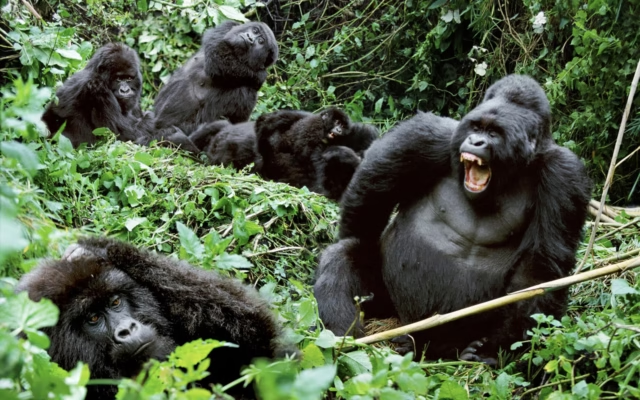
This private Uganda gorilla trekking safari is a focused 3-day Uganda gorilla trekking road trip: a full-day mountain gorilla trek in Bwindi Impenetrable National Park—a UNESCO rainforest where roughl…
 Best
Seller
5 Day Gorilla & Chimp Safari
You visit
Kibale Forest, Bwindi Forest, Entebbe
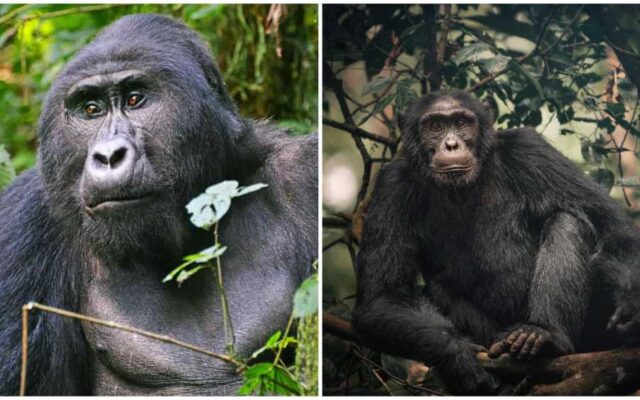
Combine Bwindi gorilla trekking with Kibale chimpanzee tracking.
 Best
Seller
6 Days Uganda Gorillas, Chimpanzees & Wildlife Safari
You visit
Kibale Forest, Queen Elizabeth NP, Bwindi Forest, Entebbe
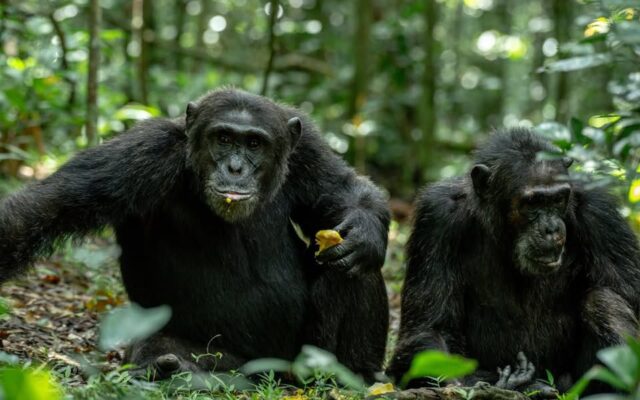
Primates plus plains in six days: Kibale chimps, Queen Elizabeth savannah, Bwindi gorillas and a Lake Mburo finale for zebra — the full Uganda highlight reel without rushing Kidepo or Murchison.
 Best
Seller
7 Day Uganda Wildlife & Gorilla
You visit
Murchison Falls, Kibale Forest, Queen Elizabeth NP, Bwindi Forest, Entebbe
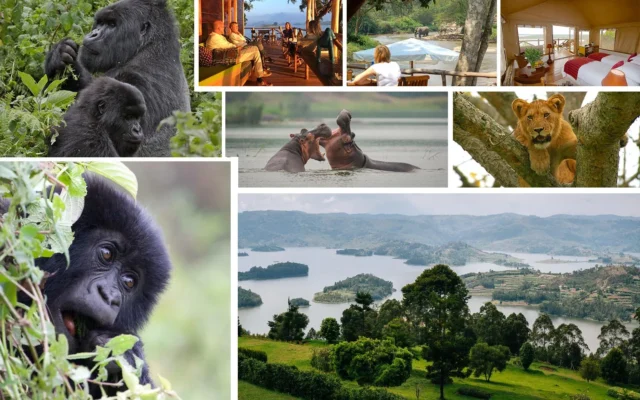
Seven days with gorillas: the wildlife tour above plus Bwindi trekking on Day 6 — the single most booked private itinerary for Uganda Safari Tours guests who want chimps, savannah and gorillas in one…