The African forest elephant is one of the continent’s most ecologically important yet least understood megafauna. Smaller, quieter, and far more elusive than the savannah elephant familiar from open-plains game drives, forest elephants move through the shadows of tropical rainforests as architects of forest regeneration. In Uganda, they inhabit the western forest parks of Bwindi, Kibale, and Semuliki — often revealed not by sight but by the fresh trails, dung, and broken vegetation left in their wake.
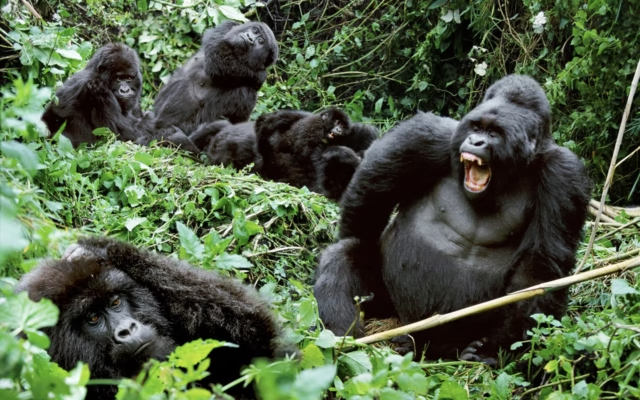
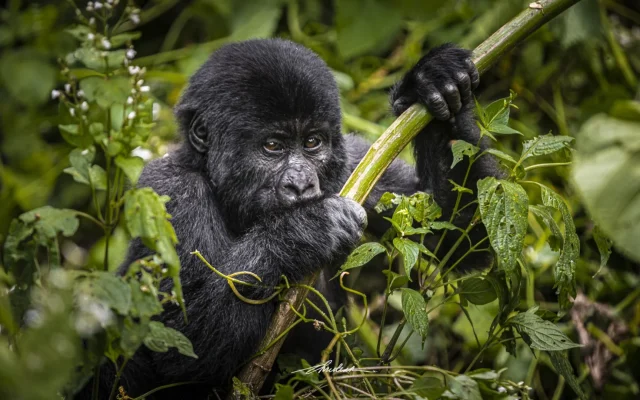
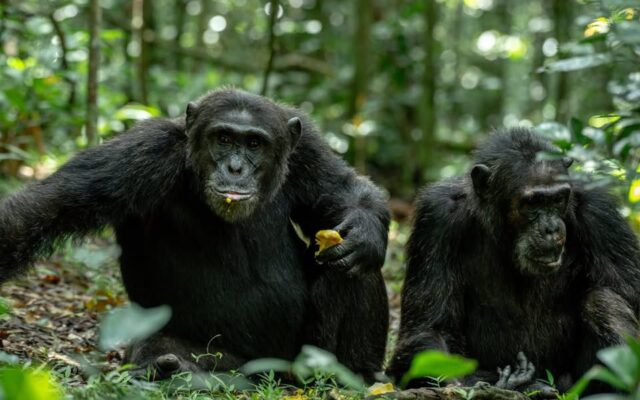
For safari travelers, forest elephants represent a different kind of wildlife encounter. There are no dedicated elephant drives in Uganda’s jungles; instead, these animals may appear — or leave their signs — during gorilla trekking, chimpanzee tracking, and guided forest walks. Understanding their biology, shy behaviour, and conservation urgency deepens every rainforest safari experience.
What Is a Forest Elephant?
The African forest elephant (Loxodonta cyclotis) is a distinct elephant species native to the humid tropical forests of Central and West Africa. Once considered a subspecies of the African elephant, genetic and morphological research confirmed forest elephants as a separate species — a recognition reflected in their Critically Endangered IUCN status since 2021.
- Kingdom: Animalia
- Phylum: Chordata
- Class: Mammalia
- Order: Proboscidea
- Family: Elephantidae
- Genus: Loxodonta
- Species: Loxodonta cyclotis
How Forest Elephants Differ from Savannah Elephants
Uganda is one of few countries where both African elephant species occur. Savannah elephants (Loxodonta africana) dominate Queen Elizabeth, Murchison Falls, and Kidepo, while forest elephants inhabit the rainforest parks of the southwest and west.
Key Differences
- Size: Forest elephants are smaller, with bulls averaging roughly 2.2 metres at the shoulder
- Tusks: Straighter and downward-pointing in both sexes
- Ears: Rounder and more oval-shaped
- Habitat: Dense tropical and montane rainforest, not open savannah
- Behaviour: Far shyer and more elusive; retreat from disturbance
- Diet: More frugivorous — fruits form a larger dietary share
- Reproduction: Slower — longer gestation and calving intervals
Physical Characteristics
Forest elephants are superbly adapted to life beneath the canopy. Their compact frame allows movement through thick undergrowth, while sensitive feet and trunks navigate uneven, root-laced forest floors.
Size and Build
Adult forest elephant bulls are substantially smaller than savannah bulls, with females weighing roughly 2,000 to 3,000 kilograms. This reduced stature is an adaptation to dense forest environments rather than a sign of immaturity.
Tusks and Ivory
Straight, downward-pointing tusks develop in both males and females from an early age. Forest elephant ivory is pinkish, harder, and historically more prized by poachers — a factor in the species’ catastrophic decline across Central Africa.
Ears and Trunk
Rounder ears distinguish forest elephants from the larger, more fan-shaped ears of savannah elephants. The trunk remains the primary tool for feeding, drinking, communication, and social interaction.
Where Forest Elephants Live in Uganda
Uganda sits at the eastern margin of the forest elephant range, connected to larger Congo Basin populations through forest corridors.
Bwindi Impenetrable National Park
Bwindi’s ancient montane forest supports a population of predominantly forest elephants, estimated at roughly 96 individuals through recent DNA-based surveys. Gorilla trekkers occasionally encounter elephant signs along forest trails.
Kibale National Park
Kibale hosts one of Uganda’s largest elephant populations — approximately 573 individuals — in a complex hybrid zone where forest and savannah elephant genetics intermix. Chimpanzee trekkers frequently pass elephant feeding trails.
Semuliki National Park
Semuliki represents Uganda’s extension of the Congo Basin lowland forest, with forest elephants inhabiting a biome found nowhere else in East Africa.
Ecological Role: Megagardeners of the Forest
Forest elephants are among the most important seed dispersers on Earth. By consuming fruits and depositing seeds in their dung across vast home ranges, they maintain forest diversity, structure, and regeneration. Scientists describe them as megagardeners — without elephants, many rainforest tree species would struggle to reproduce and colonise new areas.
Behaviour and Temperament
Forest elephants are defined by caution. Unlike savannah elephants that may tolerate vehicle approaches on open plains, forest elephants typically flee at the first sign of human presence. Rangers and trackers read their activity through footprints, dung, bark stripping, and cleared trails rather than direct observation.
Conservation Status
The African forest elephant is Critically Endangered. Populations across Central Africa have declined by more than 80% over three generations due to ivory poaching and habitat destruction. Uganda’s protected forests offer critical refuge at the species’ eastern range limit.
Forest Elephant Encounters on Safari
The most rewarding way to engage with forest elephants in Uganda is through primate trekking and rainforest safaris:
- Gorilla trekking in Bwindi Impenetrable National Park
- Chimpanzee tracking in Kibale National Park
- Guided forest walks in Semuliki National Park
- Multi-park itineraries combining rainforest and savannah experiences
Quick Facts
- Scientific name: Loxodonta cyclotis
- Distinct species from savannah elephant
- Critically Endangered (IUCN)
- Smallest living elephant species
- Both sexes have straight, downward tusks
- Critical rainforest seed dispersers
- Found in Bwindi, Kibale, and Semuliki, Uganda
- Shy and elusive — signs more common than sightings