Common chimpanzee — Uganda safari guide for travelers planning wildlife encounters.
Introduction
Explore this species across our habitat guide, where to see page, and safari planning resources - plus parks such as linked destinations.
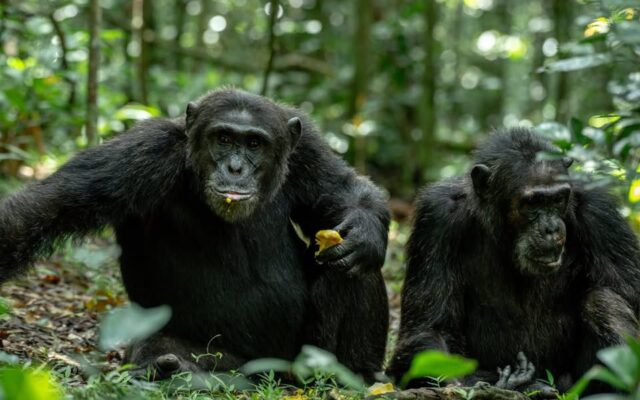
The Eastern Chimpanzee is one of the most fascinating, intelligent, and behaviourally complex wildlife species found in Africa. As one of humanity’s closest living relatives, chimpanzees have captivated scientists, wildlife enthusiasts, safari travelers, and conservationists for generations. Their remarkable intelligence, emotional depth, social complexity, and ability to use tools make them one of the most compelling animals to observe in the wild.
Unlike many iconic African wildlife species that are viewed from safari vehicles on open savannahs, chimpanzees are encountered through immersive forest trekking experiences. Visitors walk through tropical forests under the guidance of expert trackers, listening for vocal calls, movement in the canopy, and signs of chimpanzee activity before eventually locating a troop in its natural habitat.
Seeing chimpanzees in the wild is one of Africa’s most unforgettable wildlife encounters. Their human-like interactions, expressive communication, playful juveniles, strategic social alliances, and extraordinary intelligence create deeply memorable experiences.
This comprehensive guide explores everything you need to know about the Eastern Chimpanzee, including biology, habitat, behaviour, diet, conservation, where to see them, and chimpanzee trekking safari experiences in Uganda and East Africa.
What Is an Eastern Chimpanzee?
The Eastern Chimpanzee (Pan troglodytes schweinfurthii) is a subspecies of the common chimpanzee and one of the closest living relatives of humans. Sharing approximately 98–99% of human DNA, Eastern chimpanzees demonstrate advanced cognition, emotional awareness, complex social relationships, and behavioural adaptability.
They are among the most intelligent non-human primates in the world and are widely studied for insights into evolution, communication, culture, and social behaviour.
Eastern chimpanzees differ from other chimpanzee subspecies in geographic range, some behavioural patterns, and ecological adaptations.
Scientific Classification
- Kingdom: Animalia
- Phylum: Chordata
- Class: Mammalia
- Order: Primates
- Family: Hominidae
- Genus: Pan
- Species: Pan troglodytes
- Subspecies: Pan troglodytes schweinfurthii
Physical Characteristics
Size
Eastern chimpanzees are significantly smaller than gorillas but remain powerful and agile primates.
Adult males generally weigh between 40 and 70 kilograms, while females are smaller, typically ranging from 27 to 50 kilograms.
Body Structure
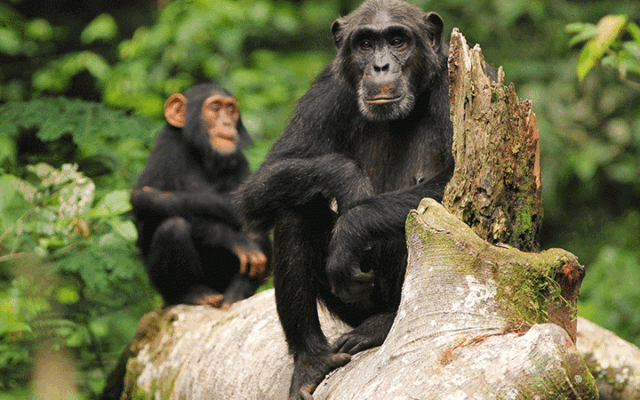
Chimpanzees possess long arms, flexible shoulders, dexterous hands, and muscular builds suited for climbing, brachiation, and terrestrial movement.
Their long arms are particularly adapted for movement through forest environments.
Facial Features
Chimpanzees have expressive faces with highly mobile features that contribute to social communication.
Facial expressions play a major role in emotional and behavioural interaction.
Hair
Eastern chimpanzees are covered in dark hair, though faces, ears, fingers, and some body areas are less densely furred.
How Closely Related Are Chimpanzees to Humans?
Chimpanzees are among humanity’s closest living relatives, sharing roughly 98–99% of human DNA.
This genetic closeness helps explain similarities in:
- Social behaviour
- Emotional responses
- Communication systems
- Problem solving
- Parenting behaviour
- Tool use
- Memory
- Strategic thinking
Where Do Eastern Chimpanzees Live?
Eastern chimpanzees occur across parts of East and Central Africa.
Countries include:
- Uganda
- Rwanda
- Tanzania
- Burundi
- Democratic Republic of Congo
- South Sudan (limited range)
Uganda is one of the best countries in Africa for seeing Eastern chimpanzees in the wild.
Best Places to See Eastern Chimpanzees in Uganda
Kibale National Park
Kibale National Park is widely regarded as Uganda’s premier chimpanzee trekking destination.
Why Kibale?
- High chimpanzee density
- Excellent trekking success rates
- Chimpanzee habituation experiences
- Rich primate diversity
- Strong safari infrastructure
Budongo Forest Reserve
Budongo offers excellent chimpanzee tracking in a mature tropical forest ecosystem near Murchison Falls National Park.
Kyambura Gorge
This dramatic forest gorge within Queen Elizabeth National Park offers a unique chimpanzee trekking experience.
Kalinzu Forest Reserve
Kalinzu is another strong chimp trekking destination known for good sightings and biodiversity.
Toro-Semliki Wildlife Reserve
A lesser-known but valuable chimpanzee destination.
Habitat
Eastern chimpanzees inhabit diverse forest ecosystems.
Habitat types include:
- Tropical rainforest
- Montane forest
- Gallery forest
- Woodland forest mosaics
- Riverine forest
- Savannah-forest transition zones
This ecological flexibility contributes to their adaptability.
Social Structure
Chimpanzees live in highly complex social communities.
Their social organization is far more dynamic than many other primates.
Community Structure
Chimpanzee communities may include:
- Adult males
- Adult females
- Juveniles
- Infants
- Subadults
Community sizes vary significantly.
Fission-Fusion Society
One of the defining aspects of chimpanzee behaviour is fission-fusion social structure.
This means larger communities split into smaller temporary subgroups depending on:
- Food availability
- Social relationships
- Mating opportunities
- Travel needs
- Territorial activity
Dominance Hierarchy
Chimpanzee societies are politically complex.
Males often compete for status and dominance.
Social rank influences:
- Mating access
- Resource access
- Alliance formation
- Conflict outcomes
- Leadership influence
Intelligence
Eastern chimpanzees are among the most intelligent animals on Earth.
Observed cognitive abilities include:
- Tool use
- Problem solving
- Planning
- Memory
- Social manipulation
- Strategic cooperation
- Learning
- Innovation
Tool Use
Chimpanzees are famous for tool use.
Observed examples include:
- Using sticks to extract insects
- Leaf sponges for water collection
- Object manipulation
- Food processing techniques
This makes them one of the few non-human animals known for sophisticated tool behaviour.
Communication
Chimpanzees communicate through multiple channels.
Vocal Communication
- Pant-hoots
- Screams
- Grunts
- Barks
- Alarm calls
- Contact calls
Facial Communication
Facial expressions communicate emotion and social intent.
Body Language
Posture and movement signal confidence, fear, aggression, playfulness, or submission.
Tactile Communication
Touch, grooming, and physical contact reinforce social relationships.
Behaviour
Chimpanzee behaviour is remarkably sophisticated.
Common behaviours include:
- Play
- Grooming
- Alliance formation
- Territorial patrols
- Conflict mediation
- Tool use
- Communication rituals
- Infant care
Diet
Eastern chimpanzees are omnivorous.
Diet may include:
- Fruit
- Leaves
- Seeds
- Flowers
- Bark
- Insects
- Termites
- Ants
- Occasional animal protein
Fruit often forms a major dietary component.
Movement
Chimpanzees are both arboreal and terrestrial.
Movement methods include:
- Knuckle-walking
- Climbing
- Brachiation-like movement
- Jumping between branches
Reproduction
Females generally give birth to a single infant after a gestation period of approximately 8 months.
Infants remain dependent for several years.
Parenting
Chimpanzee mothers invest heavily in offspring.
Maternal roles include:
- Protection
- Nursing
- Transport
- Social learning
- Behavioural teaching
Lifespan
Eastern chimpanzees may live approximately 30–50 years depending on wild conditions and health factors.
Threats
Eastern chimpanzees face serious threats.
- Habitat destruction
- Deforestation
- Human encroachment
- Disease
- Illegal hunting
- Wildlife trafficking
- Fragmentation
Conservation Status
Chimpanzees are endangered and require active conservation management.
Protection depends on:
- Habitat conservation
- Research
- Protected areas
- Community conservation
- Responsible tourism
- Law enforcement
Chimpanzee Trekking
Chimpanzee trekking is one of Uganda’s top wildlife experiences.
Visitors trek forest habitats with guides to locate chimpanzee communities.
Encounters may include:
- Feeding behaviour
- Calling displays
- Travel movement
- Social interaction
- Playful juveniles
- Grooming
Chimpanzee Habituation Experience
Chimp habituation offers extended immersive time with chimpanzees, ideal for wildlife enthusiasts and photographers.
Best Time to See Eastern Chimpanzees
Chimpanzee trekking is possible year-round.
Dry seasons often offer easier trekking:
- June to September
- December to February
Interesting Facts
- Among humanity’s closest relatives
- Highly intelligent
- Use tools
- Complex politics
- Omnivorous diet
- Advanced communication
- Emotional depth