The bohor reedbuck diet is a study in selective grazing on Africa's greenest edges. These antelopes do not bulldoze through bulk roughage like buffalo; they target tender grasses and reed shoots with high protein and low fibre — often the freshest growth on floodplains, lake shores, and recently burnt savannah. Water dependence, night feeding, and seasonal grass switching explain where reedbuck appear on Uganda game drives and why wetland routing matters as much as predator luck. See also habitat, behaviour, and where to see bohor reedbuck.
Herbivore Ecology
Bohor reedbuck are graminivorous specialists — overwhelmingly grass eaters with occasional dicot browsing. Their digestive strategy favours quality over quantity: smaller bodies than waterbuck, more selective bites than zebra, and a feeding rhythm tuned to protein peaks in young shoots rather than sustained bulk intake.
That selectivity ties reedbuck to habitats where moisture and disturbance (grazing, fire, flooding) constantly renew grass quality — exactly the wetland–grassland interface Uganda's parks protect along the Nile, Lake George, and Mburo's lake chain.
Preferred Foods
Across Africa, bohor reedbuck favour:
- Tender reed shoots and young culms near swamps
- Short to medium grasses with high protein content
- Newly sprouted growth after rain or fire
- Species such as Cynodon, Cenchrus, Sporobolus, Panicum, and Themeda on open plains
- Leersia and Vossia near water — similar to topi and puku preferences
- Imperata on regularly burnt pastures
Dicots are rare but may include forbs and leaves of woody plants in dry months when grass quality drops — a flexibility documented in Ethiopian and East African studies that helps reedbuck survive seasonal bottlenecks.
Research in Uganda
Diet studies in the Rwenzori region and broader East Africa show strong seasonal switching: wet-season preferences for species like Cynodon dactylon and Cenchrus ciliaris, dry-season shifts toward Sporobolus pyramidalis and Panicum repens. Year-round favourites such as Sporobolus consimilis appear on heavily grazed grasslands typical of park edges and floodplain lawns — habitat reedbuck share with Uganda kob and waterbuck on composite drives in Queen Elizabeth and Murchison Falls.
Water and Moisture Needs
Reedbuck are classed as water-dependent. They drink from rivers, lakes, and swamps and rarely wander far from permanent moisture in dry months. Lush green pasture can partly offset drinking frequency — important in wet seasons when dew and leaf moisture are high — but drought still concentrates animals on Nile deltas, Kazinga margins, and Lake Mburo shores.
For safari planners, diet and water needs are the same story: follow the green edge along water.
Feeding Times and Daily Rhythm
Bohor reedbuck feed by day and night, with peaks often at dawn and late afternoon. Nocturnal grazing helps avoid midday heat and some predator pressure, though lions and leopards hunt reedbuck at all hours near cover. Vigilance time is substantial — reedbuck alternate feeding with scanning, a behaviour measured in West African savannah studies and visible on any patient Uganda drive.
They may travel considerable distances from daytime refuges in tall grass to nocturnal grazing zones — another reason dawn starts find animals near cover, while late afternoon light catches them on open lawn edges.
Association With Other Grazers
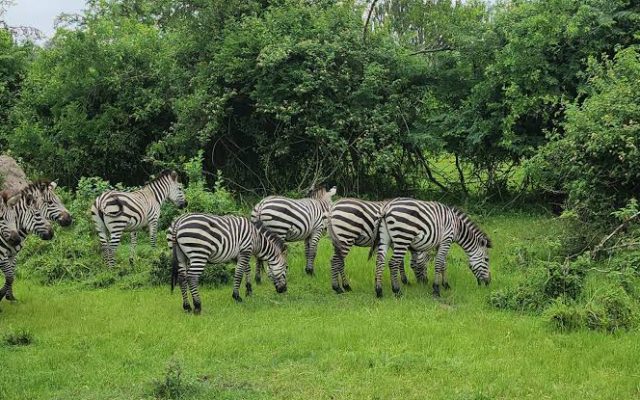
Reedbuck often graze in loose association with hartebeest, topi, kob, puku, and waterbuck — each species slicing the grass community differently. Reedbuck take the tender, often taller fringe growth; kob exploit short open lawns; waterbuck hold territories on sturdier waterside turf. Mixed-species aggregations in dry season — sometimes hundreds strong in other countries — show how wetland meadows function as shared grazing commons.
Seasonal Diet Shifts in Uganda Parks
Wet Seasons (March–May, September–November in western Uganda)
Fresh growth spreads reedbuck across wider grasslands. Cover is thicker; sightings may rely on movement and whistles. Protein-rich young shoots reduce browsing stress and support breeding females and calves.
Dry Seasons (June–August, December–February)
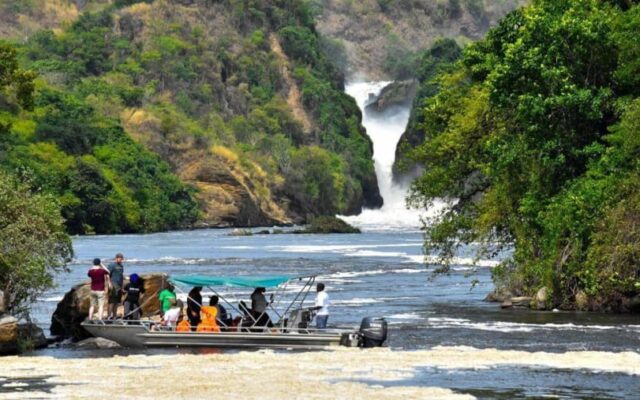
Grass quality falls on upland plains; reedbuck contract toward river channels, lake shores, and permanent swamps. Guides on Murchison delta routes and Lake Mburo lake circuits often find reedbuck alongside waterbuck and hippos at the same waterline.
Impact on Vegetation
Moderate selective grazing can stimulate grass tillering and maintain lawn structure on floodplains. Heavy pressure from livestock outside parks competes for the same shoots reedbuck need — one reason protected wetland margins matter. Inside Uganda's reserves, reedbuck grazing sits within a broader herbivore community that includes elephant, buffalo, and hippo engineering of channels and grass height.
Diet, Predators, and Safari Viewing
Because reedbuck feed on productive margins where cover meets open ground, they occupy the same ecotone lions patrol. Their diet ecology thus predicts predator risk — and explains the hiding-first anti-predator strategy described in our behaviour guide. Photographers who understand feeding times position vehicles on lawn edges at dawn rather than chasing open-plain kob herds.
Conservation Link
Sustainable grazing depends on grass species reedbuck prefer remaining abundant. Habitat loss, overburning, or invasive takeover of native grasses can silently reduce carrying capacity even when animals are not poached. Park fire management and wetland protection are dietary conservation in practice — see conservation for wider threats.
Field Tips for Travellers
- Scan wetland lawn edges at dawn — feeding reedbuck may step out briefly
- Listen for whistling alarms from tall grass before you see the animal
- Pair boat safaris with bank scanning — grazers often work the waterline
- Ask guides to include swamp-fringe tracks, not only open kob plains
Combine diet-focused routing with our best time to see bohor reedbuck and safari experiences pages when building an itinerary.