African leopard — Uganda safari guide for travelers planning wildlife encounters.
Introduction
Explore this species across our habitat guide, where to see page, and safari planning resources - plus parks such as linked destinations.
The African leopard is one of the most mysterious, elegant, and elusive predators in Africa. Revered for its stealth, extraordinary strength, adaptability, and breathtaking beauty, the leopard is among the most sought-after safari sightings on the continent. As one of Africa’s famous Big Five animals, the leopard combines grace and lethal hunting precision with a secretive lifestyle that makes every sighting unforgettable.
Unlike lions that dominate open plains in groups, leopards thrive through solitude, camouflage, patience, and stealth. A leopard encounter on safari feels deeply special—whether it is a powerful male resting on a tree branch, a female silently moving through grass at dusk, or a glimpse of this magnificent predator carrying prey into a tree.
Uganda offers rewarding leopard safari experiences across multiple wildlife destinations, particularly in classic savannah ecosystems where patient wildlife viewing can produce exceptional sightings.
This complete guide explores African leopard biology, habitat, behaviour, conservation, safari experiences, and where to see leopards in Uganda and across Africa.
What Is an African Leopard?
The African leopard (Panthera pardus pardus) is one of Africa’s most iconic big cats and a highly adaptable apex predator found across diverse ecosystems in sub-Saharan Africa.
Leopards are renowned for stealth, camouflage, climbing ability, hunting skill, and extraordinary strength relative to body size.
They are among Africa’s most commercially important safari species and one of the legendary Big Five animals.
Scientific Classification
- Kingdom: Animalia
- Phylum: Chordata
- Class: Mammalia
- Order: Carnivora
- Family: Felidae
- Genus: Panthera
- Species: Panthera pardus
- Subspecies: Panthera pardus pardus
Physical Characteristics
Appearance
The African leopard is instantly recognizable for its stunning rosette-patterned coat.
Key features include:
- Rosette camouflage markings
- Powerful muscular frame
- Long tail for balance
- Strong jaws
- Exceptional climbing adaptations
- Keen sensory awareness
Strength
Leopards are extraordinarily strong relative to size.
This allows them to:
- Drag prey
- Climb with kills
- Defend food resources
- Navigate challenging terrain
Camouflage
The leopard’s coat provides remarkable concealment across varied habitats.
Where Do African Leopards Live?
African leopards occur across a wide range of habitats where prey, cover, and suitable territory remain.
Habitat types include:
- Savannah
- Woodland
- Rocky landscapes
- Riverine ecosystems
- Forest-edge habitats
- Mixed wildlife ecosystems
Where to See African Leopards in Uganda
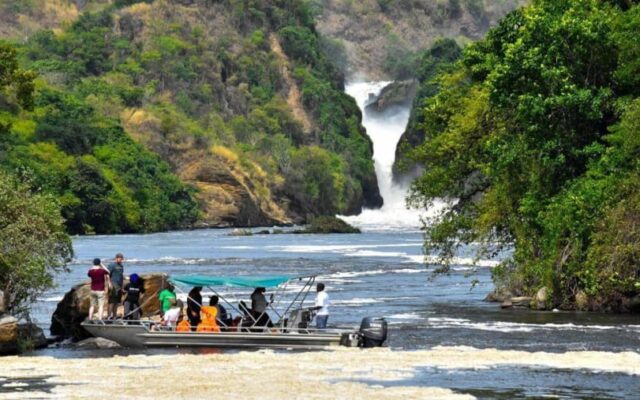
Murchison Falls National Park
Uganda’s premier leopard safari destination.
- Classic savannah leopard habitat
- Strong predator ecosystem
- Big Five safari opportunities
Queen Elizabeth National Park
Excellent leopard viewing potential in diverse wildlife habitat.
Kidepo Valley National Park
Remote wilderness leopard encounters in dramatic landscapes.
Lake Mburo National Park
Occasional rewarding leopard sightings for patient safari travelers.
Social Structure
Leopards are primarily solitary animals.
Typical exceptions include:
- Mothers with cubs
- Temporary breeding interactions
Behaviour
African leopard behaviour reflects stealth, intelligence, territoriality, patience, and extraordinary hunting specialization.
Common behaviours:
- Solitary movement
- Territory patrols
- Stealth hunting
- Tree climbing
- Resting in cover
- Nocturnal activity
Hunting Behaviour
Leopards are ambush predators.
Hunting traits include:
- Patience
- Stealth
- Short explosive pursuit
- Close-range ambush
Diet
Leopards are carnivores.
Prey may include:
- Antelope
- Small mammals
- Birds
- Young ungulates
- Various opportunistic prey
Tree-Climbing Behaviour
Leopards are famous for climbing trees, often using elevation for safety, resting, observation, and food security.
Territorial Behaviour
Leopards maintain territories shaped by prey availability, habitat quality, and breeding opportunities.
Reproduction
Females raise cubs independently with strong maternal care.
Ecosystem Role
Leopards are apex predators that help regulate prey populations and ecological balance.
Threats
- Habitat loss
- Human-wildlife conflict
- Prey decline
- Fragmentation
- Persecution pressure
Conservation
Leopards require habitat protection, prey security, reduced conflict, and strong ecosystem conservation.
Leopard Safaris
Leopard safaris are among Africa’s most exciting predator experiences.
Safari experiences include:
- Game drives
- Big Five safaris
- Predator safaris
- Photography safaris
Best Time to See Leopards
Leopards can be seen year-round, though dry seasons often improve visibility and safari logistics.
Interesting African Leopard Facts
- Big Five species
- Exceptional climber
- Highly elusive predator
- Extraordinary camouflage
- Solitary hunter
- One of Africa’s most sought-after safari sightings