Wildlife and wetland ecology at Lake Opeta
Most travelers who research Lake Opeta arrive through birding itineraries or northeastern Uganda loops — not because the site promises lion prides on open savannah, but because it is one of the country's most intact wetland systems and a genuine Karamoja wetland lake at the southern edge of a vast arid region. The Ramsar-listed Lake Opeta Wetland System covers roughly 68,912 hectares across Nakapiripirit, Sironko, Katakwi, and Kumi districts in eastern Uganda. Papyrus beds, Vossia swamp, Hyparrhenia grassland mosaics, and seasonal floodplains create habitat for shoebills, Fox's weaver, waterbirds, fish, reptiles, and — in dry months — mammals that move down from Pian Upe Wildlife Reserve.
That reserve relationship is central to understanding Lake Opeta wildlife. Pian Upe sits on the drier Karamoja plateau immediately north and east of the wetland. When seasonal rains fail and grasslands brown out, the Opeta floodplain can become the only substantial water refuge in the landscape — for wildlife from the reserve and for cattle herded by Karimojong and Pokot communities. You are watching a working ecosystem where conservation, pastoral livelihoods, fishing, and cultivation in the catchment all interact. Compared with the airport-adjacent convenience of Mabamba Swamp, Opeta demands more route commitment and rewards travelers building a fuller Karamoja Region or eastern Uganda story.
Seasonal flooding and the living floodplain
Seasonal flooding defines Lake Opeta year to year. The wetland occupies an extensive plain between Lake Bisina to the west — part of the same Kyoga basin complex — and drier country toward Mount Elgon and the Karamoja interior. Rainfall from Elgon catchments and local storms can spread water across channels that feel almost dry in other months. Guides read these shifts constantly: a track passable in December may require detours after March rains; papyrus edges advance or retreat; shoebill hunting zones move with water depth.
Travelers should treat flood dynamics as part of the experience, not a logistical annoyance. The same variability that complicates driving is what keeps fish populations viable, supports breeding Fox's weaver in swamp structure, and pulls reserve wildlife toward water in the dry season. A visit in contrasting months can feel like two different destinations — which is why pairing wildlife context with our best time to visit Lake Opeta guide matters for planning.
Birds as the headline wildlife story
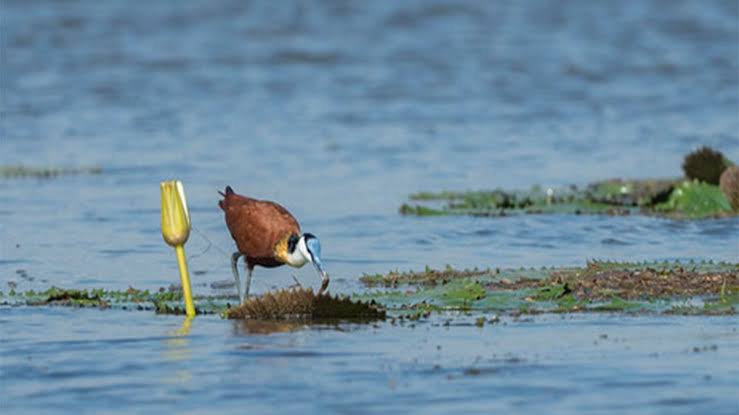
While mammals occur, birds anchor conservation importance at Lake Opeta. The site is an Important Bird Area and Ramsar wetland (site number 1636, listed September 2006) where Fox's weaver — Uganda's only endemic bird species — has been recorded breeding in swamp habitat. Globally threatened shoebill, near-threatened papyrus gonolek, papyrus yellow warbler, and well over 150 other species use the system. For many visitors, a shoebill standing in still shallows or a Fox's weaver colony in seasonal papyrus is the wildlife memory that outlasts any mammal glimpse.
Shoebill sightings remain wild birding, not guaranteed exhibits. Local guides who know recent territories and respectful viewing distances are essential — the same ethical framing that applies at Mabamba or Ajai Wildlife Reserve. Fox's weaver adds a listing reason serious birders cannot replicate easily elsewhere in East Africa. That combination — iconic shoebill plus national endemic — is why Opeta appears on specialist bird watching routes between Soroti, Lake Kyoga, and longer legs toward Kidepo Valley National Park.
Mammals, fish, and Pian Upe connections
Large mammal viewing at Lake Opeta is seasonal and landscape-scale, not park-gate predictable. During dry periods, animals from Pian Upe may use the wetland fringe — a pattern documented in Ramsar and reserve management literature. Species associated with the wider northeastern ecosystem can include zebra, hartebeest, eland, oribi, and other dry-country antelope in suitable grassland margins, plus predators and scavengers at the wetland edge. Treat any encounter as a bonus on a wetland-focused day, not the primary reason to drive east.
Fish matter ecologically and culturally. Opeta supports species that have declined in larger lakes such as Victoria and Kyoga, giving the site fisheries significance at subsistence and commercial levels. Fishermen, nets, and landing activity are normal sights — reminders that this is lived-in country. Reptiles, frogs, and invertebrates complete the food web shoebills and other piscivores depend on. Photographers often value the mix of open sky, papyrus texture, cattle on distant grassland, and sudden bird drama over a classic savannah portrait.
Pastoral landscapes and responsible viewing
Between swamp and savanna, Karimojong and Pokot pastoral use shapes the scene. Dry-season grazing brings cattle toward water — a livelihood practice intertwined with wildlife access to the same refuge. Responsible visitors keep distance from herds and homesteads, ask before photographing people, and avoid treating communities as backdrop to bird ticks. Hiring local guides supports interpretation of how wetland health relates to both cattle and conservation targets.
Keep voices low near sensitive birds, never discard litter in swamp channels, and follow guide advice on shoebill distance. Waterproof footwear helps on muddy margins after rain. Ethical viewing protects breeding Fox's weaver and shoebill territories while keeping community relationships positive for the next traveler.
How Lake Opeta fits a wider Uganda safari
Opeta rarely replaces headline parks on a first Uganda trip. It excels as a purposeful eastern or Karamoja extension: wetland depth on a route linking Soroti, Nyero Rock Paintings, Lake Kyoga, Pian Upe, and overland approaches to Kidepo Valley National Park through Karamoja Region. Mount Elgon and Mbale gateways sit logically on southern approaches; Mount Elgon National Park adds montane contrast after lowland swamp mornings.
For deeper planning, see our guides on Lake Opeta bird watching, best time to visit, and getting there — each covers a different angle of the same wetland visit.