Wildlife and rainforest ecology at Budongo Forest Reserve
Most travelers reach Budongo Forest Reserve for chimpanzee trekking, but the forest itself is a working ecosystem within the greater Murchison Conservation Area — mahogany canopy, fig trees, forest streams, and primate communities that persist beside logging history, research stations, and tourism trails. Wildlife here is intimate, forest-focused, and best understood through ecology rather than a savannah game checklist.
Budongo is not Kibale National Park — and that difference matters. It offers a quieter chimp experience with strong appeal for travelers combining rainforest immersion with classic wildlife in Murchison Falls National Park. The forest sits on the route between Kampala and northern Uganda, making it one of the most logistically sensible primate stops in the country.
Chimpanzees and primate communities
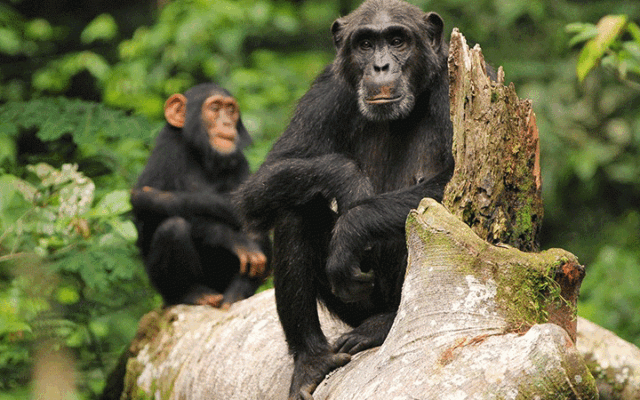
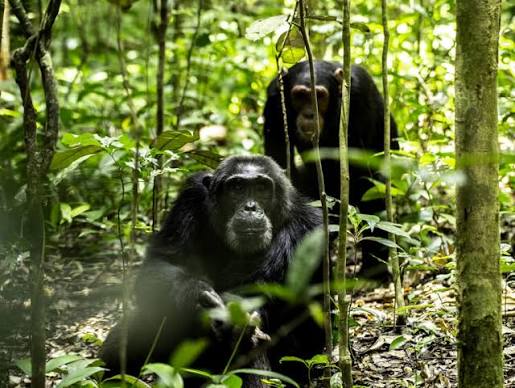
The ecological heart of Budongo Forest wildlife is its chimpanzee population — among Uganda's largest, with habituated groups tracked from sectors such as Kaniyo Pabidi and Busingiro depending on current UWA arrangements. Chimpanzees feed on figs, fruits, and forest resources, moving quickly through canopy and understory. Treks vary in duration and terrain; encounters may include feeding, grooming, vocal choruses, and juvenile play.
Compared with gorilla trekking in Bwindi Impenetrable National Park, chimpanzee viewing is often more dynamic — groups split, call, and travel. Good guides read nesting signs, listen for pant-hoots, and set respectful viewing distances. Permits and briefing protocols follow Uganda Wildlife Authority rules; confirm sector and availability when building your itinerary.
Other primates and forest mammals
Beyond chimps, Budongo holds black-and-white colobus, red-tailed monkey, blue monkey, and other forest primates visible on walks and drives near forest edges. Duikers, bushpigs, and smaller mammals occur in thicker cover. Large savannah species belong to nearby Murchison — Budongo's value is rainforest specialization, not elephant herds on forest trails.
Photographers often appreciate the contrast: morning chimps in mahogany gloom, afternoon hippo and buffalo on the Nile delta the same week. That habitat shift is why Budongo strengthens northern Uganda safaris so effectively.
Mahogany forest and biodiversity context
Budongo is celebrated for ancient mahogany and ironwood forest — trees that define light, sound, and understory structure. Decades of research, including long-running chimpanzee studies, have documented forest regeneration, logging impacts, and conservation management. Visitors who treat Budongo only as a permit tick miss the deeper story of how East Africa's remaining mid-elevation rainforest persists beside agriculture and oil-road development pressure.
Forest walks without chimp focus still reward travelers interested in ecology, butterflies, and quiet interpretation — especially when paired with Budongo Eco Lodge or similar bases near Kaniyo Pabidi.
Responsible wildlife viewing
Follow UWA briefing rules for chimp trekking: keep distance, avoid flash photography, never feed primates, and stay with your guide group. Forest trails can be muddy — wear sturdy footwear and protect cameras. Ethical viewing protects habituation progress and keeps Budongo viable for researchers and the next traveler.
Hiring official guides and using established sectors supports conservation employment in a forest that connects directly to Murchison's wider tourism economy.
Forest research, butterflies, and quiet interpretation
Budongo's long-running chimpanzee research programs have documented social structure, tool use, and forest regeneration across decades — context that enriches a trek beyond the initial encounter. Travelers interested in ecology may notice fig cycles that drive fruit availability, elephant paths that open understory light gaps, and butterfly clouds on sunny forest edges after rain. A nature walk without chimp focus still rewards slow interpretation, especially near Budongo Eco Lodge when guides have time to explain tree species and primate sign rather than rushing toward a permit slot.
That research heritage also explains why viewing rules are strict: habituation is a multi-year investment. Flash photography, loud groups, and off-trail pursuit undermine work that keeps Budongo viable alongside logging history and development pressure on the Masindi–Murchison corridor.
How Budongo fits a wider Uganda safari
Most itineraries treat Budongo as a Murchison extension or en-route primate stop: chimps one morning, savannah game drives and the falls the next. It pairs naturally with Ziwa Rhino Sanctuary on the Kampala–Murchison road, Karuma Wildlife Reserve, and Bugungu Wildlife Reserve for Albertine Rift context.
For deeper planning, see our guides on Budongo Forest Reserve bird watching, best time to visit, and getting there — each covers a different angle of the same forest visit.