Best time to visit Budongo Forest Reserve
Unlike single-season wildlife events, Budongo Forest Reserve is accessible throughout the year. The planning questions are practical: Will forest trails be muddy? Can you secure chimpanzee trekking permits on your Murchison dates? Are you visiting Kaniyo Pabidi en route to Murchison Falls National Park or as a dedicated rainforest stop from Kampala?
Dry season vs rainy season
Uganda's broadly drier windows — roughly June to September and December to February — often simplify forest trekking and the Kampala–Murchison transfer. Trails under mahogany canopy drain more slowly than savannah tracks but are generally easier when rain has been light for several days.
Rainy periods centered on March to May and October to November bring lush forest scenery, fewer competing visitors at times, and strong bird activity after showers. Trade-offs include muddy paths, longer chimp treks in slick conditions, and the need for rain jackets and gaiters. Budongo remains productive in wet months — build flexible timing around Murchison lodge nights.
Chimp trekking timing
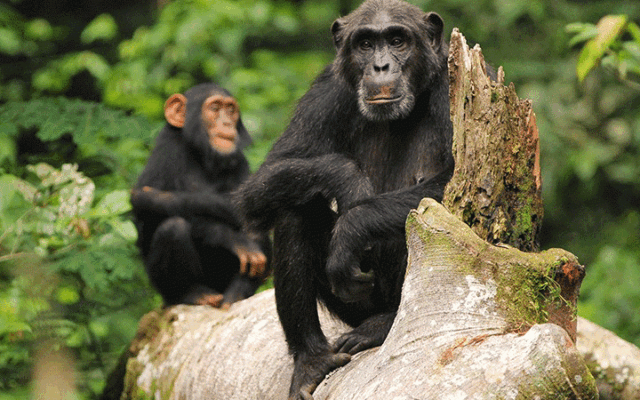
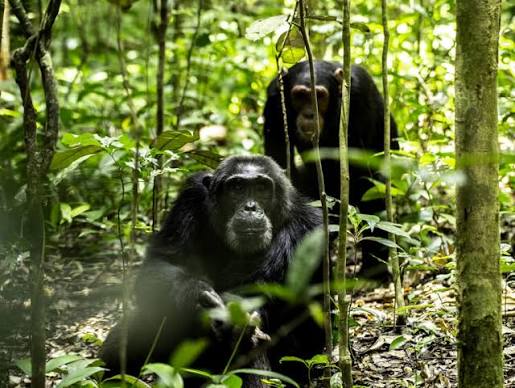
Morning chimp sessions are standard. Briefings and trailheads at Kaniyo Pabidi or other sectors start early; combining chimps with same-day Paraa arrival requires disciplined scheduling on the Masindi–Murchison road. Many travelers overnight near Budongo or at Murchison lodges, chimp trek first, then game drives — avoiding the mistake of a late arrival after a long forest search.
Permit demand rises in peak international travel and Ugandan holiday weeks. Book chimp permits when confirming Murchison accommodation, not as an afterthought.
Birding and forest walk seasons
Resident forest birds are present year-round. Listers targeting migrants often favor October to March within broader Uganda birding circuits. Nature walks without chimp focus can run in afternoon hours when trekking groups have cleared — useful in rainy weeks when one heavy morning shower might otherwise cancel plans.
Photography, humidity, and forest light
Under mahogany canopy, light levels drop quickly — photographers should expect higher ISO and slower shutter speeds than on Murchison savannah drives. Drier months often produce clearer forest paths and less lens fog when moving between humid understory and open briefing areas. Rainy weeks add atmosphere — greener backdrops, active hornbills after showers — but mud and low cloud reduce sharpness unless you carry rain covers and dry bags.
Chimp photography follows UWA distance rules; bird and colobus photography on forest margins is often more flexible but still demands ethical distance and no flash near nests. Plan memory cards and batteries for a full morning; cold forest mornings and warm briefing sun both affect gear condensation.
Pairing Budongo with Murchison Falls
The strongest itineraries treat Budongo as a rainforest prelude to savannah: chimps and hornbills, then lion, elephant, and Nile boat cruises. Dry-season Murchison game viewing and drier Budongo trails align well June–September and December–February. Wet-season travelers still succeed with extra nights and flexible drive days between Masindi, Budongo, and Paraa.
En-route stops such as Ziwa Rhino Sanctuary add rhino tracking — schedule rhino walks on a separate half-day rather than stacking rhino, chimps, and Paraa transfer into one unrealistic calendar block.
Month-by-month snapshot
January–February: Often drier, popular travel window, book chimps and Murchison lodges early.
March–May: Rainier forest trails; rewarding birding after showers; allow flexible trek duration.
June–August: Peak dry-season safaris; strong combination with Murchison game drives.
September: Transition month — still workable; confirm trail conditions locally.
October–November: Second rainy peak possible; migrant bird interest rising.
December: Holiday demand on northern routes; morning starts essential.
Pair this page with wildlife at Budongo and getting to Budongo Forest for species and route detail.