The waterbuck is one of the most dependable large antelopes on a Uganda savannah safari — a heavy-bodied, shaggy-coated grazer that lives within sight of rivers, lakes, and wetlands. Unlike fleet-footed plains antelopes that roam deep into dry bush, waterbuck anchor themselves to permanent water, making them unusually easy to find on boat cruises and riverside game drives in Murchison Falls, Queen Elizabeth, and Lake Mburo national parks.
Scientifically classified as Kobus ellipsiprymnus, the waterbuck belongs to the reduncine tribe of water-associated antelopes alongside kob, puku, and reedbuck. In Uganda, the Defassa waterbuck subspecies (K. e. defassa) is the form visitors encounter west of the Great Rift Valley — distinguished by a solid white patch on the rump rather than the white ring that marks the common waterbuck of eastern Africa.
What Is a Waterbuck?
Waterbuck are large, robust antelopes built for a semi-aquatic savannah lifestyle. Adult males carry long, forward-curving horns with heavy ridges; females are hornless but share the same shaggy grey-brown coat, white facial markings, and distinctive rump pattern. Their name reflects ecology, not a requirement to stand in water — though fleeing into rivers and lakes when pressed by predators is a well-known defensive tactic.
- Kingdom: Animalia
- Phylum: Chordata
- Class: Mammalia
- Order: Artiodactyla
- Family: Bovidae
- Genus: Kobus
- Species: Kobus ellipsiprymnus
- Uganda subspecies: Kobus ellipsiprymnus defassa
Physical Characteristics
Size and Build
Waterbuck are among the larger African antelopes. Males stand roughly 120 to 136 centimetres at the shoulder and may weigh 200 to 260 kilograms or more; females are smaller, typically 100 to 120 centimetres tall and 160 to 200 kilograms. The body is deep-chested with a thick neck and long legs — a profile that reads as powerful rather than graceful when compared to Uganda kob or impala.
Coat and Markings
The shaggy coat ranges from grey-brown to reddish brown, often darker on the shoulders and along the neck. White patches appear around the muzzle, throat, eyebrows, and inner legs. Defassa waterbuck show a conspicuous white rump patch; the common waterbuck east of the Rift displays a white ring encircling the tail — the key field mark separating the two subspecies.
Horns
Only males grow horns. These curve forward and upward in a wide arc, with transverse ridges along their length. Horn size signals maturity and dominance; territorial bulls on lakeshores and riverbanks are often the most photographed individuals on Uganda boat safaris.
Scent Glands
Waterbuck possess oily skin glands that produce a musky secretion once thought to repel crocodiles — a belief popular in safari folklore though not scientifically confirmed. The scent is noticeable at close range and contributes to the animal's rugged, untamed character in the field.
Water Dependence
Few antelopes are as tied to water as the waterbuck. They rarely range more than one to two kilometres from permanent rivers, lakes, or swamps and cannot tolerate prolonged dehydration in hot weather. This dependence explains their distribution along the Victoria Nile in Murchison, the Kazinga Channel system in Queen Elizabeth, and the lake complex of Lake Mburo.
When threatened, waterbuck often flee into water rather than across open plains — a behaviour that distinguishes them from kob and topi on mixed-species drives.
Habitat and Ecosystem Role
Waterbuck favour grassland and lightly wooded savannah adjacent to water — riverine corridors, floodplain edges, valley bottoms, and lakeshore meadows. They graze coarse grasses that shorter-bodied antelopes avoid, helping maintain vegetation structure along wetland margins.
As a substantial prey species, waterbuck support lion, leopard, and spotted hyena populations in Uganda's savannah parks. Calves and sick adults are most vulnerable; healthy adults rely on size, vigilance, and their watery escape routes.
Social Structure
Waterbuck society combines territorial males, loose female groups, and bachelor herds of immature bulls. Females and young often form small herds of five to ten animals, though individuals are also seen alone or in pairs. Mature males defend lakeshore or riverbank territories, marking boundaries and chasing rivals.
Young males leave female groups as horns develop, joining bachelor herds until mature enough to claim territory. The system produces visible drama on game drives — standing bulls, grazing herds, and sparring adolescents along the same shoreline.
Diet
Waterbuck are predominantly grazers. Grasses make up roughly 70 to 95 percent of the diet, supplemented by reeds, rushes, and browse during dry months when green grass is scarce. Their preference for coarse, protein-rich grasses near water reduces competition with selective short-grass grazers like Uganda kob on the same plains.
Behaviour
Waterbuck are most active in the early morning and late afternoon, resting through midday heat — often in shade near water. They are alert, with a stiff-legged alarm posture and snorting calls that carry across riverbanks. Boat safaris frequently yield close, relaxed sightings because waterbuck tolerate observers on water routes they treat as escape habitat.
Reproduction
After a gestation of roughly eight to nine months, females give birth to a single calf. Calves are hidden in riverside vegetation for their first vulnerable weeks while mothers graze nearby. Birth peaks often align with rainy-season grass growth, though waterbuck breed across much of the year in equatorial Uganda.
Predators
Lions are the primary predator of adult waterbuck in Murchison and Queen Elizabeth, with leopard and spotted hyena taking calves and weaker animals. The waterbuck's size and water refuge make adults harder prey than smaller antelopes — but lions along the Nile and Kazinga Channel have learned to ambush shoreline grazers at dawn.
Conservation Status
The IUCN lists the waterbuck species as Least Concern overall, but the Defassa waterbuck subspecies found in Uganda is classified Near Threatened with a decreasing population trend in parts of East Africa. Inside Uganda's national parks, populations remain healthy — a testament to protected wetland corridors and ranger patrols along major water systems.
Where to See Waterbuck in Uganda
Murchison Falls National Park
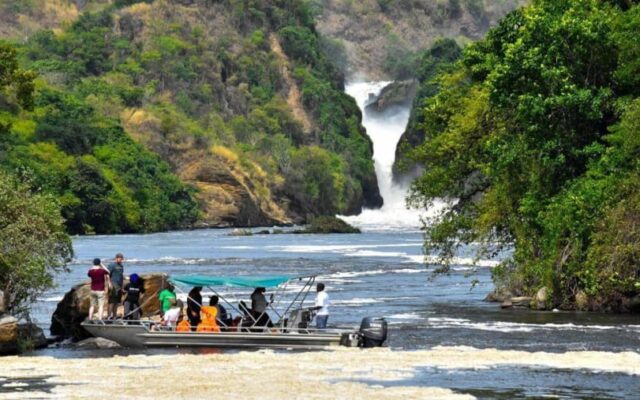
Nile boat cruises and north-bank game circuits regularly produce waterbuck along the Victoria Nile and delta grasslands — often alongside hippo, crocodile, and elephant.
Queen Elizabeth National Park
Kazinga Channel boat safaris and Mweya peninsula drives are among the most reliable waterbuck viewing experiences in East Africa, with herds on channel banks and hyena, lion, and buffalo nearby.
Lake Mburo National Park
Compact lakeshore tracks deliver frequent waterbuck sightings — ideal for short savannah add-ons en route to western Uganda.
Why Waterbuck Matter on Safari
Ecologically, waterbuck indicate healthy wetland savannah. For travellers, they are photogenic, approachable from boats, and a bridge between aquatic and terrestrial wildlife on combined drive-and-cruise itineraries. They also help newcomers distinguish Uganda's antelope diversity — larger and shaggier than kob, more tied to water than impala, and more sedentary than hartebeest.
Seeing Waterbuck on Safari
Pair this overview with our where to see waterbuck, behaviour, and safari experiences guides to plan park sectors, seasons, and routes across Uganda's savannah parks.
Quick Facts
| Scientific name | Kobus ellipsiprymnus |
|---|---|
| Uganda form | Defassa waterbuck (K. e. defassa) |
| Key parks | Murchison Falls, Queen Elizabeth, Lake Mburo |
| IUCN | Least Concern (species); Defassa Near Threatened |