The southern white rhino is the largest rhinoceros species on Earth and one of Africa's most powerful grazers. Massive in build, surprisingly social for a rhino, and equipped with horns that have made the species both iconic and tragically targeted by poachers, the southern white rhino carries a conservation story that resonates across the continent. In Uganda, that story is especially personal: rhinos were wiped out in the wild during the turmoil of the 1970s and 1980s, yet today they are being bred back into existence at Ziwa Rhino Sanctuary — the only place in the country where travelers can track white rhinos on foot before continuing to Murchison Falls National Park for a complete Big Five safari circuit.
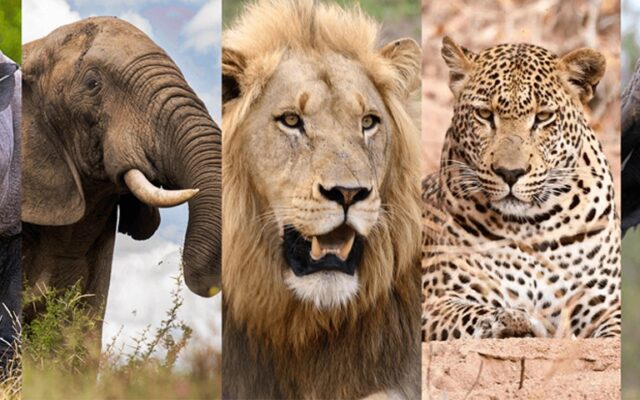
Encountering a white rhino on a guided tracking walk is unlike watching wildlife from a safari vehicle. You move quietly through woodland and grassland with armed rangers, reading tracks, scent, and broken vegetation until a two-tonne animal materializes among the trees. The experience is intimate, grounded, and deeply connected to Uganda's reintroduction ambitions. For many visitors, Ziwa is the missing piece that transforms a northern Uganda itinerary from "almost Big Five" into the full set — lion, leopard, elephant, buffalo, and rhino.
What Is a Southern White Rhino?
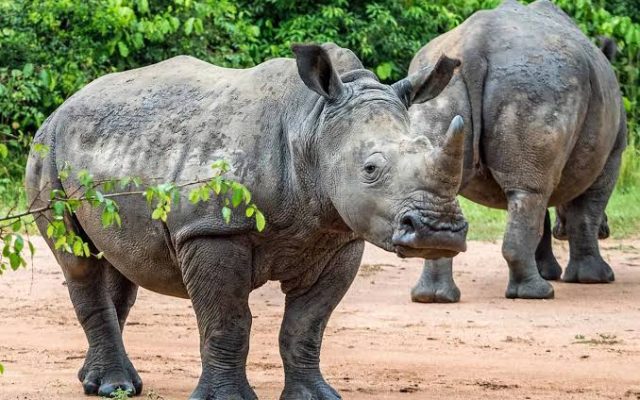
The southern white rhino (Ceratotherium simum simum) is a subspecies of the white rhinoceros and the most numerous rhino taxon remaining in Africa. Despite the name, white rhinos are not white — the label is thought to derive from the Afrikaans word wijd, meaning "wide," referring to the animal's broad, square upper lip adapted for grazing.
- Kingdom: Animalia
- Phylum: Chordata
- Class: Mammalia
- Order: Perissodactyla
- Family: Rhinocerotidae
- Genus: Ceratotherium
- Species: Ceratotherium simum
- Subspecies: Ceratotherium simum simum
Physical Characteristics
Southern white rhinos are built for life on open grasslands. Their enormous heads hang low, mouths wide, designed to crop short grasses with industrial efficiency.
Size and Weight
Adult males typically weigh between 2,000 and 2,500 kilograms, with exceptional bulls exceeding 3,000 kilograms. Females are slightly smaller, generally ranging from 1,600 to 2,000 kilograms. At the shoulder, white rhinos stand roughly 1.5 to 1.8 metres tall — making them the second-largest land mammal after the elephant.
Horns
Both males and females carry two horns made entirely of keratin — the same protein found in human hair and fingernails. The front horn is usually longer and more prominent. Horns grow throughout life and are used in territorial displays, defence, and digging.
Senses
White rhinos have relatively poor eyesight but compensate with exceptional hearing and one of the strongest senses of smell among mammals. Rangers at Ziwa often explain that rhinos "see with their noses," which is why wind direction and quiet movement matter during tracking walks.
Where Southern White Rhinos Live
Historically, southern white rhinos ranged across the savannahs and woodlands of southern and eastern Africa. Populations collapsed to near extinction in the early twentieth century before recovering through intensive protection in South Africa, Namibia, Kenya, and Zimbabwe.
Uganda's Rhino Story
Uganda once supported wild rhinos in protected landscapes including what is now Murchison Falls National Park. Decades of poaching and civil instability drove the species to local extinction by the early 1980s. The reintroduction program at Ziwa Rhino Sanctuary, launched in 2005, aims to restore rhinos to Uganda's wild ecosystems once breeding populations are large enough and security conditions allow.
Africa Beyond Uganda
Most southern white rhinos today live in South Africa, with smaller populations in Namibia, Kenya, Zimbabwe, and Botswana. Uganda's sanctuary population remains modest but growing — a deliberate, managed step toward future wild release.
Habitat and Ecosystem
White rhinos thrive in open grasslands, savannah woodlands, and floodplain edges where short grasses are abundant and water is accessible. Their grazing shapes vegetation structure, creating mosaic habitats that benefit antelope, birds, and smaller herbivores. Learn more in our white rhino habitat guide.
Social Structure
Unlike the more solitary black rhino, southern white rhinos are comparatively social. Females and subadults often form loose groups, while territorial bulls maintain overlapping ranges that may include several females.
Territorial Bulls
Adult males defend territories marked with dung middens, urine sprays, and horn scrapes on the ground. Dominance displays include snorting, mock charges, and aggressive posturing — behaviours visitors sometimes witness during tracking walks at Ziwa.
Mothers and Calves
Females give birth to a single calf after a gestation of approximately 16 months. Calves stay close to their mothers for several years, and seeing a young rhino alongside an adult is among the most rewarding sightings on a sanctuary walk.
Diet and Grazing Ecology
White rhinos are dedicated grazers. Their wide lips allow them to mow short grasses close to the ground, consuming 50 kilograms or more of vegetation daily. At Ziwa, rhinos move between open glades and woodland edges, following seasonal grass quality and water availability. See our white rhino diet page for feeding ecology detail.
Behaviour
White rhino behaviour blends methodical grazing, mud wallowing, scent communication, and sudden bursts of speed when alarmed. Despite their bulk, rhinos can run at speeds up to 50 kilometres per hour over short distances. Explore white rhino behaviour for tracking etiquette and communication systems.
Conservation Status
The southern white rhino is classified as Near Threatened by the IUCN — a remarkable recovery from fewer than 100 individuals in the wild a century ago, yet poaching for horn remains a serious threat across Africa. Uganda's breeding program represents a national commitment to restoring a species the country lost. Read our full white rhino conservation guide for the reintroduction timeline and anti-poaching framework.
Rhino Tracking at Ziwa Rhino Sanctuary
Guided on-foot rhino tracking is Uganda's signature white rhino experience. Trained rangers lead small groups through the sanctuary, locating rhinos on foot and interpreting behaviour from a safe, respectful distance. Walks typically last one to two hours depending on rhino movements and terrain. Sessions run in the morning and afternoon, making Ziwa an ideal stopover on the road between Kampala and Murchison Falls.
What Makes Rhino Tracking Unique?
- On-foot wildlife encounter — not a vehicle safari
- Close observation with expert ranger interpretation
- Direct contribution to sanctuary funding and ranger salaries
- Essential Big Five component for northern Uganda itineraries
- Combines naturally with Murchison game drives and Nile boat cruises
Big Five Safari Circuits
Uganda's Big Five story is incomplete without rhinos. While Murchison Falls National Park delivers outstanding lion, leopard, elephant, and buffalo viewing, rhinos exist only at Ziwa — for now. Most operators route travelers through the sanctuary en route to or from Murchison, creating a seamless northern circuit. Browse white rhino safari experiences and Uganda safari packages for itinerary ideas.
Best Time to See White Rhinos
Rhino tracking operates year-round at Ziwa. Cooler morning and late-afternoon walks often coincide with active grazing and wallowing behaviour. See our best time to see white rhinos guide for seasonal planning.
Quick Facts
- Largest rhinoceros species in the world
- Second-largest land mammal after the elephant
- Near Threatened — recovered from near extinction in the twentieth century
- Extinct in Uganda's wild since the early 1980s
- Reintroduced at Ziwa Rhino Sanctuary since 2005
- Tracked on foot with armed rangers
- Completes Uganda's Big Five with Murchison Falls safaris
- Gestation approximately 16 months
- Can run up to 50 km/h despite massive size