Where to see sable antelope — expert Uganda safari guide from local planners who know permits, parks, and realistic routing.
Explore this species across our habitat guide, behaviour page, and safari planning resources — centred on Lake Mburo National Park with Queen Elizabeth margin combinations.
Seeing sable antelope in Uganda is straightforward once you understand one essential fact: Lake Mburo National Park holds the country's reintroduced Hippotragus niger population. Unlike kob or buffalo, which appear across multiple savannah parks, sable require a deliberate Mburo stop — or a routed western circuit that includes one. The reward is rare, photogenic, and often achievable within hours of leaving Kampala.
Best Place to See Sable Antelope in Uganda
1. Lake Mburo National Park
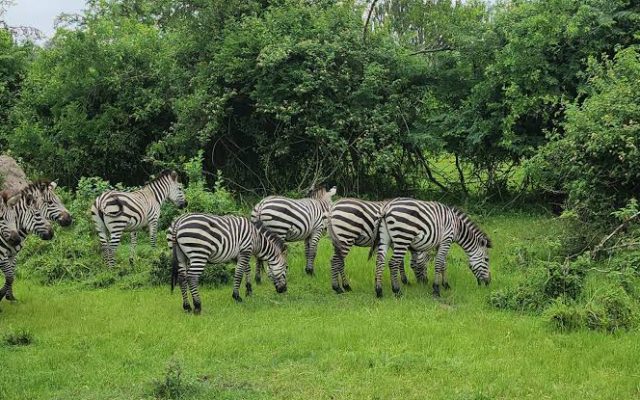
Lake Mburo National Park is the definitive sable destination in Uganda. Roughly 240 kilometres southwest of Kampala — three to four hours by road — this compact acacia savannah park delivers reintroduced sable herds on standard game drives, often alongside impala, zebra, and eland within hours of entering through the Nshara or Sanga gates.
Top Sectors and Tracks
- Rwonyo peninsula: Lake-shore herds near the park headquarters and boat launch
- Kazuma track: Open grassland with scattered acacia — excellent dawn drives for sable on termite mounds
- Game-viewing hill circuits: Mixed woodland and plain with panoramic savannah views
- Post-fire regrowth sectors: Fresh grass attracts selective grazing sable within days of burns
Why Lake Mburo Stands Out
- Uganda's only established sable population — reintroduced Hippotragus niger
- Closest savannah park to Kampala and Entebbe — ideal for short breaks
- Walking safaris and horseback options where Uganda Wildlife Authority permits
- Boat trips on Lake Mburo alongside game drives
- Collector antelope alongside impala, zebra, and eland
- Natural combination stop en route to Bwindi gorilla trekking
Typical Sightings
Expect herds of ten to thirty animals, bachelor groups on woodland margins, solitary territorial bulls during the rut, and sentinel animals on termite mounds. Horn clashes between rival bulls and lake-shore drinking sessions are common photographic opportunities during dry-season drives.
2. Queen Elizabeth National Park — Woodland Margins
Queen Elizabeth National Park does not sustain a resident sable population. Authoritative wildlife surveys place Uganda's sable at Lake Mburo following reintroduction, not on the Kasenyi Plains or Mweya circuits. However, the park belongs on sable-focused itineraries for two practical reasons.
First, the Ishasha sector in Queen Elizabeth's far south — famous for tree-climbing lions — offers woodland savannah margins structurally similar to sable habitat. Fig-dotted plains sliding toward the DRC border mirror the acacia ecotones sable favour. Travellers routing Bwindi to Lake Mburo routinely pass through Ishasha, combining lion viewing with an onward Mburo sable afternoon.
Second, Kyambura gorge approaches and the park's southern boundary corridors connect western Uganda's primate and savannah ecosystems. A classic week-long circuit — Bwindi gorillas, Ishasha lions, Lake Mburo sable, then northern Queen Elizabeth for kob and Kazinga boat cruises — delivers Uganda's full savannah antelope story in one trip.
Planning Queen Elizabeth on a Sable Itinerary
- Schedule Ishasha as a transit day between Bwindi and Mburo, not as a sable destination
- Book southern-sector lodges (Ishasha Wilderness Camp, Enjojo Lodge) for fig-tree lion drives
- Continue to Lake Mburo the same or following day for guaranteed sable
- Add northern Queen Elizabeth afterward for kob, elephant, and channel boat safaris
Combining Lake Mburo and Queen Elizabeth
Popular routed combinations:
- Kampala → Lake Mburo (1 night) → Bwindi (gorillas): Sable opener before forest trekking
- Bwindi → Ishasha (lions) → Lake Mburo (sable): South-western savannah loop
- Mburo → Queen Elizabeth north (kob, boat): Two-park antelope contrast in one week
- Fly-in to Mweya or Kihihi + road to Mburo: Time-saving western circuit
Other Uganda Sites — Context
Roan antelope — the other Hippotragus species — survive at Kidepo Valley National Park and Pian Upe Wildlife Reserve in northeastern Uganda, not at Lake Mburo. Sable and roan do not overlap in Uganda; travellers seeking both Hippotragus species must combine Mburo with a northeastern extension. No other Uganda park currently holds sable.
Getting to Lake Mburo
Road transfer from Kampala via Masaka and Mbarara takes three to four hours on tarmac and murram approaches. The park suits self-drive visitors with 4x4 vehicles and organised safaris alike. AeroLink serves Mbarara airstrip for fly-in combinations with Bwindi or Queen Elizabeth.
On-the-Ground Viewing Tips
- Start at dawn when sable feed actively on open plains and post-fire regrowth
- Work lake shores in the afternoon for drinking herds
- Ask guides about recent rut activity for territorial bull displays
- Scan termite mounds for sentinel animals — classic sable posture
- Combine vehicle drives with a boat trip for shoreline antelope views
- Consider a walking safari for ground-level perspective where permitted
What Sable Share the Landscape With
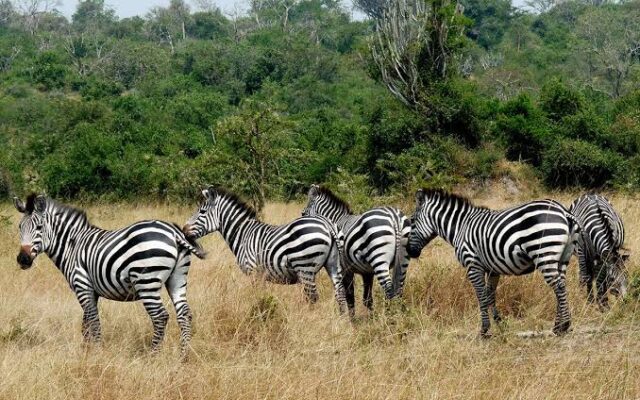
Lake Mburo sable appear alongside plains zebra, African buffalo, eland, impala, topi, bushbuck, warthog, and leopard. The park lacks elephant and historically had no resident lion — though occasional lion reports have returned predator drama. This community makes Mburo a distinct savannah experience from Queen Elizabeth's heavier Big Four emphasis.
Ethical Viewing
Stay on designated tracks, keep distance during the rut and calving season, and never chase fleeing herds with a vehicle. Uganda Wildlife Authority rangers enforce park rules — compliance protects the habitat and social structure sable depend on.
Plan timing with best time to see sable antelope, deepen ecology on facts, and browse sable safari experiences for routed packages.