Sable antelope habitat occupies the productive transition between open grassland and woodland — the acacia savannah margins, lake shores, and lightly bushed plains where medium to tall grasses meet scattered trees. Understanding where sable live explains their reintroduction to Lake Mburo National Park in Uganda and why the woodland fringes of Queen Elizabeth's Ishasha sector resemble — but do not duplicate — their preferred ecology. Connect this page to sable antelope facts, behaviour, and where to see sable antelope.
Woodland–Savannah Ecotone Specialists
Sable are not deep-forest antelopes, nor are they exclusive short-grass plains specialists like some gazelle. They thrive where grassland meets scattered trees — acacia thickets, fig margins, and seasonal wetlands within walking distance of drinking water and tall-grass forage. This middle habitat explains their success across East and southern Africa and their particular suitability for Lake Mburo's compact but varied landscape.
Research across the continent shows sable selecting medium to tall grasses rather than simply following the most abundant vegetation. They favour protein-rich green growth after fires and rains and avoid heavily overgrazed short-grass plains where competition with zebra and wildebeest intensifies — a selectivity that keeps them in ecotones where grass height and quality overlap their preferences.
Water Dependence
Sable drink regularly when surface water is available, typically visiting lakes, rivers, or permanent springs daily. They can derive moisture from lush vegetation during wet periods, but Lake Mburo's five lakes and associated wetlands are a clear anchor for herd distribution. Dry-season concentrations near waterholes and lake margins produce reliable game-drive viewing on tracks such as Rwonyo and Kazuma.
Unlike sitatunga or waterbuck, sable do not require swamp immersion — they need proximity to water and suitable grass height, not wetland habitat itself.
Vegetation Types
Typical sable habitat includes:
- Acacia–grassland mosaics with scattered umbrella trees
- Woodland savannah with medium to tall grass understory
- Lake shores and seasonal floodplain margins
- Post-fire regenerating grassland with fresh shoots
- Ecotone edges between open plains and denser bush
- Termite-mound grasslands with elevated sentinel positions
Lake Mburo's vegetation mosaic — acacia woodland, open valleys, rocky kopjes, and five permanent lakes — matches this profile closely. Uganda Wildlife Authority habitat assessments prior to sable reintroduction confirmed sufficient grassland area and water access within park boundaries.
Grass Height Preferences
Sable ecology is tightly linked to grass height. They avoid very short, heavily grazed lawns and prefer stands roughly 30 centimetres to over one metre tall — grass that offers cover for calves while providing nutritious leaf material. Fire management and controlled burning in Lake Mburo help maintain this mosaic, regenerating palatable grasses that sable and other grazers exploit in succession.
Altitude and Climate
Lake Mburo sits at roughly 1,200 to 1,800 metres elevation in western Uganda's rift valley foothills. The climate is bimodal — two rainy seasons and two dry windows — producing grass flushes that synchronise sable movements with seasonal forage quality. Unlike Kidepo's semi-arid extremes, Mburo's moderate rainfall supports year-round grass growth with pronounced dry-season concentrations near water.
Historical Habitat Loss in Uganda
Roan antelope — the Hippotragus species native to Lake Mburo historically — was eliminated from the park by poaching and habitat pressure in the late twentieth century. Woodland encroachment by invasive acacia species and heavy cattle grazing on park margins further degraded grassland quality. Sable reintroduction formed part of a broader Uganda Wildlife Authority strategy to restore large grazers and rebalance browser–grazer dynamics, paralleling the successful 2015 Rothschild's giraffe translocation.
Competition and Habitat Sharing at Lake Mburo
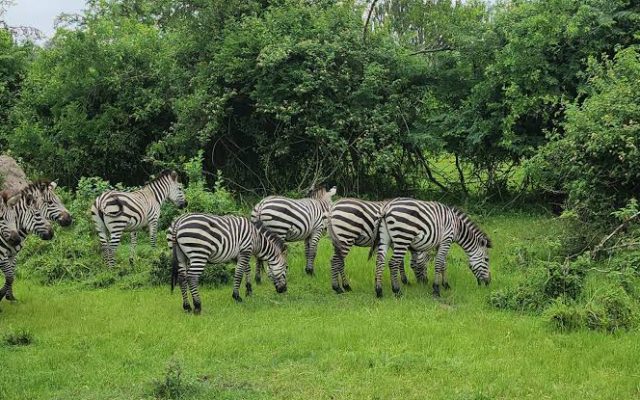
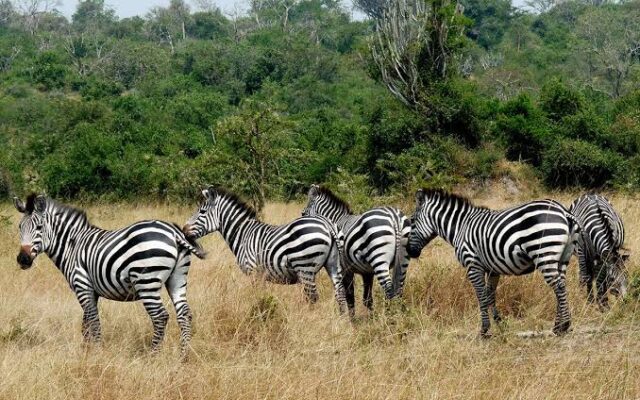
Lake Mburo holds zebra, buffalo, eland, impala, topi, and several smaller antelopes alongside reintroduced sable. Sable coexist by exploiting taller grass niches — less overlap with zebra on short lawns and less overlap with bushbuck in thickets. Where grasses are medium height and fresh, sable, eland, and topi may feed in the same sector without direct competition.
Edge Habitat and Leopard Ambush
Sable favour ecotones but pay a predation price: woodland margins are leopard country. The same lake shores and acacia fringes that deliver water and forage also conceal ambush predators. Understanding this trade-off explains why sable sentinels on termite mounds are such a consistent Lake Mburo sight — vigilance is constant.
Habitat Management
Uganda Wildlife Authority manages Lake Mburo through fire regimes, invasive acacia control, anti-poaching patrols, and tourism regulation. Sable reintroduction success depends on maintaining grassland area against bush encroachment — the same challenge that motivated giraffe introduction to increase browsing pressure on woody regrowth. Responsible tourism revenue supports these management activities.
Comparison With Queen Elizabeth Habitat
Queen Elizabeth's Ishasha sector offers structurally similar woodland savannah — fig-dotted plains sliding toward the DRC border — but lacks resident sable. Travellers routing Bwindi to Lake Mburo pass through Ishasha for tree-climbing lions, then continue to Mburo for guaranteed sable. The habitat resemblance helps explain why Mburo was selected as Uganda's sable reintroduction site.
What Habitat Knowledge Means for Safari Viewing
After rains, scan open plains with tall grass regrowth for grazing herds. In dry months, work lake shores and woodland margins where water and forage concentrate activity. Ask guides about recent fire scars — fresh burns often attract sable within days. Pair habitat knowledge with seasonal timing and Lake Mburo safari routes for the strongest sightings.
Quick Habitat Summary
- Primary habitat: Woodland–savannah ecotone with tall grasses
- Water: Daily drinking typical; lake shores key in dry season
- Uganda site: Lake Mburo National Park (reintroduced)
- Grass preference: Medium to tall, post-fire regrowth
- Elevation: ~1,200–1,800 m western Uganda
- Management: Fire, acacia control, anti-poaching