
Sable Antelope FAQs and Answers — quick answers on biology, horn displays, Lake Mburo reintroduction, Queen Elizabeth circuit combinations, and safari planning. Explore where to see sable antelope, behaviour, best time to visit, and safari experiences.
- What is a sable antelope?
The sable antelope is a large horse-antelope of genus Hippotragus. Adult bulls wear a glossy black coat with sweeping scimitar horns; females are chestnut brown. In Uganda, reintroduced Hippotragus niger occur only at Lake Mburo National Park.
- What is the scientific name of the sable antelope?
Hippotragus niger — the sable antelope. Four subspecies exist across Africa; Uganda's reintroduced animals align with East African H. n. kirkii woodland savannah stock. See our sable antelope facts page for taxonomy detail.
- Where can I see sable antelope in Uganda?
Only at Lake Mburo National Park — Uganda Wildlife Authority's reintroduction established the country's sole population. No other park holds sable. Compare sectors on our where to see sable antelope page.
- Can I see sable antelope in Kidepo or Queen Elizabeth?
No — sable are not in Kidepo or Queen Elizabeth. Kidepo holds roan antelope (the other Hippotragus species). For sable, route through Lake Mburo only.
- Why were sable antelope reintroduced to Lake Mburo?
Uganda Wildlife Authority restored Hippotragus niger to Lake Mburo following ecological assessment of acacia woodland savannah — the same landscape that supported the successful 2015 Rothschild giraffe translocation. Sable fill a woodland-margin grazing niche after roan antelope became locally extinct at Mburo.
- How big is a sable antelope?
Bulls stand 1.2–1.35 m at the shoulder and weigh 200–235 kg. Females are slightly smaller at roughly 180–210 kg. Both sexes carry ringed horns — bull horns can exceed 1 m along the curve.
- Are sable antelope dangerous?
Yes — potentially. Sable are among Africa's most aggressive large antelopes. Bulls kneel and slash with horns; documented kills of lions and leopards exist. On game drives keep respectful distance; on Lake Mburo walking safaris follow armed ranger instructions strictly.
- How do sable antelope differ from roan antelope?
Both are Hippotragus grazers. Sable bulls are glossy black; roan are grey-brown with a bold facial mask. Sable prefer woodland margins; roan prefer tall open grassland. In Uganda: sable at Lake Mburo, roan at Kidepo and Pian Upe.
- What do sable antelope eat?
Sable are selective grazers of medium-height grass on woodland margins — not browsers like kudu. They favour fresh growth after rain or fire. More on our sable antelope diet page.
- How fast can a sable antelope run?
Sable gallop at roughly 57 km/h — faster than eland. They rely on explosive acceleration and retreat to woodland cover rather than long open-plain chases.
- Are sable antelope endangered?
Globally Least Concern, but populations are decreasing in much of southern Africa. Uganda's Lake Mburo reintroduction expands range. Read our conservation page for the translocation programme.
- When is the best time to see sable antelope in Uganda?
Year-round at Lake Mburo. Dry seasons (June–September and December–February) offer shorter grass and better visibility. Dawn game drives are essential. See best time to see sable antelope.
- Why is Lake Mburo the only park for sable?
Uganda Wildlife Authority selected Lake Mburo for habitat suitability and translocation experience (giraffe 2015, impala exports). No other Ugandan reserve has received a sable reintroduction. The species does not occur naturally elsewhere in the country.
- Can I see sable on a walking safari?
Yes — Lake Mburo permits guided walking safaris with armed Uganda Wildlife Authority rangers. Sable on ridge lines are a highlight, but bulls are aggressive — never approach without ranger approval.
- Can I combine sable viewing with gorilla trekking?
Yes — Lake Mburo sits between Kampala and Bwindi. A 1–2 night Mburo module for sable, zebra, and walking safaris pairs naturally before or after gorilla permits.
- Do female sable antelope have horns?
Yes — both sexes carry ringed horns. Bull horns are thicker, longer, and more dramatically curved; cow horns are shorter but similarly shaped.
- What predators hunt sable antelope?
Leopard and spotted hyena take calves at Lake Mburo. Healthy adult sable resist predation through aggression and speed — lions are scarce at Mburo. Bulls have killed leopards when cornered.
- How many sable antelope are in Lake Mburo?
Population size is managed by Uganda Wildlife Authority and grows as the reintroduced herd establishes and breeds. Exact counts vary by survey — early establishment phases focus on calving success and ranging rather than large herd sizes.
- Which Uganda safaris include sable antelope viewing?
Any itinerary visiting Lake Mburo. Browse sable antelope safaris and Uganda safari packages for routed options.
- How can tourists help sable antelope conservation?
Visit Lake Mburo on licensed safaris, pay official park fees, report snares to rangers, respect viewing distances, and include Mburo on western circuits to diversify tourism revenue beyond gorilla parks. Tourism funds UWA monitoring of the reintroduced herd.
Safari packages to see Sable Antelope
Bookable itineraries below include parks and activities where you are most likely to encounter Sable Antelope in the wild.
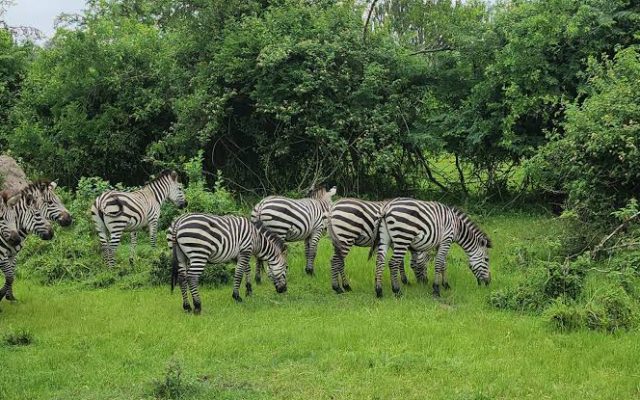
1 Day Lake Mburo Safari
You visit
Uganda Equator, Kayabwe, Lake Mburo, Kampala or Entebbe
This compact 1-day Lake Mburo safari is the closest national-park wildlife experience to Kampala and Entebbe. Lake Mburo is Uganda’s smallest savannah park but one of the most rewarding for a short tr…
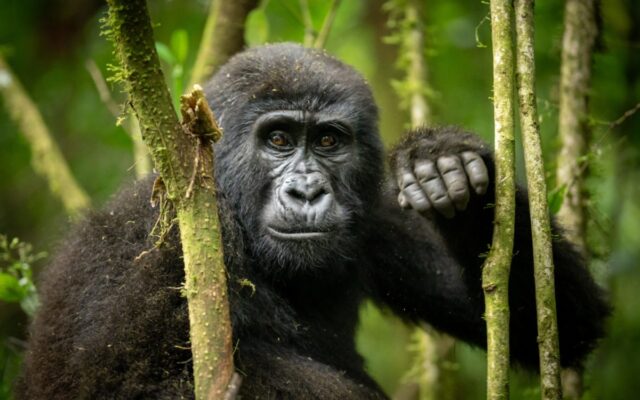
12 Days Uganda Wildlife and Gorillas Safari
You visit
Murchison Falls, Kibale Forest, Queen Elizabeth NP, Bwindi Forest, Lake Mburo, Entebbe
A comprehensive 12-day wildlife and gorillas safari combining Uganda’s northern savannah giants with southwestern primate forests. Murchison Falls delivers elephant, giraffe and the Nile launch; Queen…
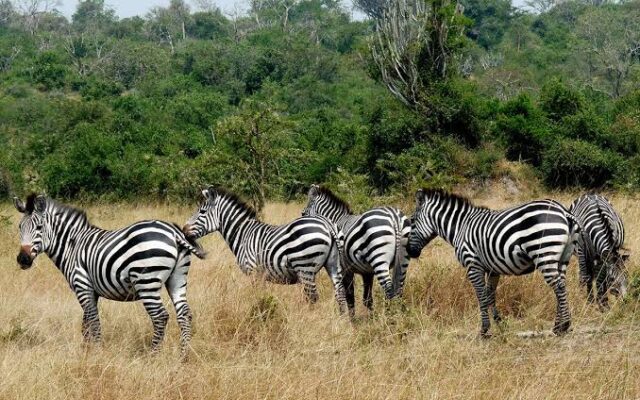
2 Days Lake Mburo Safari
You visit
Entebbe (Start, End)
Lake Mburo is the nearest national park to Kampala — roughly 3.5–4 hours on tarmac — making a 2-day Lake Mburo safari ideal for a first taste of Ugandan wildlife without the long haul to the…

3 Days Lake Mburo & Queen Elizabeth Safari
You visit
Entebbe (Start, End)
Linking Lake Mburo and Queen Elizabeth makes geographic sense — both sit on the Masaka–Mbarara corridor — and gives zebra, impala and boat wildlife on Day 1 before the larger QE savannah on Days 2–3.…