Patas monkey habitat is defined by openness — the dry acacia savannah, lightly wooded grasslands, and scattered bush where a primate can see predators approaching and sprint to safety across bare ground. Unlike the montane forest of Bwindi or the rainforest galleries of Kibale, Erythrocebus patas requires visibility, termite-mound lookouts, and a ground layer rich in grasses and seeds. In Uganda, that means Kidepo Valley National Park and the northern plains of Murchison Falls National Park — the country's only protected landscapes that consistently deliver this ecological package. Explore where to see patas monkeys and behaviour for how habitat shapes daily life.
Open Savannah, Not Forest
The fundamental habitat requirement for patas monkeys is low canopy cover. They avoid dense forest, montane woodland, and thick riverine gallery — the environments where Uganda's other primates thrive. Instead they occupy the same broad ecological zone as Uganda kob, oribi, and Jackson's hartebeest: open grassland with scattered acacia, Combretum bush, and isolated Borassus palms. This habitat matrix offers three essentials simultaneously — ground forage, predator sightlines, and elevated termite mounds for guard-male surveillance.
Vegetation Structure
Acacia Woodlands and Grassland Mosaics
Kidepo's Narus Valley typifies patas habitat: golden grass plains interrupted by flat-topped acacias, rocky kopjes, and seasonal drainage lines. Grass height varies from grazed lawn to waist-high stands after rains; patas prefer intermediate heights where movement is easy and visibility remains good. Murchison's northern bank mirrors this structure with additional Borassus palm savannah — an iconic Murchison landscape where patas troops forage between palm shadows and open glades.
Termite Mounds as Habitat Features
Termite mounds are not merely background scenery — they are functional habitat infrastructure for patas monkeys. Hard, elevated, and scattered across the plain, mounds provide the guard male with a vantage point that can add two to three metres of height — enough to spot leopard movement at distance. Mounds also concentrate different vegetation and insect prey, making their bases productive foraging zones for females and juveniles.
Water and Seasonal Resources
Patas are not as water-dependent as some savannah ungulates, but they drink regularly and concentrate near permanent water in the driest months. Kidepo's Narus River and seasonal pools; Murchison's Nile corridor and wallow lines — these hydrological features shape dry-season distribution. During wet seasons, troops spread more widely across the grassland matrix as temporary pools and fresh grass growth reduce competition near main water sources.
Climate and Seasonality
Northern Uganda's climate is broadly bimodal — rains typically peak around April to May and September to November, with drier intervals in June to August and December to February. Patas habitat responds dramatically to this cycle. Wet seasons bring tall grass, abundant insects, and fruiting shrubs; dry seasons shorten grass, concentrate animals near water, and improve game-drive visibility on firm tracks.
For safari planners, dry-season habitat conditions generally improve patas detection — troops are easier to spot on shorter grass, and predictable water dependence brings them to known areas. Wet-season habitat is richer in food but visually harder to scan; sharp-eyed guides and repeat drives compensate.
Altitude and Geography
Patas monkeys in Uganda occur at relatively low elevations — roughly 900 to 1,200 metres in Kidepo's valleys and similar altitudes on Murchison's northern plateau. They do not extend into highland forest or alpine zones. The geographic restriction to the far north reflects both habitat suitability and historical range patterns across the Sahelian–Sudanian savannah belt that reaches into northeastern Uganda.
Habitat Comparison: Kidepo vs Murchison
Kidepo Valley National Park
Kidepo offers the most extensive and intact open savannah patas habitat in Uganda. The Narus Valley's combination of grassland, acacia, kopjes, and permanent water supports healthy troop densities. Kidepo's relative remoteness has also limited agricultural encroachment compared with some Murchison buffer zones — a conservation advantage for ground-dwelling primates sensitive to habitat fragmentation.
Murchison Falls Northern Sector
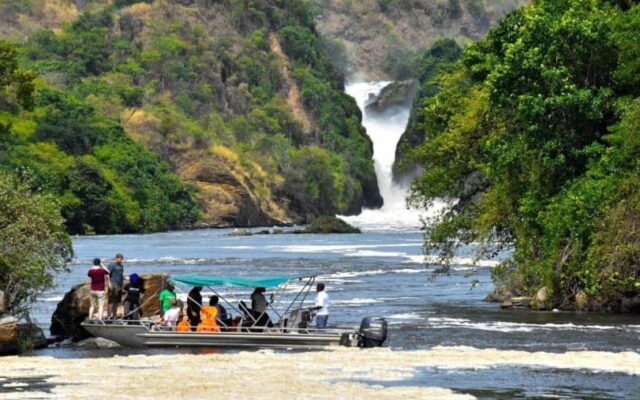
Murchison's northern bank — the game-drive country north of the Nile and Paraa — provides a secondary patas stronghold. Borassus palm savannah, acacia scrub, and open glades along the Albert Nile delta corridor offer suitable structure. Patas here share habitat with Rothschild's giraffe, elephant, and lion — making primate sightings a bonus on standard Big Five drives rather than a dedicated expedition.
What Patas Habitat Is Not
Understanding what patas avoid clarifies Uganda itinerary planning. They are not found in Bwindi's montane forest, Kibale's rainforest, Queen Elizabeth's crater lakes and forest gorges, or Lake Mburo's acacia-lake mosaic (which lacks the extensive open plain patas require). Travellers seeking patas must include northern savannah parks — there is no western or southwestern alternative within Uganda.
Edge Habitats and Movement Corridors
Patas occasionally use woodland edges and riparian strips as movement corridors, especially when travelling between foraging areas or accessing water. These edges are transitional — patas pass through rather than settle in dense cover. Habitat connectivity between open plains and water sources matters for troop ranging; fencing, cultivation, and settlement expansion in buffer zones outside parks can fragment the corridors patas need for safe ground movement.
Fire, Grazing, and Habitat Maintenance
Like many savannah species, patas benefit from periodic fire and herbivore grazing that keep grass height manageable. Uganda Wildlife Authority and natural wildfire cycles in Kidepo and Murchison maintain the open structure patas require. Overgrown, fire-suppressed savannah — increasingly common in settled landscapes outside protected areas — reduces patas suitability by increasing predator ambush cover and restricting visibility.
Ecological Interactions in Patas Habitat
Patas share their habitat with a full savannah guild: Uganda kob and oribi as grazing contemporaries; Jackson's hartebeest and buffalo in Kidepo; elephant as habitat modifier; leopard and lion as primary predators. This community context matters — patas are not isolated curiosities but participants in a functioning open-savannah food web. Healthy patas populations signal that the visibility, forage, and predator–prey dynamics of northern savannah remain intact.
Habitat Threats Outside Protected Areas
Historically, patas ranged more widely across northern Uganda's savannah belt. Agricultural expansion, charcoal production, and livestock grazing have converted much open bush outside park boundaries. Inside Kidepo and Murchison, habitat remains largely intact — which is why Uganda's patas persist where they do. Conservation of buffer zones and community land-use planning around park edges directly affects the long-term habitat security of this rare primate.
Planning Safaris Around Habitat
To maximise patas encounters, target open-plain game-drive sectors at dawn when troops leave roosting cover and begin ground foraging. Ask guides specifically about recent patas sightings on Narus tracks (Kidepo) or northern-bank loops (Murchison). Pair habitat understanding with our best time to see patas monkeys and safari experiences pages for complete northern circuit planning.
Quick Habitat Reference
- Primary type: Open acacia savannah and dry bush
- Key features: Termite mounds, short–medium grass, scattered trees
- Uganda parks: Kidepo Valley; Murchison northern bank
- Elevation: ~900–1,200 m
- Avoids: Dense forest, montane woodland, thick gallery
- Water: Regular drinking; dry-season concentration near rivers
- Best visibility: Dry season on short-grass plains