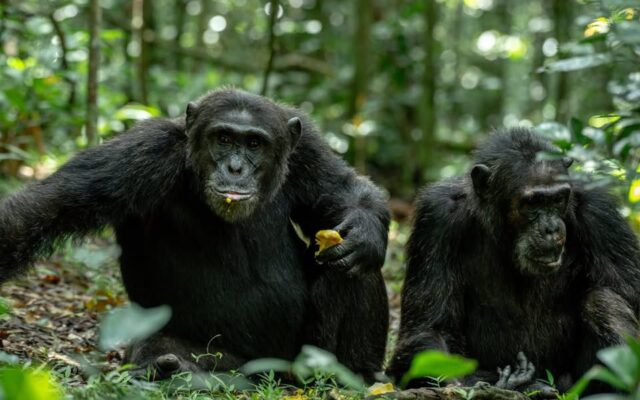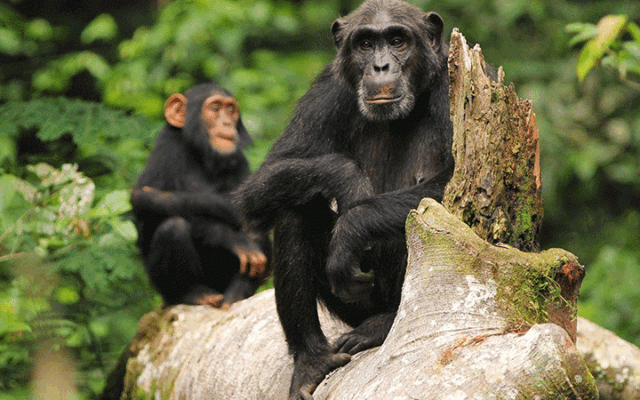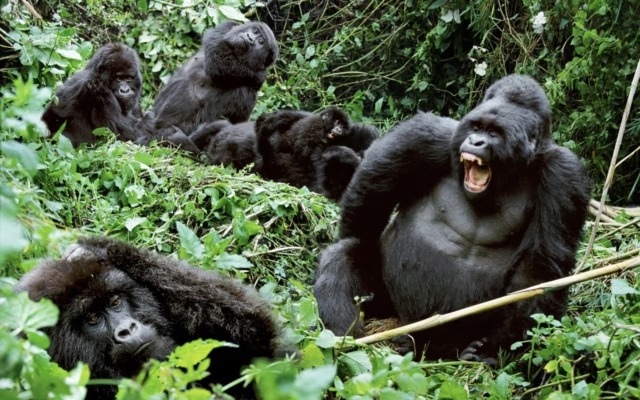
Mantled guereza habitat centres on tall, continuous forest canopy where leaves are available year-round and branches are strong enough to support troop movement at height. Understanding where guereza live explains their prominence in Kibale National Park, Budongo Forest Reserve, and Bwindi Impenetrable National Park — and why they vanish from open savannah landscapes. Connect this page to mantled guereza facts, behaviour, and where to see mantled guereza.
Rainforest Canopy Specialists
Mantled guereza are not savannah animals, swamp specialists, or bamboo dwellers like golden monkeys. They require structurally complex rainforest — tall emergent trees, diverse mid-storey species, and fig-dominated feeding groves within a continuous canopy matrix. This arboreal dependence means guereza distribution maps closely onto Uganda's remaining forest blocks rather than its grassland parks.
Research across East Africa shows guereza selecting forests with high tree species richness and abundant Celtis, Ficus, and Albizia — genera that provide palatable leaves across seasons. They tolerate a range of altitudes from lowland basins near Semuliki to montane slopes above 2,500 metres in Bwindi, provided canopy structure remains intact.
Lowland and Montane Rainforest
At Kibale National Park, guereza occupy mature lowland rainforest between roughly 1,100 and 1,600 metres elevation. Tall mahogany, fig, and ironwood trees create the vertical structure troops need. Understorey density varies — guereza prefer canopy and mid-storey levels where light reaches young leaves.
In Bwindi, montane forest above 1,500 metres adds mist, steeper terrain, and different tree communities — yet guereza persist, demonstrating flexibility within the rainforest guild. Trek approach trails through Nkuringo, Buhoma, and Ruhija sectors routinely pass feeding troops.
Riverine Gallery Forest
Gallery forest along rivers and swamp margins provides critical habitat linkages. Bigodi Wetland Sanctuary — a community-managed swamp at Kibale's eastern edge — holds riverine fig forest where guereza feed at remarkably close range. Similar gallery strips occur along Semuliki River in Semuliki National Park and forest streams in Budongo.
These linear forests connect larger blocks, allowing gene flow between troops. Fragmentation of gallery corridors — through cultivation or papyrus burning — isolates populations and increases local extinction risk even when core forest appears intact.
Budongo Forest Ecosystem
Budongo Forest Reserve — roughly 825 square kilometres of moist semi-deciduous forest on the Lake Albert escarpment — is among Uganda's most important guereza strongholds outside Kibale. Kaniyo Pabidi and Sonso sectors combine tall mahogany forest with chimpanzee trekking infrastructure, making colobus viewing accessible on Murchison Falls safari circuits.
Key Habitat Zones in Budongo
- Kaniyo Pabidi: Mature forest on the Masindi–Paraa road; chimp and colobus trails
- Sonso research area: Central forest with long-term primate study history
- Forest edge near Budongo Eco Lodge: Troops visible from approach roads at dawn
- Riverine strips: Fig-dominated feeding groves along seasonal streams
Kibale National Park — Primate Forest Mosaic
Kibale's 795 square kilometres protect the highest primate diversity in East Africa. Guereza share canopy with chimpanzees, red colobus, L'Hoest's monkeys, red-tailed monkeys, grey-cheeked mangabeys, and olive baboons at forest margins. The park's mosaic of mature forest, regenerating areas, and swamp edges creates varied guereza home ranges — troops near Kanyanchu chimp trailhead are among the most habituated to foot traffic.
Canopy Structure and Tree Species
Guereza depend on specific canopy architecture:
- Emergent trees exceeding 40 metres for overnight roosting
- Connected mid-storey branches for inter-tree travel without descending
- Fig trees (Ficus spp.) providing reliable leaf and occasional fruit forage
- Celtis and Albizia species offering palatable young leaves
- Open canopy gaps avoided except during travel — cover from raptors matters
Selective logging that removes emergents collapses this architecture even when understorey appears green — a subtle habitat degradation guereza feel before humans notice.
Altitude and Climate in Uganda
Western Uganda's primate forests receive bimodal rainfall — peaks typically March to May and September to November. Temperature moderates with altitude; Kibale and Budongo remain humid year-round. Leaf flush after rains improves forage quality, while dry seasons firm forest trails for visitors without dramatically shifting guereza distribution — troops remain in home ranges year-round.
Forest Edge and Human Interface
Guereza sometimes feed in forest edge trees adjacent to tea plantations, lodge gardens, and community farmland near Kibale and Bigodi. These edge troops are among the easiest to photograph but face elevated risk from dogs, snares, and crop-conflict retaliation. Responsible viewing keeps distance and avoids encouraging habituation beyond existing trail tolerance.
Predator–Habitat Overlap
Leopards use the same forest blocks as guereza, hunting from branches or ambush cover below canopy travel routes. Crowned hawk-eagles specialise on arboreal monkeys — guereza alarm calls and sudden canopy retreat often signal raptor presence before visitors see the bird. Habitat with emergent snags and open gaps beneath feeding trees increases predation risk; troops respond by feeding in denser canopy where possible.
Habitat Threats
Outside protected areas, conversion of rainforest to agriculture, charcoal production, and timber extraction reduces available range. Inside parks, invasive species, illegal logging, and climate-driven drying of swamp margins pose longer-term risks. Maintaining connectivity between Kibale, Bigodi, and smaller forest reserves helps troops persist across generations.
Safari Viewing and Habitat Ethics
Stay on designated trails, follow ranger and community guide instructions, and avoid shouting or chasing troops. Off-trail trampling damages regenerating seedlings that future canopy depends on. Tourism revenue at Kibale and Bigodi funds habitat protection and community livelihoods that reduce encroachment pressure.
Planning Your Visit
For habitat-focused viewing, prioritise dawn walks in dry season at Kibale and Bigodi, add Budongo on Murchison circuits, and combine with our best time to see mantled guereza guide and Uganda safari packages linking primate forests across the west.