
Mantled Guereza FAQs and Answers — quick answers on black-and-white colobus biology, white mantle identification, Kibale and Budongo viewing, chimpanzee trek combinations, and safari planning. Explore where to see mantled guereza, behaviour, best time to visit, and safari experiences — or request a quote for a tailored primate itinerary.
- What is a mantled guereza?
The mantled guereza (Colobus guereza) is a large black-and-white colobus monkey named for the flowing white mantle along its flanks and its long bushy tail. Also called the eastern black-and-white colobus or Abyssinian colobus, it is an arboreal leaf-eater common in Uganda's rainforest parks including Kibale National Park and Budongo Forest.
- Where can I see mantled guereza in Uganda?
Reliable viewing occurs at Kibale National Park on chimpanzee trek trails, Bigodi Wetland Sanctuary community walks, Budongo Forest Reserve on Murchison circuits, and Bwindi Impenetrable National Park during gorilla trekking approaches. See our where to see mantled guereza guide.
- Do I need a permit to see mantled guereza?
Unlike chimpanzees or mountain gorillas, mantled guereza are usually seen on standard park entry and guided forest walks — no separate colobus permit is required at Kibale or Bigodi. Chimpanzee trekking permits cover colobus sightings on the same trails.
- How do mantled guereza differ from red colobus?
Mantled guereza are black with a dramatic white mantle, white tail tuft, and no thumb. Red colobus (Piliocolobus spp.) wear reddish-brown coats and are a different genus. Both occur at Kibale and Bigodi — guereza are more boldly patterned and often easier to photograph against dark canopy.
- What do mantled guereza eat?
Mantled guereza are specialist leaf-eaters (folivores). They consume mature and young leaves, plus some flowers, fruit, and bark. A multi-chambered stomach ferments tough foliage. Full detail on our mantled guereza diet page.
- Why do mantled guereza have no thumbs?
Colobus monkeys lack thumbs — an adaptation for brachiating through canopy. Hook-like hands grip branches securely while the long mantle and tail aid balance. This anatomy suits slow, deliberate movement along high branches rather than fast ground running.
- How big is a mantled guereza?
Adults weigh roughly 9–14 kg, with males slightly larger than females. Head-and-body length is about 50–70 cm, plus a tail of 70–90 cm — often longer than the body. The white mantle can add striking visual bulk in photographs.
- What sound do mantled guereza make?
Male mantled guereza produce a deep roaring call at dawn and dusk — one of the most evocative sounds of Uganda's forests. Troops also use grunts, snorts, and tongue-clicking during social contact. More on our behaviour page.
- Are mantled guereza endangered?
Globally, mantled guereza are classified Least Concern by the IUCN. Local populations depend on intact rainforest — habitat loss remains the main threat. Uganda's protected forests at Kibale, Budongo, and Bwindi support stable troops. See our conservation page.
- When is the best time to see mantled guereza?
Colobus are visible year-round. Dry seasons (June–September and December–February) offer easier forest trails. Morning walks coincide with feeding activity and male roaring. See best time to see mantled guereza.
- Can I combine colobus viewing with chimpanzee trekking?
Yes — one of Uganda's strengths. Kibale chimpanzee treks routinely encounter mantled guereza on approach trails. Add an afternoon Bigodi walk for close canopy views. Read our chimpanzee trekking guide.
- Can I see mantled guereza during gorilla trekking?
Often yes. Bwindi gorilla trek approach trails pass through montane forest where black-and-white colobus feed in fig trees. Sightings are a welcome bonus before or after gorilla contact. Plan via our gorilla trekking guide.
- Do mantled guereza live in troops?
Yes. Mantled guereza live in multi-male, multi-female troops typically numbering 5–15 animals, sometimes more. Troops defend home ranges in the canopy and move slowly between feeding trees — ideal for patient forest observation.
- Are mantled guereza good for photography?
Among Uganda's best primate subjects for still photography. High-contrast black-and-white patterning, slow movement, and habituation on Kibale and Bigodi trails allow time for composition. Overcast forest light reduces harsh shadows on pale mantle fur.
- What habitat do mantled guereza prefer?
Mature tropical and montane rainforest, riverine gallery forest, and wooded swamp edges with tall canopy. Fig, Celtis, and Albizia trees are important food sources. Full ecology on our habitat guide.
- Are there mantled guereza in Budongo Forest?
Yes. Budongo Forest Reserve on the Murchison Falls circuit holds mantled guereza alongside chimpanzees, red-tailed monkeys, and blue monkeys. Kaniyo Pabidi and Sonso areas are productive for colobus on forest walks and chimp trekking approaches.
- What is the scientific name of the mantled guereza?
Colobus guereza — family Cercopithecidae, subfamily Colobinae. Uganda's western populations are generally assigned to the subspecies C. g. occidentalis (western guereza), though taxonomy varies by source.
- Which Uganda safaris include mantled guereza viewing?
Any itinerary visiting Kibale, Bigodi, Budongo, or Bwindi can include colobus. Browse mantled guereza safaris and Uganda safari packages.
- Do mantled guereza come to the ground?
Rarely. Mantled guereza are strongly arboreal — they feed, travel, and rest in trees. Brief ground crossings may occur at forest gaps, but visitors should scan canopy and mid-storey branches rather than the forest floor.
- How can tourists help mantled guereza conservation?
Visit protected forests on licensed safaris, pay park and community walk fees, keep distance from troops, and avoid feeding wildlife. Tourism revenue at Kibale and Bigodi funds rangers and local conservation. More on our conservation page.
Safari packages to see Mantled Guereza
Bookable itineraries below include parks and activities where you are most likely to encounter Mantled Guereza in the wild.
 Best
Seller
Best
Seller
5 Day Gorilla & Chimp Safari
You visit
Kibale Forest, Bwindi Forest, Entebbe
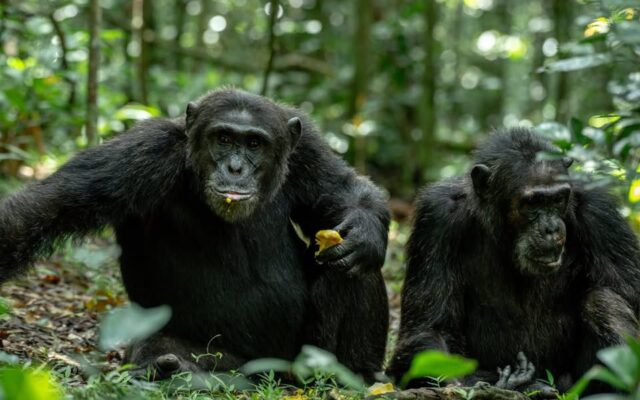
Combine Bwindi gorilla trekking with Kibale chimpanzee tracking.
 Best
Seller
Best
Seller
6 Days Uganda Gorillas, Chimpanzees & Wildlife Safari
You visit
Kibale Forest, Queen Elizabeth NP, Bwindi Forest, Entebbe
Primates plus plains in six days: Kibale chimps, Queen Elizabeth savannah, Bwindi gorillas and a Lake Mburo finale for zebra — the full Uganda highlight reel without rushing Kidepo or Murchison.
2 Days Budongo Forest Chimpanzee Safari
You visit
Murchison Falls, Entebbe
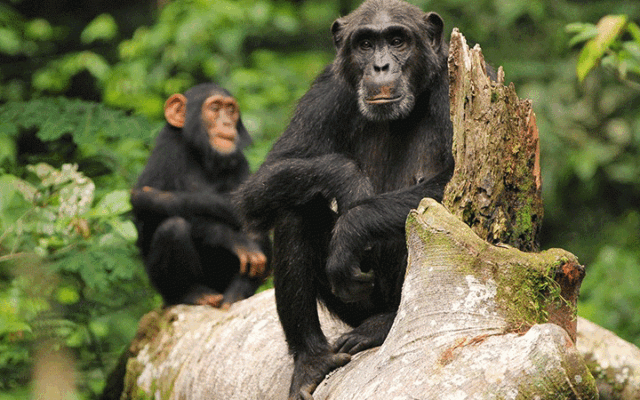
The Budongo Forest reserve on the southern edge of Murchison Falls is a quieter alternative to Kibale for chimpanzee tracking. Kaniyo Pabidi and Busingiro sectors offer mature mahogany forest, fewer c…
 Best
Seller
Best
Seller
3 Day Uganda Gorilla Trekking Safari
You visit
Bwindi Forest, Entebbe
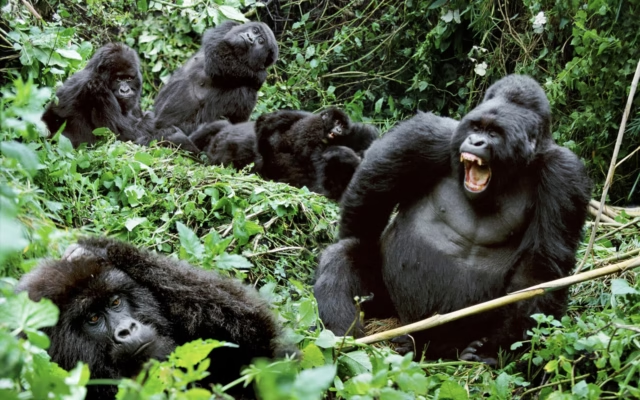
This private Uganda gorilla trekking safari is a focused 3-day Uganda gorilla trekking road trip: a full-day mountain gorilla trek in Bwindi Impenetrable National Park—a UNESCO rainforest where roughl…