
Klipspringer FAQs and Answers — quick answers on biology, rock-hopping behaviour, Kidepo kopje viewing, Mount Elgon hiking, and safari planning. Explore where to see klipspringer, behaviour, best time to visit, and safari experiences.
- What is a klipspringer?
The klipspringer (Oreotragus oreotragus) is a small African rock antelope known for its salt-and-pepper coat, cylindrical hooves that grip granite, and monogamous pair bonds. In Uganda, klipspringer are best seen on Kidepo Valley kopjes and Mount Elgon rock outcrops.
- Where can I see klipspringer in Uganda?
Kidepo Valley National Park is the premier destination — granite kopjes on Narus Valley game drives hold pairs alongside leopard and lesser kudu. Mount Elgon National Park offers sightings on montane hiking routes. See our where to see klipspringer guide.
- What does klipspringer mean?
Klipspringer means "rock jumper" in Afrikaans — a name that describes the species' spectacular leaps between boulders and its life on cliff faces and kopje summits across Africa.
- How big is a klipspringer?
Klipspringer stand roughly 43–60 cm at the shoulder and weigh 8–13 kg — compact and stocky, built for balance on narrow ledges rather than speed across open plains.
- Do both male and female klipspringer have horns?
Yes — both sexes carry short, heavily ridged horns typically 7–9 cm long. Female horns are often slightly thinner. Horns support territorial defence and pair displays rather than dramatic combat.
- Are klipspringer endangered?
Globally, klipspringer are classified Least Concern with stable populations where rocky habitat remains intact. Uganda's park populations at Kidepo and Mount Elgon depend on protected kopje integrity. See our conservation page.
- What do klipspringer eat?
Klipspringer are selective browsers — leaves, shoots, flowers, fruits, and lichens from plants rooted in rock crevices and montane scrub. Grass is a minor component. Full detail on our klipspringer diet page.
- Why do klipspringer live on rocks?
Cylindrical, rubbery hooves grip granite and cliff faces where larger antelopes cannot feed or escape. Rock elevation provides lookout posts, crevice browse, and refuge from many ground-level predators — a vertical niche plains grazers cannot exploit.
- Are klipspringer monogamous?
Yes — klipspringer typically form long-term pair bonds, with male and female sharing a rocky territory year-round. Both sexes defend the territory and alternate sentinel duty on kopje summits.
- What predators hunt klipspringer?
Leopards are the signature klipspringer predator, ambushing animals at kopje bases and on lower slopes. Martial eagles take calves; caracal and jackals hunt rocky margins. Cliff refuge reduces but does not eliminate predation.
- When is the best time to see klipspringer?
Klipspringer are visible year-round in suitable habitat. Dry seasons (June–September and December–February) offer the clearest kopje viewing on Kidepo drives. Dawn is the best time of day for sentinel perching. See best time to see klipspringer.
- How do I spot klipspringer on a game drive?
Scan every kopje and boulder summit at dawn — pairs often appear as motionless silhouettes against sky. Use binoculars before approaching; sudden vehicle movement may flush animals off the rock. Ask your guide for explicit kopje-scanning briefings.
- Can I see klipspringer on a walking safari?
On Mount Elgon, guided hiking routes pass volcanic rock outcrops where klipspringer occur. Kidepo viewing is primarily vehicle-based with kopje scanning from tracks — climbing kopjes without ranger permission is not permitted.
- How do klipspringer differ from oribi?
Oribi are open-grassland antelopes seen on plains drives. Klipspringer are rock specialists on kopjes and cliff faces — smaller, stockier, with cylindrical hooves and pair-living behaviour rather than open-country herds.
- How do klipspringer differ from lesser kudu?
Both occur on Kidepo rocky country, but lesser kudu are larger bush antelopes with spiral horns browsing thicket margins. Klipspringer are smaller cliff specialists perched on granite summits with short straight horns on both sexes.
- What is the scientific name of the klipspringer?
Oreotragus oreotragus — the only species in its genus, belonging to the family Bovidae. East African animals are adapted to kopje and montane rock habitats.
- How long is klipspringer pregnancy?
Gestation lasts roughly six to seven months, producing a single calf born in a sheltered rock crevice. Calves remain hidden while parents forage nearby — a vulnerable stage on shared leopard kopjes.
- Which Uganda safaris include klipspringer viewing?
Any itinerary visiting Kidepo Valley National Park can include kopje scanning for klipspringer. Mount Elgon hiking extensions add montane rock sightings. Browse klipspringer safaris and Uganda safari packages.
- How far is Kidepo from Kampala?
Kidepo is roughly 700 km northeast of Kampala — 10+ hours by road. Scheduled flights to Apoka airstrip reduce travel time and maximise dawn kopje drives — the practical choice for most klipspringer-focused safaris.
- How can tourists help klipspringer conservation?
Visit Kidepo and Mount Elgon on licensed safaris, pay official park fees, stay on designated tracks, and avoid purchasing rock or bushmeat products that incentivise habitat destruction. Tourism revenue funds rangers who protect the kopjes klipspringer depend on. More on our conservation page.
Safari packages to see Klipspringer
Bookable itineraries below include parks and activities where you are most likely to encounter Klipspringer in the wild.
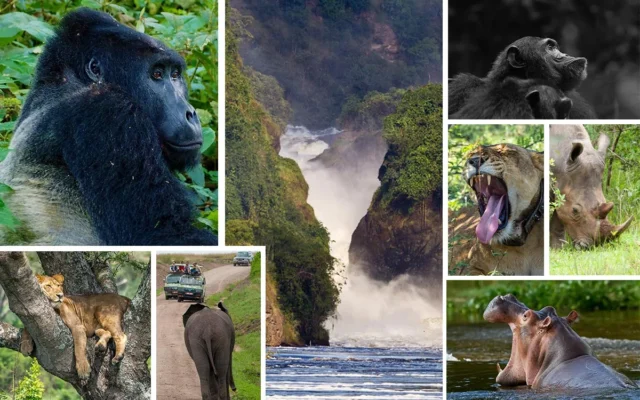
18 Days Uganda Wildlife Safari
You visit
Entebbe (Start, End)
The ultimate 18-day Uganda wildlife safari — every savannah park, both chimp forests, gorillas, and the remote northeast. After Murchison and Kidepo, the route sweeps through Kibale, Queen Elizabeth,…
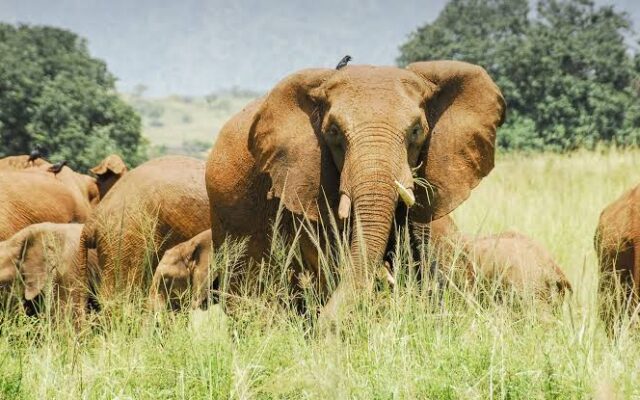
4 Days Kidepo Valley Safari
You visit
Entebbe (Start, End)
Kidepo Valley is Uganda's most remote park — semi-arid savannah against the Morungole Mountains near the South Sudan border. Cheetah, ostrich and large lion prides roam the Narus Valley; the drier Kid…
 Best
Seller
Best
Seller
3 Day Uganda Gorilla Trekking Safari
You visit
Bwindi Forest, Entebbe
This private Uganda gorilla trekking safari is a focused 3-day Uganda gorilla trekking road trip: a full-day mountain gorilla trek in Bwindi Impenetrable National Park—a UNESCO rainforest where roughl…
 Best
Seller
Best
Seller
5 Day Gorilla & Chimp Safari
You visit
Kibale Forest, Bwindi Forest, Entebbe
Combine Bwindi gorilla trekking with Kibale chimpanzee tracking.