
African Wild Dog FAQs and Answers — use the questions below for quick answers on Lycaon pictus biology, pack behaviour, Endangered status, Kidepo Valley sightings, conservation, and safari planning. Explore where to see African wild dogs, best time to visit, and safari experiences for deeper guides — or request a quote for a tailored predator itinerary.
- What is an African wild dog?
The African wild dog (Lycaon pictus) — also called the painted wolf — is one of Africa's most endangered carnivores and most efficient hunters. Wild dogs live in cooperative packs, hunt with success rates exceeding 80%, and possess a unique tri-colour coat pattern on every individual. They are not related to domestic dogs despite the common name.
- Where can I see African wild dogs in Uganda?
Kidepo Valley National Park is Uganda's primary African wild dog destination — the only park with a reasonably reliable population. Occasional records exist from Murchison Falls National Park and Queen Elizabeth National Park, but sightings there are rare and unpredictable. See our where to see African wild dogs guide for park comparisons.
- Are African wild dogs endangered?
Yes. African wild dogs are classified as Endangered on the IUCN Red List. Fewer than 7,000 adults remain across Africa, fragmented into isolated populations. Threats include habitat loss, snaring, disease, persecution, and competition from lions. Uganda's Kidepo Valley provides critical refuge for one of East Africa's remaining populations.
- Why are African wild dogs so rare in Uganda?
Wild dogs require vast connected territories with abundant prey and low persecution — conditions that persist mainly in remote Kidepo Valley. Western parks like Murchison and Queen Elizabeth have suitable habitat but higher lion densities, more road traffic, and greater habitat fragmentation, limiting permanent pack residency. Historical persecution and snaring also reduced populations nationwide.
- What is the best time to see African wild dogs in Uganda?
Dry seasons (June–September and December–February) offer the best visibility in Kidepo Valley. Dawn and dusk game drives are essential — wild dogs are most active during cool hours. Allow 4+ nights in Kidepo with daily game drives. See our best time to see African wild dogs guide for monthly conditions.
- How many African wild dogs are left in Africa?
Approximately 6,600 adults remain across Africa according to IUCN estimates, fragmented into roughly 39 sub-populations. Many groups number fewer than 100 individuals. Uganda's population is small but significant, centred on Kidepo Valley National Park.
- What do African wild dogs eat?
Wild dogs hunt medium-sized ungulates including impala, kob, reedbuck, oribi, and young warthog. In Kidepo, Uganda kob, oribi, and Jackson's hartebeest are primary prey. Packs hunt cooperatively through endurance chasing. Learn more on our African wild dog diet page.
- How do African wild dogs hunt?
Packs identify a target and launch a coordinated endurance chase. Lead dogs sprint at prey while flankers block escape routes. The white tail tip helps trailing dogs follow through tall grass. Hunts can last 20 minutes and cover five kilometres before prey collapses from exhaustion. Success rates exceed 80%.
- How big is an African wild dog pack?
Packs typically contain 6 to 20 individuals, though groups of 30 or more occur in prey-rich ecosystems. Packs are built around an alpha breeding pair, with subordinate adults helping hunt and rear pups communally.
- Are African wild dogs dangerous to humans?
Wild dogs are not considered dangerous to humans in safari contexts. They are naturally wary of people and avoid contact. In vehicles on game drives, packs often tolerate close observation while hunting or resting. Never approach on foot or disturb den sites.
- What is the difference between African wild dogs and hyenas?
Wild dogs (Lycaon pictus) are canids with painted coats, rounded ears, and cooperative pack hunting. Spotted hyenas are hyaenids with sloping builds, spotted coats, and matriarchal clans. Wild dogs hunt by endurance; hyenas combine hunting with powerful jaws for bone crushing. Both are social predators but belong to entirely different families.
- Do lions kill African wild dogs?
Yes. Lions are the wild dog's greatest natural threat. Lion prides kill wild dogs — especially pups at den sites — and steal kills from hunting packs. High lion density limits where wild dog packs can safely den and hunt.
- Can African wild dogs be domesticated?
No. African wild dogs are specialist wild carnivores with complex social structures that cannot be replicated in captivity or domestic settings. They remain entirely wild and are protected under Ugandan law within national parks.
- What sound do African wild dogs make?
Wild dogs communicate through bird-like twittering and squeaking calls, hoo contact vocalisations, low moans, and alarm barks. Their vocal repertoire is distinct from hyena whoops or lion roars. Experienced Kidepo guides can sometimes locate packs by listening for dawn contact calls.
- How fast can African wild dogs run?
Wild dogs can reach speeds of approximately 66 kilometres per hour (41 miles per hour) during hunts. They rely on endurance rather than sprint speed — maintaining pace over several kilometres until prey tires.
- Are wild dog sightings guaranteed in Kidepo?
No. Even in Kidepo Valley — Uganda's best wild dog park — sightings are never guaranteed. Packs range across hundreds of square kilometres. Extended stays with multiple dawn and dusk drives maximise odds but patience is essential. Treat any encounter as a rare privilege.
- Do I need a special permit to see wild dogs in Uganda?
No separate wild dog permit is required. Standard park entry fees for Kidepo Valley, Murchison Falls, or Queen Elizabeth cover game drives where wild dog encounters may occur. Private vehicle hire and guide fees are arranged through your safari operator.
- Can I combine wild dog safaris with gorilla trekking?
Yes. Classic Uganda circuits pair Bwindi gorilla trekking with Kidepo savannah game drives. A 12–16 day itinerary can deliver mountain gorillas, chimpanzees, Big Five predators, and Africa's rarest canid. Browse Uganda safari packages for combined primate and predator routes.
- Why are African wild dogs called painted wolves?
The name painted wolf refers to the unique tri-colour coat pattern — irregular patches of black, tan, and white — that differs on every individual. Conservation organisations increasingly use painted wolf to distance the species from negative associations with feral domestic dogs.
- What threatens African wild dogs in Uganda?
Primary threats include snaring for bushmeat, habitat fragmentation, canine distemper and rabies from domestic dogs, lion predation at den sites, and historical persecution. Anti-poaching patrols in Kidepo and community engagement are the main conservation responses.
- How can safari tourism help wild dog conservation?
Tourism revenue funds anti-poaching patrols, supports community livelihoods around parks, and demonstrates the economic value of living predators. Travelers who visit Kidepo Valley on extended safaris directly contribute to park conservation budgets. Choose operators who respect den sites and maintain distance from packs.
- Which safari type is best for African wild dogs?
Private fly-in safaris to Kidepo with 4+ nights and daily dawn/dusk game drives offer the best combination of access, flexibility, and encounter potential. See our African wild dog safari experiences guide for luxury, midrange, budget, and group options.
Safari packages to see African Wild Dog
Bookable itineraries below include parks and activities where you are most likely to encounter African Wild Dog in the wild.
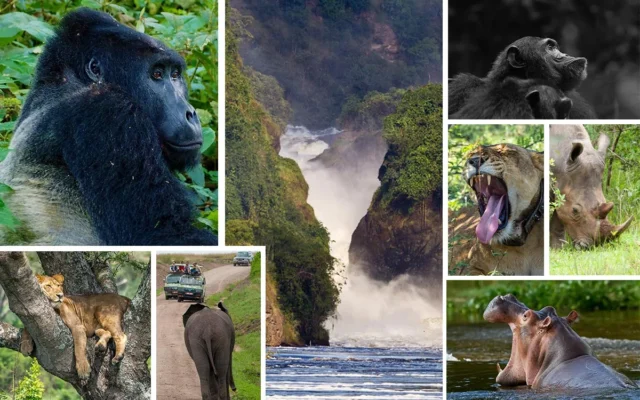
18 Days Uganda Wildlife Safari
You visit
Entebbe (Start, End)
The ultimate 18-day Uganda wildlife safari — every savannah park, both chimp forests, gorillas, and the remote northeast. After Murchison and Kidepo, the route sweeps through Kibale, Queen Elizabeth,…
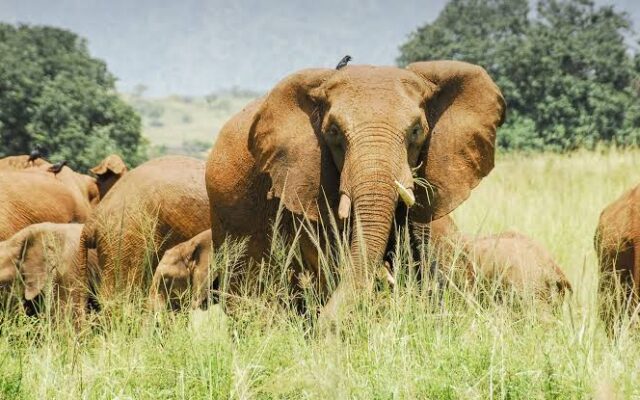
4 Days Kidepo Valley Safari
You visit
Entebbe (Start, End)
Kidepo Valley is Uganda's most remote park — semi-arid savannah against the Morungole Mountains near the South Sudan border. Cheetah, ostrich and large lion prides roam the Narus Valley; the drier Kid…
 Best
Seller
Best
Seller
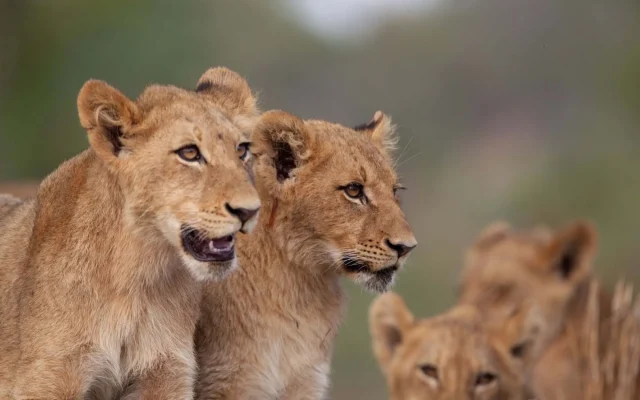
7 Day Uganda Wildlife & Gorilla
You visit
Murchison Falls, Kibale Forest, Queen Elizabeth NP, Bwindi Forest, Entebbe
Seven days with gorillas: the wildlife tour above plus Bwindi trekking on Day 6 — the single most booked private itinerary for Uganda Safari Tours guests who want chimps, savannah and gorillas in one…
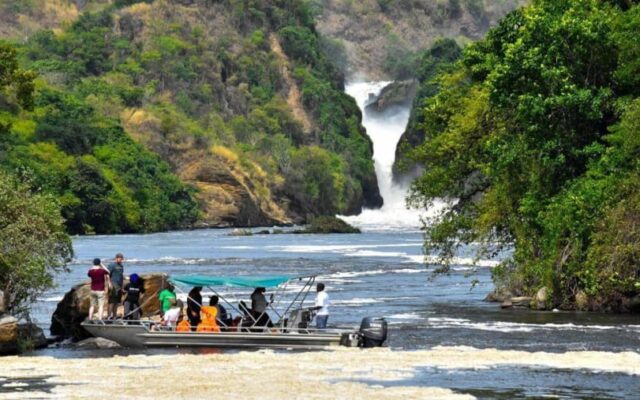
3 Day Murchison Falls Safari
You visit
Murchison Falls, Entebbe
Our classic 3-day Murchison Falls safari follows the park’s most proven circuit: dramatic falls, savannah game drives north of the Nile, and the famous boat trip where the river narrows below the casc…