Wildlife and forest ecology at Volcanoes National Park
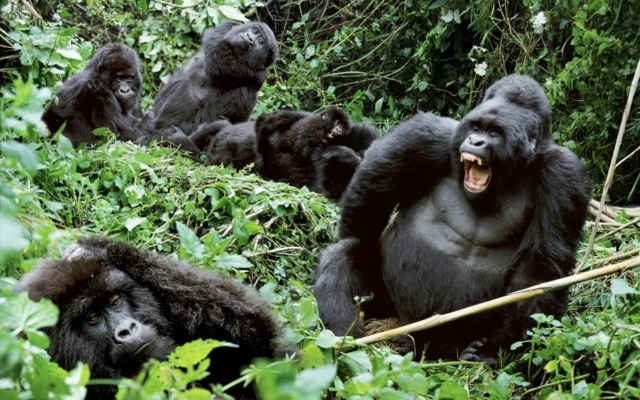
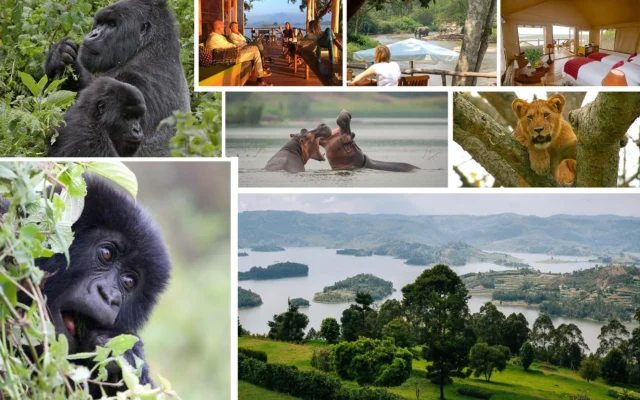
Most travelers reach Volcanoes National Park for one reason: mountain gorilla trekking. That hour with a habituated family — often within meters of a silverback, juveniles wrestling in bamboo, mothers cradling infants — ranks among Africa's greatest wildlife experiences. Yet the park's wildlife story extends across volcanic slopes, bamboo belts, and hagenia woodland covering roughly 160 square kilometers in Rwanda's northwestern Virunga Mountains. Steep terrain, cool mist, and layered vegetation create habitat for primates, forest mammals, and hundreds of bird species in a compact elevational range unlike open savannah parks such as Akagera National Park.
The park forms the Rwandan sector of the Virunga Conservation Area, a transboundary protected network shared with Virunga National Park in the Democratic Republic of Congo and Uganda's Mgahinga Gorilla National Park. UNESCO recognizes the broader Volcans landscape through the Man and the Biosphere Programme. Roughly one-third of the world's mountain gorillas live across this massif — conservation here is globally significant, not merely a regional tourism product.
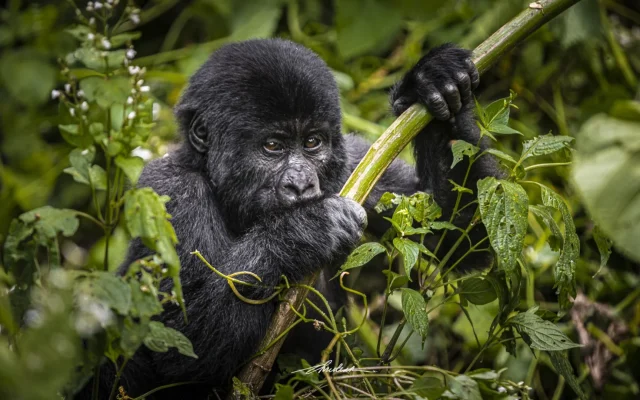
Mountain gorillas and habituated families
Volcanoes National Park wildlife is inseparable from gorilla conservation. The Rwanda Development Board (RDB) manages roughly ten habituated gorilla families for tourism, with a daily cap of eight visitors per family — typically 80 permits issued each day. Family names — Susa, Kwitonda, Agashya, Hirwa, and others — are tracked daily by rangers who know individual gorillas by sight. Trek difficulty varies by overnight nest location: some groups are reached in under an hour; others require three or four hours of steep climbing through bamboo and nettle zones.
Standard trekking allows one regulated hour with the assigned family. Minimum age is 15. Permits cost USD 1,500 for foreign non-residents. The fee funds protection, veterinary monitoring, community revenue-sharing, and the ranger infrastructure that makes close encounters possible without habituation breaking down. Respiratory illness screening matters: gorillas share human disease susceptibility; a cold can threaten an entire family.
Compared with Bwindi Impenetrable National Park in Uganda, Volcanoes treks often involve shorter drives from Kigali and somewhat more open bamboo forest in sections — though "easy" is relative above 2,500 meters on muddy slopes.
Golden monkeys — the Virunga specialty
The golden monkey (Cercopithecus mitis kandti) is endemic to the Virunga Massif and a handful of other Central African forests. Unlike wide-ranging gorillas, golden monkeys concentrate in bamboo feeding zones, making separate tracking permits (typically around USD 100) a lively second-morning activity. Troops are acrobatic, vocal, and strikingly colored — orange-gold flanks against dark limbs — offering excellent photography when light penetrates bamboo canopy.
Golden monkey tourism spreads visitor pressure beyond gorilla families and rewards travelers who stay multiple nights near Kinigi or Musanze rather than rushing a single permit and departure.
Forest mammals beyond primates
Volcanoes is not a drive safari destination. Mammal viewing happens on foot, often indirectly. African buffalo occur in forest clearings; bushbuck and black-fronted duiker slip through undergrowth. Spotted hyena are present though rarely seen by trekkers. Forest elephants persist in low numbers — sign is more common than sightings. Giant forest hog and other large mammals recorded in the broader Virunga system are uncommon on standard tourist trails.
Compared with Queen Elizabeth or Murchison Falls game drives, Volcanoes mammal encounters reward guide knowledge on forest trails — reading tracks, dung, and broken vegetation — not open-plains scanning from a vehicle.
Ecological zones and elevation
Five volcanoes — Karisimbi, Bisoke, Muhabura, Gahinga, and Sabyinyo — structure habitat vertically. Farmland gives way to bamboo (critical for gorillas and golden monkeys), then hagenia-hypericum forest, subalpine shrub, and Afro-alpine moorland on summits. Karisimbi rises to 4,507 meters; multi-day climbs reveal giant lobelias and senecios absent from briefing-level treks.
This compressed elevational range within 160 km² means rapid habitat transitions on short horizontal distances — and steep trails that punish underprepared visitors. Wildlife distribution follows these zones: primates dominate bamboo and mid-elevation forest; summit specialists include birds and invertebrates adapted to cold, wet alpine conditions.
Dian Fossey legacy and research continuity
Primatologist Dian Fossey established the Karisoke Research Center between Karisimbi and Bisoke in 1967, revolutionizing gorilla habituation and anti-poaching practice. Her murder in 1985 and the memorial hike to Dian Fossey's grave connect tourism to decades of patrol-funded protection. Today's habituated families descend from research and tourism protocols refined across generations — visitors inherit that conservation debt with each permitted trek.
Communities at the park edge
Volcanoes is not isolated wilderness. Communities around Musanze District farm potatoes and pyrethrum on volcanic soils; tourism employs guides, porters, lodge staff, and artisans. RDB revenue-sharing channels permit income into local projects — schools, water, and health infrastructure — reducing incentives for poaching and illegal forest use.
Responsible wildlife tourism means hiring porters ($15–20 tip range), choosing community-led cultural experiences, and respecting distance rules. Ethical viewing protects habituated families and keeps Volcanoes viable for the next traveler.
Responsible wildlife viewing
Follow RDB briefing rules: maintain roughly seven meters distance when possible (gorillas may approach closer), no eating near animals, no flash photography, voices low. Never litter on trails or touch plants and animals. Porters support local livelihoods and improve trek safety on slick bamboo slopes — especially valuable for older trekkers or rainy-season visits.
How Volcanoes fits a wider safari
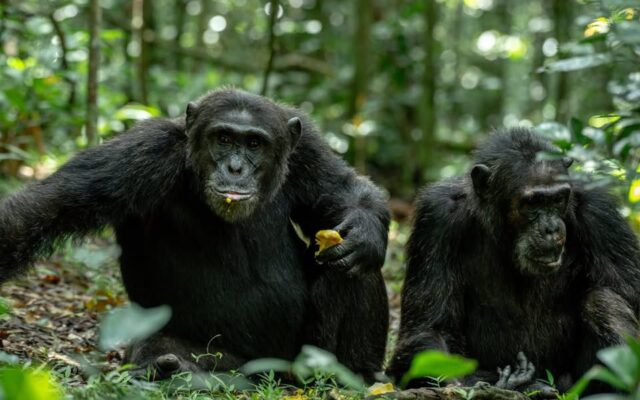
Most itineraries anchor two to four nights in the Musanze–Kinigi corridor for gorilla permits, optional golden monkeys, volcano hikes, or the Fossey tomb trek. Natural combinations include Nyungwe National Park chimpanzees, Akagera savannah wildlife, and cross-border Bwindi dual gorilla circuits. Volcanoes is the primate climax many Rwanda routes build toward.
For deeper planning, see our guides on Volcanoes National Park bird watching, best time to visit, and getting there.