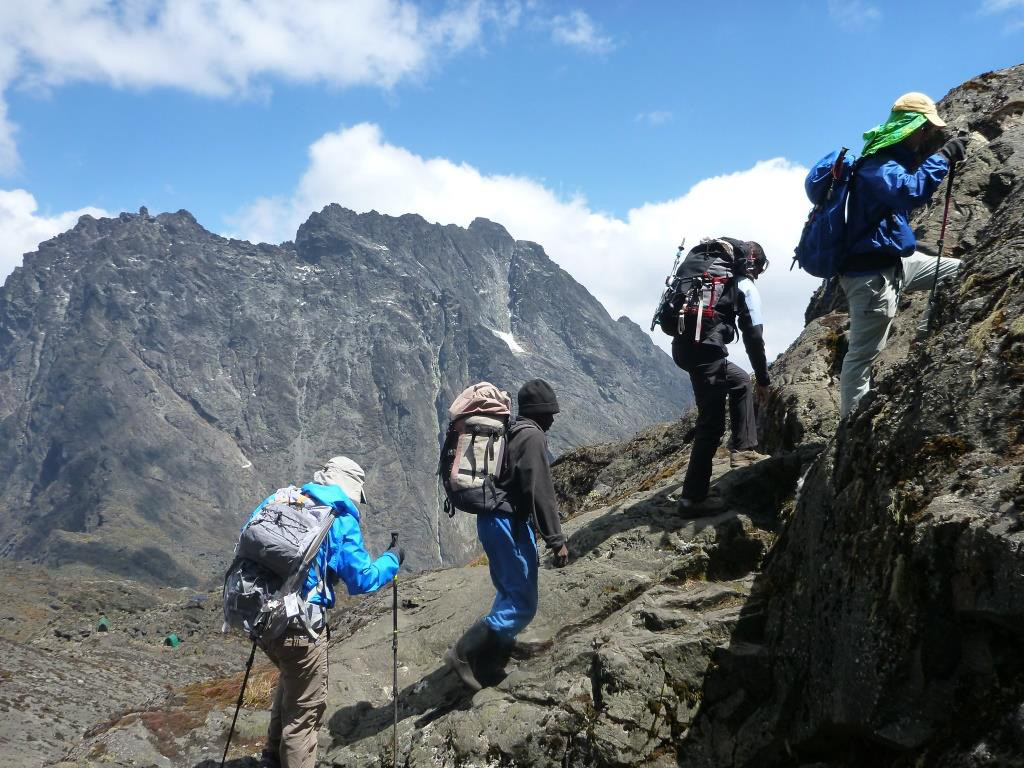
Days are often warm; nights cool down at altitude and in forest camps — layer clothing rather than relying on a single forecast.
Long rains typically peak March–May; shorter rains appear October–November, though patterns shift year to year.

DestinationsRwenzori Mountains National Park
Weather in Rwenzori Mountains National Park follows broader East African patterns — two rainy seasons and two drier windows — but local altitude and forest cover can shift temperatures more than maps suggest.
Weather in Rwenzori Mountains National Park follows broader East African patterns — two rainy seasons and two drier windows — but local altitude and forest cover can shift temperatures more than maps suggest.
Days are often warm; nights cool down at altitude and in forest camps — layer clothing rather than relying on a single forecast.
Long rains typically peak March–May; shorter rains appear October–November, though patterns shift year to year.
Rain is possible year-round; waterproof layers and dry bags for trekking gear are sensible even in “dry” months.
Entebbe (Start, End)
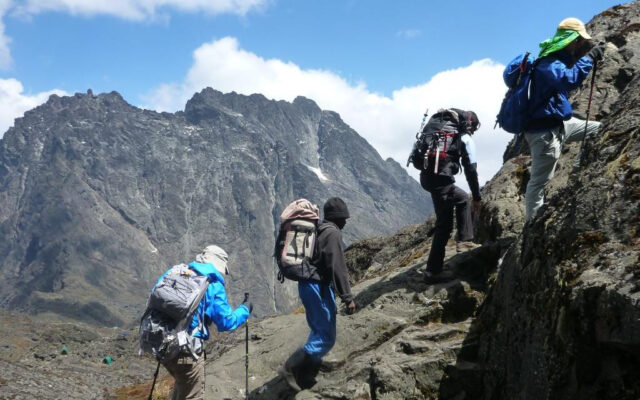
Five days on the Rwenzori Mountains "Mountains of the Moon" tackles the lower central circuit — montane forest, giant lobelias and glacier views without requiring full 9-day Margherita summit logistic…

Entebbe (Start, End)
Seven days on the Rwenzori central circuit pushes higher than the 5-day option — typically to Bujuku Valley or Scott Elliot pass viewpoints with Margherita summit attempts requiring dedicated alpine a…

Entebbe (Start, End)
This 9-day Mountain Rwenzori hiking safari tackles the Central Circuit from Nyakalengija to John Matte Hut and Bujuku Valley — the classic introduction to the Mountains of the Moon. Trek through monta…