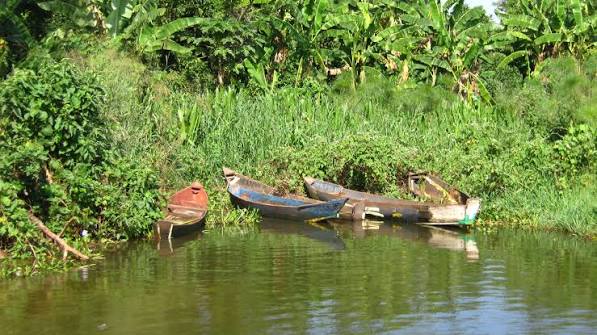
Bird watching at Lake Kyoga
Lake Kyoga birding belongs on itineraries that already value wetlands: travelers linking Soroti, Lake Opeta, and central Nile sites at Jinja or the Source of the Nile. The lake is shallow, extensive, and wrapped in papyrus — conditions that support fish eagles, kingfishers, herons, cormorants, terns, ducks, waders, and swamp specialists that differ markedly from forest interior species at Mabira Forest Reserve or Albertine Rift parks.
Kyoga is not a single access point like a boardwalk sanctuary. Productive birding depends on which bay, island channel, or swamp fringe your guide chooses — water level and wind matter as much as month on the calendar. Treat a visit as a half-day to full-day outing with a community or specialist guide rather than a ten-minute roadside stop.
Open-water and shoreline species
From boats or well-chosen shores, expect a strong core of African waterbirds: African fish eagle, long-tailed cormorant, great white and pink-backed pelicans where feeding conditions align, various egrets and herons, African jacana on lily pads, white-faced whistling duck, and seasonal waders on exposed mud. Whiskered and white-winged terns hunt over open water; kingfishers — pied, malachite, and giant — work reed edges and drowned timber.
Because Kyoga connects to the wider Nile system, list composition can resemble other Victoria Nile wetlands while retaining local nuance in papyrus-dominated arms. Guides who bird both Kyoga and Lake Opeta help you avoid duplicating the same half-day twice without adding new species.
Papyrus specialists and swamp edge birding
Serious listers focus on intact papyrus habitat. Species often sought in Ugandan papyrus swamps — such as papyrus gonolek, papyrus yellow warbler, white-winged warbler, and carruthers' cisticola — may occur where beds remain unburned and undrained. Access is usually by narrow boat channels or guided walks at community-agreed margins; ethics require keeping distance from nesting colonies and avoiding damage to emergent stems.
Swamp edges also hold weavers, bishops, waxbills, and raptors hunting over reeds. Early morning is best: calm water for boat stability, active feeding, and softer light for photography. Afternoon wind on shallow Kyoga can make boating harder and birds harder to spot on rippled surfaces.
Seasonal patterns and migration
Year-round resident birding is viable because Kyoga's fish eagles, kingfishers, and many herons do not leave the system seasonally. Palearctic migrants and intra-African movements add interest roughly from October through March, overlapping with Uganda's popular northern-winter travel window. Exact migrant mixes vary annually with water level and regional rain — flexible scheduling beats rigid target lists.
Rainy periods centered on March–May and October–November can flood access tracks and expand papyrus fringe, sometimes pushing birds closer to roads or sometimes dispersing them across wider swamp. Dry windows — broadly June–September and December–February — often simplify driving between Soroti, Kyoga landings, and add-ons such as Nyero Rock Paintings.
Gear, guides, and pacing
Bring 8×42 binoculars as a default; a spotting scope helps on open-water rafts of cormorants or terns. Field guides or eBird checklists for Uganda wetlands speed identification between stops. Telephoto lenses suit fish eagles and kingfishers; pack a rain shell, sun hat, and dry bag because Kyoga outings are exposed.
A birding-focused guide earns their fee on Kyoga by choosing channels with recent activity, interpreting calls in papyrus, and pacing the day across two habitats — open lake plus swamp — rather than circling one busy landing. Casual visitors still benefit from any competent local naturalist who knows where fishermen see eagle activity daily.
Building an eastern and Nile birding route
Lake Kyoga fits naturally into a loop from Kampala via Jinja and Mabira Forest Reserve for forest edge species, then northeast to Kyoga and Soroti. Lake Opeta extends swamp targets; Nyero Rock Paintings adds a non-bird cultural break that keeps travel days balanced.
Northbound birders may continue toward Karuma Falls and Gulu before joining Murchison Falls or Kidepo circuits — Kyoga is the shallow-lake preamble to deeper Nile gorges and savannah. Central Uganda specialists sometimes compare Kyoga with Mabamba Swamp or Lutembe Bay on Lake Victoria; Kyoga trades shoebill hype for scale, Nile context, and eastern route logic.
See also our Lake Kyoga wildlife and ecology notes, best time to visit, and access and routes pages for season and transport detail.