Wildlife and ecology at Lake Kyoga
Lake Kyoga sits in the heart of Uganda's Nile corridor: a broad, shallow freshwater system fed by the Victoria Nile from Jinja and Source of the Nile country, then draining northward toward Karuma Falls and the wider Albert Nile basin. At roughly 1,720 square kilometres with average depths often around four metres, Kyoga behaves less like a deep Rift Valley lake and more like a flooded plain of channels, islands, papyrus beds, and open water — exactly the kind of habitat where fish, waterbirds, and wetland-adapted life concentrate.
Most travelers encounter Lake Kyoga as a regional route stop between eastern towns such as Soroti, northern gateways like Gulu, and central Uganda drives that pass through or near the Nile. That positioning matters for expectations: you will not find elephant herds or lion prides on the lake itself. Instead, wildlife here is water-focused — tilapia and Nile perch in nets, fish eagles on dead trees, kingfishers along reed edges, monitor lizards on landing stages, and seasonal concentrations of waterbirds in fringing swamps.
The Nile connection and why the lake stays shallow
Lake Kyoga's character comes from its place in the Nile system. The Victoria Nile carries sediment and water from Lake Victoria through the Owen Falls / Jinja reach into Kyoga's western arm. Shallow bathymetry, extensive swamp filtration, and island fragmentation slow water movement and spread nutrients across a wide surface. Papyrus (Cyperus papyrus) and other emergent vegetation colonise margins, creating nursery habitat for fish and cover for birds.
From a safari-planning angle, linking Kyoga mentally to the Source of the Nile and Jinja helps you read the landscape: you are still inside Uganda's great river story, just downstream of the famous headwaters and upstream of Karuma's rocky gorge. Many itineraries treat the lake as the wetland chapter between adventure on the Nile at Jinja and savannah or forest parks farther north or west — not a duplicate of either.
Fish, fisheries, and the human ecology of the lake
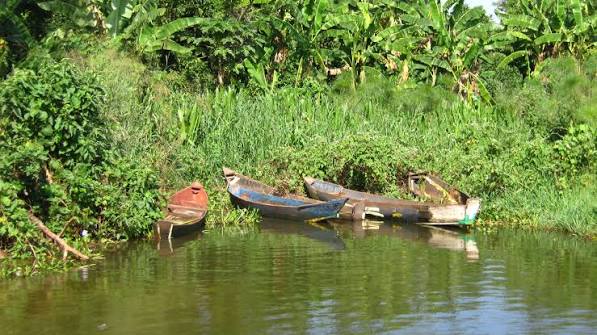
Fishing is the dominant human–wildlife interface at Lake Kyoga. Communities around Soroti, Kamuli, Nakasongola, and scattered landing sites depend on tilapia, Nile perch, lungfish, and other species. Early-morning landings — boats unloading, fish drying on racks, women sorting catch — are as much part of the experience as any checklist species. Sustainable tourism supports this economy when visitors hire local guides, pay fair boat fees, and avoid disturbing nets or breeding shallows.
Ecologically, commercial and subsistence fishing shapes what you see. Overfishing pressure and gear types influence fish size and species mix; invasive water hyacinth or changing water levels can alter open water versus swamp cover. A good local guide explains which arms of the lake are productive in the current season and where papyrus channels still hold clear water for birding or photography.
Waterbirds, papyrus, and island margins
Waterbirds are the primary wild-life draw for naturalists. African fish eagle, pied and malachite kingfishers, cormorants, herons, egrets, whiskered terns, and various ducks and waders use open water and swamp edges. Papyrus specialists — including species sought by serious birders — occur where intact beds remain. Exact lists depend on water level, time of day, and which bay or island chain you visit; Kyoga is large enough that one landing never represents the whole system.
Islands dot the lake surface, some inhabited, others used seasonally for grazing or fishing camps. They break wind, create lee shores for roosting birds, and add scenic depth to boat outings. Photographers often value the combination of low horizons, storm light over shallow water, and silhouetted papyrus — a visual mood quite different from mountain gorilla forests or Kidepo savannah.
Mammals, reptiles, and smaller wetland life
Large mammals are occasional, not guaranteed. Sitatunga and other swamp-adapted antelope may occur in suitable papyrus habitat in the wider Kyoga basin; hippopotamus appear in some Nile-connected reaches depending on access and security conditions — always confirm locally before planning close water approaches. More commonly you will notice Nile monitor lizards, terrapins, frogs calling at dusk, and insects along lit landing areas.
Compared with Queen Elizabeth National Park boat cruises on the Kazinga Channel or Murchison Falls Nile launches, Kyoga feels less packaged: fewer uniform wildlife queues, more working-lake texture. That trade-off suits travelers who want authentic wetland context on a custom route rather than a single iconic wildlife hour.
Conservation pressures and responsible visits
Lake Kyoga faces familiar freshwater challenges: siltation from upstream land use, fluctuating water levels, invasive vegetation, pollution from settlements, and pressure on fish stocks. Wetland drainage in feeder swamps can reduce bird habitat and nursery grounds. Tourism cannot solve those issues alone, but respectful visits — using community boats, avoiding litter, keeping distance from nesting colonies, and not purchasing undersize fish — align with local stewardship.
When arranging boat time, confirm life jackets, weather limits, and whether your route crosses open water or stays inside sheltered papyrus channels. Shallow lakes can become rough quickly when wind rises; morning outings usually offer calmer conditions and better bird activity.
How Lake Kyoga fits a wider Uganda itinerary
Kyoga pairs logically with Soroti as an eastern base, Lake Opeta for additional swamp birding, and Nyero Rock Paintings for cultural depth on the same regional loop. From central Uganda, many routes drop from Kampala toward Jinja and Mabira Forest Reserve before turning northeast — Mabira adds forest birds and primate viewing that complement Kyoga's open-water species.
Northbound travelers often connect Kyoga context with Karuma Falls and Gulu rather than treating the lake as an isolated detour. For deeper planning, see our Lake Kyoga bird watching, best time to visit, and getting there guides — each covers a different angle of the same destination.