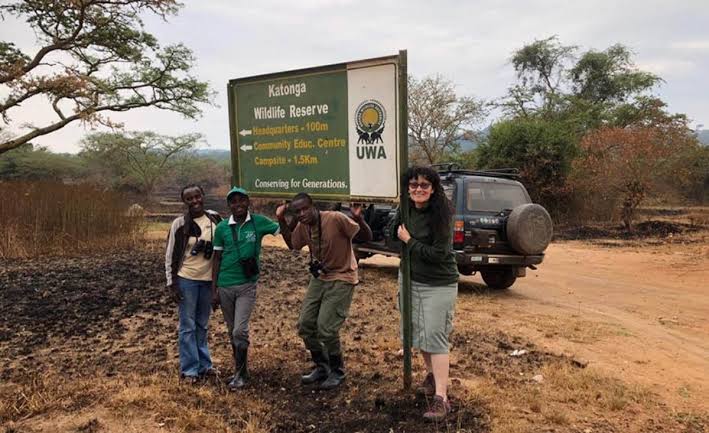
Wildlife at Katonga Wildlife Reserve
Katonga Wildlife Reserve protects a wetland–savannah mosaic along the Katonga River drainage in central-western Uganda — a landscape bridging the Lake Victoria basin toward the western rift valleys. Unlike Queen Elizabeth National Park or Murchison Falls National Park, Katonga is low-profile: fewer lodges, lighter marketing, and wildlife encounters that depend on habitat type, season, and whether you commit to canoe-style exploration in swamp forest rather than a single roadside glance.
The reserve's headline mammal for specialists is the sitatunga — a shy, swamp-adapted antelope that moves through papyrus and floating vegetation where ordinary game drives fail. That alone distinguishes Katonga from open savannah parks and aligns it with wetland logic familiar from Mabamba Swamp, though Katonga's scale and access model are different: river channels, guided walks, and patient scanning rather than shoebill canoes on Lake Victoria.
Habitat zones: swamp, river, and grassland
Katonga's terrain mixes papyrus swamp, riverine forest, seasonal floodplain, and grassland. Water levels shift through the year — after rains, channels widen and sitatunga range deeper into cover; in drier months, edges concentrate mammals and birds where mud and pool habitat remains. Guides who read recent movement patterns matter more than a fixed game-loop map copied from a national park brochure.
The Katonga River system historically connected wider watersheds; conservation here is partly about maintaining ecological continuity in a farmed and traveled landscape between Kampala, Masaka, Mbarara, and Lake Mburo National Park.
Mammals beyond sitatunga
Reserve literature and visitor reports mention mammals including waterbuck, bushbuck, oribi, Uganda kob in grassier sections, warthog, bushpig, and primates such as vervet and black-and-white colobus along forest edges. Hippo and crocodile may occur in river and swamp margins. Leopard and smaller cats are possible but rarely seen on short visits.
Compared with Lake Mburo's zebra and impala showcase, Katonga delivers wetland character — fewer postcard herds, more habitat authenticity for travelers bored by repeated savannah loops.
Canoe exploration and viewing ethics
Where access allows, canoe or boat-assisted viewing in swamp channels is the classic Katonga experience — poling quietly through papyrus while searching for sitatunga prints, swimming antelope silhouettes, or water-associated birds. Life jackets, local boat operators, and guide-led pacing are essential. Never chase swamp wildlife for photographs; sitatunga stress easily and deserve distance.
Confirm current Uganda Wildlife Authority activity options before quoting clients — reserve operations evolve and not every season offers the same boat access.
Cultural and archaeological context
Katonga sits near Bigo Bya Mugenyi, an important Bachwezi-era earthwork complex that adds archaeological depth to a wildlife day. Interpreting Katonga as isolated nature misses regional storylines: kingdom history, cattle corridors, and sacred landscapes overlap conservation geography in central Uganda.
Water levels and canoe scheduling
After heavy rain, papyrus channels may open wider for canoe poling — sometimes improving edge visibility for birds while making sitatunga harder to spot deep in cover. Dry months concentrate mammals near remaining pools but may limit boat routes if water drops below operator thresholds. Confirm with guides one week before travel in rainy peaks rather than assuming last year's blog matches current swamp depth.
Research and conservation history
Katonga was gazetted partly to protect sitatunga and wetland connectivity as central Uganda developed. The reserve remains under-visited compared with Lake Mburo National Park — a trade-off between solitude and uncertain infrastructure. That honesty helps travelers choose Katonga for atmosphere, not guaranteed megafauna.
Antelope and primate viewing tips
Scan woodland edges at dawn for oribi and Uganda kob where grass meets thicket — sudden movement often means primates flushing birds rather than predators. Vervet troops announce themselves vocally; colobus may sit high in riverine figs overhanging channels. Sitatunga require swamp patience; standing on vehicle roofs is unsafe and often prohibited — use binoculars from stable ground or boat seats only.
How Katonga fits an itinerary
Most travelers treat Katonga as a half-day or full-day extension on routes linking Kampala to Lake Mburo or Mbarara — not a multi-night base. Pair with Lake Mburo National Park for savannah contrast, Lake Wamala for regional lake culture, or Masaka for logistics.
For birds see bird watching at Katonga. Seasons on best time to visit; access on how to get there.