Uganda mangabey conservation is a race to protect fragmented rainforest before endemic populations blink out forest by forest. Classified Endangered by the IUCN, Lophocebus ugandae survives only in Uganda — making every protected hectare at Mabira Forest Reserve, Kibale National Park, and Bugoma Forest Reserve nationally and globally significant. This page covers status, threats, protection efforts, and how responsible tourism supports the guards and communities that keep troops in the canopy.
Conservation Status
The Uganda mangabey is listed as Endangered on the IUCN Red List. Unlike widespread savannah species classified Least Concern across millions of square kilometres, this monkey occupies a narrow forest archipelago with a total population likely numbering only a few thousand individuals — estimates vary with survey coverage across fragmented sites.
Endangered status reflects:
- Restricted geographic range (Uganda only)
- Severe habitat fragmentation
- Declining forest area over decades
- Hunting and snaring pressure at forest edges
- Low reproductive output typical of large-bodied primates
Historical Range Contraction
Central and western Uganda once held more continuous forest cover between the Albertine Rift and Lake Victoria basin. Agricultural expansion, commercial logging, plantation development, and infrastructure projects converted vast areas to farmland and settlement. Uganda mangabeys did not vanish everywhere overnight — they retreated into islands of surviving forest. Those islands are today's Mabira, Kibale, Bugoma, and smaller patches whose isolation now threatens genetic viability.
The species' recognition as distinct from grey-cheeked mangabeys in 2007 sharpened scientific attention — endemic status makes Uganda solely responsible for global survival.
Key Threats
Habitat Loss and Fragmentation
Primary threat. When forest is cleared for sugar, tea, maize, or settlement, troops lose feeding trees and travel routes. Fragments support fewer animals and block gene flow between populations. Without corridors, inbreeding and local extinction accelerate.
Snaring and Bushmeat
Wire snares set for terrestrial mammals catch arboreal primates. Injured mangabeys may lose limbs or die from infection. Bushmeat demand at forest edges remains a serious pressure even inside nominally protected areas.
Illegal Resource Extraction
Logging, charcoal burning, and pole cutting degrade canopy structure and understorey fruit resources. Degraded forest may look green from a road but cannot support full troop carrying capacity.
Human-Wildlife Conflict
Crop raiding at boundaries provokes retaliation. Troops pushed to edges by interior habitat loss encounter gardens — bananas, papaya, and maize tempt hungry frugivores. Conflict erodes community support for conservation unless benefits flow fairly from forest protection.
Climate Variability
Changing rainfall patterns may alter fruiting phenology — when trees fruit and how long crops last. Primates adapted to historical calendars face mismatches if key species fruit out of sync. Long-term monitoring is limited but concern is growing across tropical forest systems.
Mabira — Central Uganda Stronghold
Mabira Central Forest Reserve is a Key Biodiversity Area and the best-known public face of Uganda mangabey conservation. Managed by the National Forestry Authority, the reserve faces visible boundary pressure from the Kampala–Jinja corridor — yet interior forest still holds troops. Community tourism, guided walks, and international attention on Mabira's role in watershed protection and carbon storage reinforce arguments against further excision.
Mabira's 2007 political controversy over proposed forest giveaway galvanised civil society — a reminder that protected status requires perpetual defence, not one-time designation.
Kibale — Western Population Security
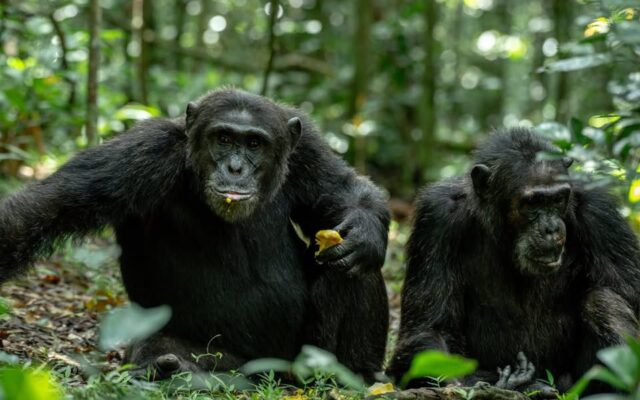
Kibale National Park benefits from Uganda Wildlife Authority management, chimpanzee tourism revenue, and relatively large intact forest blocks. Uganda mangabeys share this security umbrella with chimpanzees and other primates. Kibale's size makes it the western anchor population — if mangabeys persist anywhere long-term, Kibale is the leading candidate.
Tourism focused on chimps indirectly funds habitat patrols that protect all canopy species. Diversifying primate messaging to include endemics strengthens the economic case for forest retention.
Bugoma — Under Pressure
Bugoma Forest Reserve sits in a landscape of agricultural expansion and regional development interest. Conservation NGOs and community groups advocate for strict protection; encroachment incidents make headlines. Bugoma's Uganda mangabeys cannot relocate if the forest fails — there is no adjacent backup block of equal quality.
Forest Fragments
Smaller patches may hold dozens rather than hundreds of animals. They matter for genetic diversity and local ecosystem function but are extremely vulnerable. Survey, patrol, and community engagement at fragment scale rarely attract tourism revenue — yet they are where extinction happens first.
Protected Area Management
Different sites fall under different authorities:
- National parks (Kibale): Uganda Wildlife Authority — tourism fees, ranger patrols, research permits
- Central Forest Reserves (Mabira, Bugoma): National Forestry Authority — multiple-use frameworks with conservation cores
Coordination between agencies, NGOs, and district governments determines whether rules on paper translate to forest on the ground.
Research and Monitoring
Population surveys using transects, vocal surveys, and genetic sampling from dung are needed to update abundance estimates. Radio-tracking would reveal ranging and corridor needs but requires funding. Every flagship species benefits from baseline data — Uganda mangabeys remain under-studied relative to Kibale chimps.
Tourism as a Conservation Tool
Regulated forest tourism generates guide income, community fees, and political visibility for forest retention. Mabira walks demonstrate that biodiversity has economic value without clearing trees. Kibale's primate tourism machine funds rangers who deter snaring. Travellers who choose licensed operators and pay official fees contribute to the budget line that employs forest guardians.
Tourism is not a silver bullet — it must be low-impact, fairly distributed, and paired with enforcement. But absent revenue, protection budgets shrink.
Community Engagement
Forests surrounded by farming communities succeed only when neighbours benefit. Employment as guides and porters, revenue-sharing schemes, and education on primate ecological roles reduce tolerance for poaching and encroachment. Mabira's tourism cooperatives and Kibale's long-standing community programmes offer models — imperfect but directionally correct.
How Travellers Can Help
- Visit Mabira, Kibale, or Bugoma with licensed guides
- Pay official forest and park fees
- Follow distance and noise rules on primate walks
- Never feed wild monkeys
- Choose operators who employ local guides and respect NFA/UWA regulations
- Spread awareness of Uganda's endemic primate — visibility builds political support
Explore responsible itineraries on our Uganda mangabey safaris page and time visits via best time to see Uganda mangabeys.
Outlook
Uganda mangabeys will not recover without halting forest loss, removing snares, reconnecting fragments where possible, and funding patrols year-round. Endemic status means Uganda carries the entire global responsibility — there is no neighbouring country with backup populations. The species is a flagship for central and western forest conservation alongside chimpanzees, forest elephants, and hundreds of bird species sharing the same canopy.
Conservation success looks like stable or growing troop counts at Mabira, Kibale, and Bugoma; zero net forest loss; reduced snaring; and communities earning more from living forest than from its destruction. Every ethical forest walk contributes to that picture.