Serval habitat occupies the productive transition between open wetland and woodland savannah — tall grass margins, reedbed edges, and lightly wooded plains where rodents tunnel beneath the surface. Understanding where servals live explains their distribution across Queen Elizabeth National Park, Murchison Falls National Park, and Lake Mburo National Park in Uganda. Connect this page to serval facts, behaviour, and where to see servals.
Grassland–Wetland Ecotone Specialists
Servals are not deep-forest cats, nor are they open-desert specialists like some caracal populations. They thrive where tall grass meets water — reedbed margins, seasonal floodplains, acacia savannah with wetland pockets, and Borassus palm grassland within walking distance of rodent-rich soil. This middle habitat explains their abundance across East African savannah parks and their particular success in Queen Elizabeth's Kasenyi Plains and Murchison's Nile delta sectors.
Research across the continent shows servals selecting structurally complex grassland rather than simply following prey visibility. They favour stands tall enough to conceal stalking yet open enough for acoustic hunting — a sweet spot that shifts with seasonal grass height and fire regimes.
Water and Wetland Dependence
Servals are strongly associated with wetland edges even though they do not require daily drinking in the same way as impala or buffalo. Permanent and seasonal wetlands concentrate rodents, frogs, and ground-nesting birds — the serval's primary prey base. Queen Elizabeth's crater lakes, Kazinga Channel margins, and Murchison's Nile delta reedbeds anchor serval distribution across drive circuits.
Unlike sitatunga or otters, servals do not live in swamp interiors — they patrol margins and adjacent grassland, entering shallow water to hunt frogs and aquatic rodents when opportunity arises.
Vegetation Types
Typical serval habitat includes:
- Tall Hyparrhenia and Themeda grassland on rolling savannah plains
- Borassus palm savannah with open understorey near rivers
- Reedbed and papyrus margins bordering lakes and channels
- Acacia–grassland mosaics with seasonal wetland pockets
- Regenerating grassland after fire or light grazing pressure
- Termite-mound studded plains where rodents tunnel extensively
They generally avoid closed forest interiors and extreme open desert, preferring the structural complexity that offers both acoustic hunting cover and escape routes from lion and leopard.
Altitude and Climate in Uganda
Uganda's serval parks span roughly 900 to 1,200 metres above sea level in the western rift valley and acacia hills. Climate is tropical with bimodal rainfall — peaks typically around March to May and September to November. Grass height, not temperature alone, drives seasonal visibility: tall wet-season grass conceals servals that short dry-season growth reveals at distance on dawn drives.
Queen Elizabeth National Park — Serval Ecosystem
Queen Elizabeth is Uganda's premier serval habitat. The Kasenyi Plains north of the Kazinga Channel hold extensive tall grassland where Uganda kob graze by day and servals hunt at dawn and dusk. Crater lakes, explosion craters, and channel margins add wetland diversity. Authorised night drives from Mweya and Katwe sectors extend viewing windows when diurnal drives miss crepuscular activity.
Key Habitat Zones
- Kasenyi Plains: Open grassland with termite mounds — prime dawn serval scanning
- Mweya Peninsula margins: Grassland transitions near channel and lodge access
- Katwe explosion craters: Grassland rims with lake and wetland edges
- Ishasha sector margins: Fig-dotted woodland savannah with grassland openings
Murchison Falls National Park — Borassus Grasslands
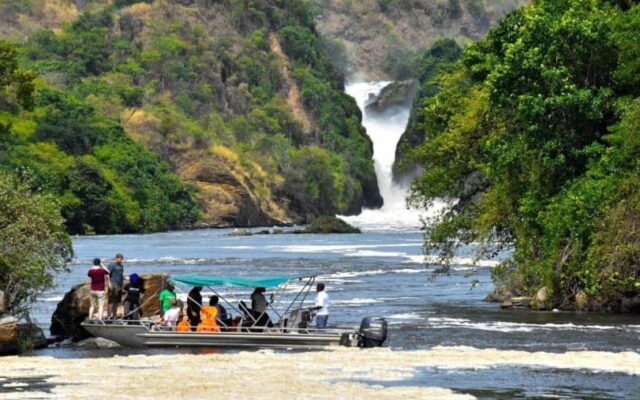
Murchison's northern bank offers a different serval landscape: Borassus palm savannah, Nile delta reedbeds, and Buligi track grasslands where elephant, giraffe, and buffalo share plains with rodent specialists below the canopy. The Victoria Nile delta — accessed by boat and game drive — combines wetland margins with tall grass ideal for serval patrol circuits.
Guides on Buligi and Albert delta circuits report servals regularly during dry-season drives when grass shortens. The park's larger predator community — lion, leopard, and spotted hyena — means servals remain vigilant, often using termite mounds as lookout platforms.
Lake Mburo National Park — Compact Grassland
Lake Mburo is Uganda's smallest savannah park but offers excellent serval habitat in acacia grassland, seasonal wetlands, and open plains near the five lakes. Night drives are authorised here — among the most reliable ways to encounter servals when grass height permits. The park's lighter lion pressure compared with Queen Elizabeth may support higher serval visibility in some seasons.
Fire, Grazing, and Habitat Maintenance
Natural and managed fire maintains the grass–wetland mosaic servals use. Historically, wild herbivore grazing and seasonal flooding shaped regrowth patterns. Uganda Wildlife Authority balances habitat protection with controlled burning in some sectors to prevent grassland succession into dense bush — management that benefits both grazing antelope and rodent-hunting cats.
Predator–Prey Habitat Overlap
Servals choose habitat with enough cover for stalking yet open ground for acoustic hunting. Leopard exploit woodland edges where servals retreat at dawn; lion patrol open plains where servals are vulnerable. The overlap between serval hunting zones and larger predator ranges is constant — which is why dawn drives, when servals are active and lions still finishing night hunts, often deliver the most dramatic small-cat sightings.
Habitat Threats
Outside protected areas, wetland drainage for agriculture and settlement eliminates serval habitat rapidly. Inside parks, invasive species, boundary encroachment, and snaring along grassland margins affect populations — though Uganda's three savannah parks maintain viable serval communities when anti-poaching patrols remain effective. Maintaining wetland connectivity between park sectors and buffer zones helps reduce persecution when servals hunt poultry on adjacent land.
Safari Viewing and Habitat Ethics
Stay on designated tracks, respect minimum distances, and follow ranger guidance on night-drive protocols. Off-track driving damages the grass–wetland mosaic servals depend on. Spotlight use on night drives should be brief and directed — prolonged illumination stresses nocturnal hunters. Responsible tourism revenue supports Uganda Wildlife Authority habitat management and community programmes around Queen Elizabeth, Murchison, and Mburo.
Planning Your Visit
For habitat-focused viewing, prioritise dawn drives in the dry season at Queen Elizabeth and Murchison, combine with our best time to see servals guide, and build serval habitat into western circuits via Uganda safari packages that link savannah parks with Bwindi gorilla trekking.