Where to see red-tailed monkey — expert Uganda safari guide from local planners who know permits, parks, and realistic routing.
Seeing red-tailed monkeys in Uganda means prioritising the country's richest moist forests — destinations where troops are abundant, trails are established, and guides know fruiting trees that draw canopy activity. Unlike savannah species visible from a vehicle, red-tailed monkeys reward forest time: chimpanzee trekking at Kibale National Park, mahogany forest walks in Budongo, and lowland trails in Semuliki National Park. No separate permit is required — plan with habitat, best time, and safari experiences.
Uganda's Three Flagship Forest Destinations
Red-tailed monkeys occur in several western forest patches, but three destinations deliver consistent sightings for safari travellers:
1. Kibale National Park
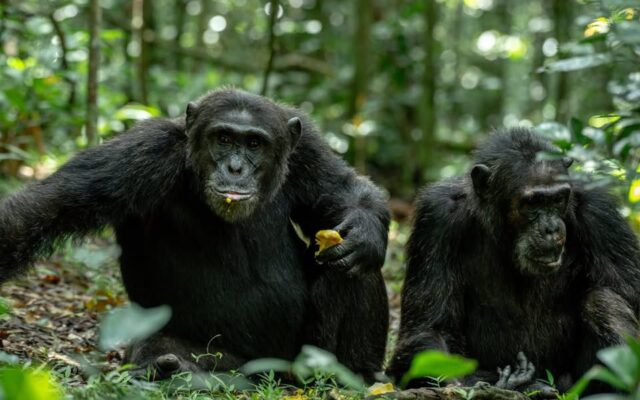
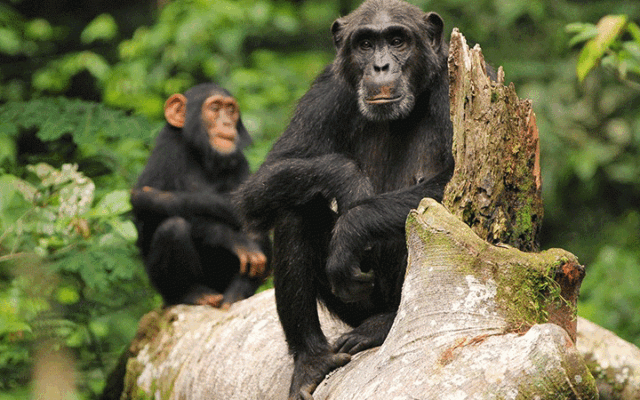
Kibale National Park is Uganda's primate capital — thirteen species including chimpanzees, red colobus, and grey-cheeked mangabeys. Red-tailed monkeys are among the most frequently encountered guenons on chimp trekking trails departing from Kanyanchu and other trailheads. Troops feed in mid-canopy figs within metres of paths; guides routinely pause for photography while tracking chimpanzees.
Why Choose Kibale?
- Highest primate diversity in East Africa
- Near-certain red-tailed monkey sightings on chimp mornings
- Pairs with Queen Elizabeth and Bwindi on classic western circuits
- Research infrastructure and experienced guide community
- Multiple lodge tiers from budget to luxury
Bigodi Wetland Sanctuary
The community-managed Bigodi Wetland Sanctuary boardwalk skirts Kibale's swamp margin where fruiting trees attract troops to the forest edge. Encounters here are often at eye level or slightly above — among the best red-tailed monkey photography in Uganda without a strenuous trek. Allow two to three hours for the full loop with birding stops.
Best For
- First-time Uganda primate visitors
- Travellers combining chimps, monkeys, and savannah parks
- Photographers seeking close canopy views at Bigodi
- Families on shorter wetland walks (age-appropriate)
2. Budongo Forest Reserve
Budongo Forest Reserve protects extensive mahogany and ironwood forest between Lake Albert and the rift escarpment. The Kaniyo Pabidi sector — en route to Murchison Falls — offers chimpanzee trekking with excellent red-tailed monkey viewing on the same trails. Busingiro, south of the reserve, provides quieter forest for repeat visitors.
Why Choose Budongo?
- Natural fit on Murchison Falls northern circuits
- Chimp trekking alternative when Kibale permits are scarce
- Mahogany cathedral forest atmosphere
- Less crowded than peak-season Kibale
Best For
- Itineraries centring chimps with Murchison game drives and Nile boat cruises
- Travellers entering Uganda from the north
- Visitors seeking forest without full Kibale diversion
3. Semuliki National Park
Semuliki National Park protects hot, humid lowland forest resembling the Congo basin. Red-tailed monkeys occur on the Kirumia Trail and shorter forest circuits alongside grey-cheeked mangabeys and hornbills. The park feels different from Kibale — lower elevation, hotter climate, Central African species flavour.
Why Choose Semuliki?
- Congo-basin forest character without crossing the border
- Birding richness including Congo basin specials
- Sempaya hot springs and cultural Batwa heritage nearby
- Quieter visitor numbers than Kibale
Best For
- Specialist birders and forest mammal enthusiasts
- Travellers looping Fort Portal, Rwenzori foothills, and Lake Albert
- Visitors wanting habitat diversity on one Uganda trip
Comparison: Kibale vs Budongo vs Semuliki
| Factor | Kibale | Budongo | Semuliki |
|---|---|---|---|
| Monkey reliability | Excellent | Very good | Good |
| Chimp trekking | Yes (flagship) | Yes (Kaniyo Pabidi) | No |
| Forest type | Mid-elevation moist | Mahogany mid-elevation | Lowland Congo-basin |
| Circuit fit | Western primate loop | Murchison north | Albertine Rift west |
| Easiest close views | Bigodi boardwalk | Kaniyo trails | Kirumia Trail |
How to Maximise Sightings
Walk quietly in morning activity peaks. Ask guides about recent fruiting trees — troops concentrate where figs ripen. Carry binoculars for high canopy; watch for falling fruit pulp and alarm barks that locate troops before you see red tails. On chimp treks, accept monkey pauses as part of the experience rather than urging guides to skip them.
Destinations Without Red-tailed Monkeys
Open savannah parks — Queen Elizabeth grasslands, Murchison north-bank plains, Lake Mburo — do not hold resident red-tailed monkey populations. Mgahinga's bamboo zone hosts golden monkeys instead. Planning forest days explicitly prevents disappointment: include at least one of Kibale, Budongo, or Semuliki on any itinerary where red-tailed monkeys are a goal.
Combining With Other Primates
A single Kibale morning may yield red-tailed monkeys, blue monkeys, red colobus, black-and-white colobus, and chimpanzees — five primate species before lunch. Budongo adds similar diversity with a northern geographic flavour. These combinations are why Uganda markets itself as Africa's primate capital; red-tailed monkeys are the colourful guenon thread running through the experience.
Getting There
Kibale is roughly five to six hours from Entebbe via Fort Portal. Budongo lies en route to Murchison from Kampala. Semuliki is accessed from Fort Portal or Bundibugyo depending on route. Fly-in options via Kasese or Pakuba airstrips reduce road time when paired with charter flights — see fly-in Uganda safaris.
Where to See — Quick Summary
- Best overall: Kibale National Park + Bigodi Wetland
- Best with Murchison: Budongo Kaniyo Pabidi
- Best lowland forest: Semuliki Kirumia Trail
- Permit needed: Chimp permit for treks; Bigodi community fee; park entry
- No dedicated monkey permit: Sightings are incidental bonuses on forest activities