Bushbuck habitat in Uganda is the ecotone — the transition zone where forest meets grassland, river meets bank, and thick cover meets open ground. Understanding these edges explains why bushbuck occur nationwide yet rarely dominate open savannah game drives. Explore related guides on bushbuck facts, behaviour, and best places to see bushbuck in Uganda.
Forest-Edge Specialists
Bushbuck are not deep-forest antelopes like sitatunga, nor open-plains grazers like Uganda kob. They occupy the margins — forest skirts, gallery woodland along rivers, wooded ravines, and acacia thickets where visibility is low enough for camouflage but browse is abundant. This niche is so common across Uganda's varied topography that bushbuck rank among the country's most widespread antelopes.
Research in Queen Elizabeth National Park confirmed bushbuck association with dense habitats offering sufficient cover and forage — a pattern repeated from Murchison's Nile escarpment to Kibale's primate forest rims.
Riverine Thickets and Water
Water shapes bushbuck distribution. They favour habitats within reach of rivers, streams, lakeshores, and permanent springs — though they can survive on dew and moisture-rich browse when surface water is scarce. In Murchison Falls, Nile-front woodland concentrates animals; in Queen Elizabeth, the Kazinga Channel and Kyambura valley systems create long ribbons of suitable cover.
Riverine galleries also double as leopard corridors, which means bushbuck habitat is predator-rich. Their cryptic behaviour is an evolutionary response to hunting cats in exactly the landscapes tourists explore at dawn.
Vegetation Types
Typical bushbuck habitat in Uganda includes:
- Riverine forest and gallery woodland along major rivers
- Forest–savannah ecotones on park boundaries and ridges
- Dense acacia and combretum thickets in wooded savannah
- Ravines and gorges with understory cover — including Kyambura
- Montane forest margins up to roughly 4,000 metres in western ranges
- Lake-shore bush at Lake Mburo and smaller reserves
They generally avoid treeless plains and the interior of closed-canopy forest where sitatunga or duikers may dominate instead.
Altitude and Climate
Bushbuck occur from lowland Semuliki basin forests to montane edges in the Rwenzori foothills. Uganda's equatorial climate supports year-round vegetation growth in most bushbuck range, though seasonal rainfall shifts browse quality and how far animals venture from cover to feed.
Park Ecosystems — Habitat in Context
Murchison Falls National Park
Nile riverine woodland, Rabongo Forest patches, and escarpment thickets provide classic bushbuck habitat. North-bank game drives along the river and southern Budongo margins are productive sectors.
Queen Elizabeth National Park
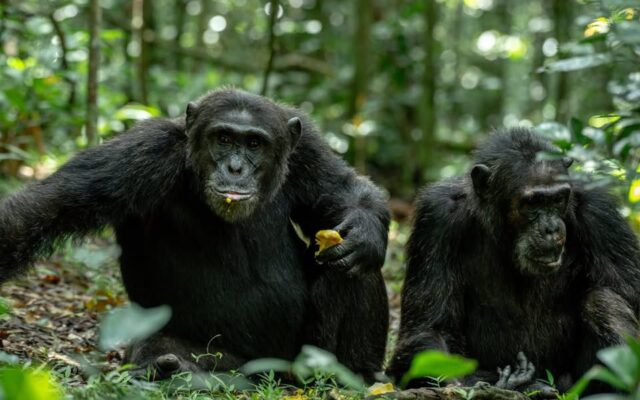
Maramagambo Forest edges, Kyambura Gorge rims, and channel-side woodland link bushbuck to one of Uganda's most visited savannah ecosystems. They share ecotones with chimps, forest elephants, and prolific birdlife.
Kibale and Bwindi Forests
Primate parks are not bushbuck strongholds in the interior, but lodge roads, forest margins, and buffer-zone woodland in Kibale and Bwindi produce regular sightings for early risers.
Lake Mburo National Park
Compact acacia woodland and lake-shore thickets make Lake Mburo one of the easiest parks to encounter bushbuck on short western circuits — often alongside impala and zebra in mosaic habitat.
Semuliki and Rwenzori Foothills
Semuliki's lowland forest edges and the Rwenzori foothill woodland extend bushbuck range into western Uganda's most biodiverse landscapes.
Home Ranges and Cover Density
Bushbuck maintain small home ranges overlapping those of neighbours, with individuals using exclusive resting sites within shared areas. Habitat quality — measured in cover density and browse diversity — determines local density more than park size alone.
Habitat Threats
Forest-edge habitat is Uganda's most vulnerable ecotone. Agriculture, charcoal production, livestock grazing, and settlement expansion eat into riverine buffers outside parks. Inside protected areas, invasive plants and climate-driven shifts in fire and rainfall can alter thicket structure. Maintaining wide woodland corridors along rivers remains the single most important habitat intervention for bushbuck.
Safari Viewing and Habitat Ethics
Stay on designated tracks, avoid driving into riverine mud that damages bank vegetation, and follow ranger guidance near gorge rims. Responsible tourism helps preserve the cover-and-water mosaic bushbuck depend on.
Planning Your Visit
Request dawn drives along river lines and forest margins when booking bushbuck safaris. Pair habitat knowledge with our best time to see bushbuck guide for the highest-quality sightings.