Bird watching at Lake Bunyonyi
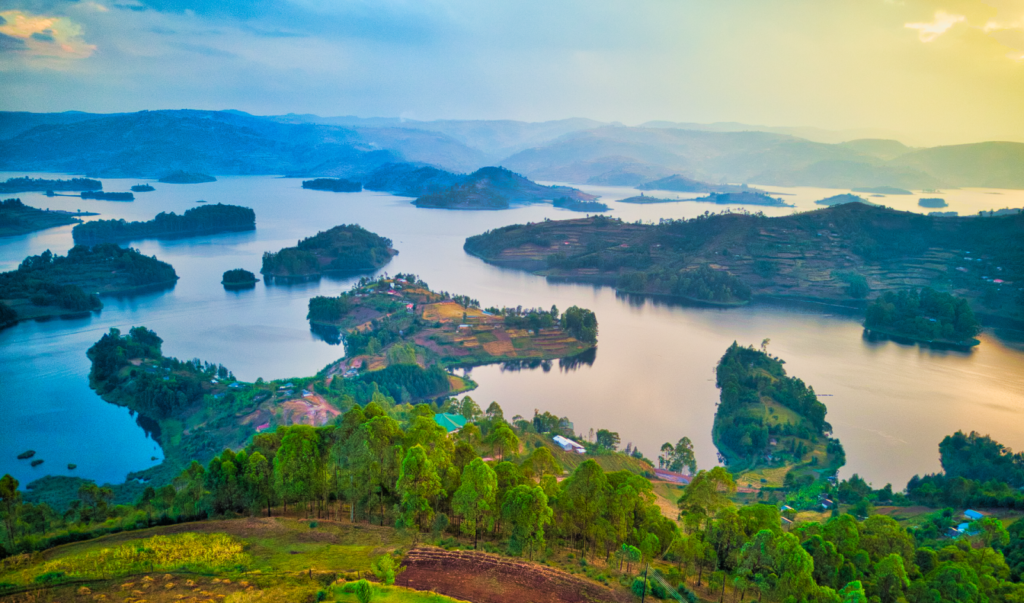
Bird watching at Lake Bunyonyi begins with the name itself: Bunyonyi translates roughly to “place of many little birds.” With more than 200 species recorded around the lake, terraced hills, and island margins, the site suits casual nature lovers and list-building birders alike — especially travelers who want quality observation without the physical demands of forest trekking in Bwindi Impenetrable National Park.
The lake sits near Kabale at roughly 1,950 metres elevation in the Kigezi highlands. That altitude shapes the list: highland sunbirds, waxbills, and raptors mix with classic African waterbirds — herons, cormorants, kingfishers, and the iconic grey crowned crane in nearby fields.
Why Bunyonyi works for birders
Unlike papyrus swamp sites such as Mabamba Swamp, Bunyonyi is a deep highland lake with island-studded open water and steep cultivated shores. Birding happens from lodges, lakeside paths, and slow boat or canoe sessions — not from long forest walks. That makes it ideal after gorilla trekking when legs need rest but binoculars still want exercise.
Morning and late afternoon offer the best light and activity. Midday heat on open water can quiet activity; plan a dawn session before breakfast, then a second scan from your lodge garden or an island stop after a cultural boat tour.
Species to expect
Commonly encountered groups include malachite and pied kingfishers hunting from overhanging branches, African fish eagles calling from dead trees, long-crested eagles over hillsides, black-headed weavers in lodge gardens, and various sunbirds on flowering shrubs. Water-associated species — cormorants, herons, egrets — work the shoreline and quieter bays.
Highland edge species appear in eucalyptus patches, banana groves, and remnant woodland on islands. Exact day lists depend on season, guide effort, and whether you combine lake time with short walks on terraced slopes above the water.
Canoe and boat birding technique
The signature canoe birding approach at Bunyonyi is slow and quiet. Local boatmen know which bays hold kingfishers and which islands carry woodland birds. Sit low in the canoe, minimize sudden movement, and let the paddler control approach angles — flushing birds for photographs defeats the purpose of a calm lake session.
Motorized boat tours cover more distance faster; they suit scenic cruising with opportunistic birding but less intimate approach to shy shoreline species. Many birders split the stay: one motorized island circuit, one quiet dawn canoe.
Gear and pacing
Bring 8×42 binoculars as a practical default. A Uganda field guide or eBird checklist helps between sightings. Telephoto lenses reward kingfisher and fish eagle photography; pack rain protection and a dry bag — highland showers arrive quickly. Layered clothing matters at this elevation: mornings can feel cool even when midday sun is strong.
Casual visitors still enjoy colorful common birds without a specialist guide. Expert birders should book enough time to scan agricultural margins above the lake — some highland specials appear there rather than on open water.
Seasonal patterns
Year-round resident birding is strong because many species use the lake continuously. Migratory interest can increase during broader October–March windows when Palearctic visitors supplement lists across Uganda — though Bunyonyi is not primarily a migrant hotspot compared with northern savannah wetlands.
Drier months (roughly June–September and December–February) simplify road access and lodge logistics — see our best time to visit Lake Bunyonyi page for month-by-month planning.
Building a Kigezi birding arc
Bunyonyi pairs naturally with Lake Mutanda for a two-lake scenic birding loop near Mgahinga. Forest specialists belong in Bwindi and Mgahinga — Albertine Rift targets such as turacos and broadbills — while Bunyonyi adds open-water and highland garden species.
Longer southwestern circuits continue to Queen Elizabeth for savannah and crater-lake birds, or north toward Kibale for forest francolins and greenbuls. Treat Bunyonyi as the calm highland chapter, not the entire birding itinerary.
Responsible birding
Keep distance from nesting herons and kingfishers on islands. Avoid playback near sensitive species unless your guide recommends it ethically. Support community boat operators and lodges that employ local naturalists — that income reinforces habitat stewardship on a lake facing development pressure.
Ecology context: Lake Bunyonyi wildlife notes. Access: getting to Lake Bunyonyi. Main hub: Lake Bunyonyi destination guide.