Wildlife and nature around Fort Portal
Search results for Fort Portal wildlife can mislead planners expecting lions on Main Street. You will not find elephant herds in the city market. What you will find is Uganda's most useful western safari base — a green Tooro Kingdom town where Kibale National Park chimpanzees, Bigodi Wetland Sanctuary primates and birds, Crater Lakes Region forest patches, and Rwenzori Mountains National Park foothill ecology all begin within a short drive of your hotel.
Think of Fort Portal as the base camp layer for primate and crater-lake Uganda: banks, lodges, and restaurants in town; chimps, red colobus, and turacos in forests; volcanic lakes and viewpoints in the surrounding hills.
Kibale National Park: the primary wildlife neighbour
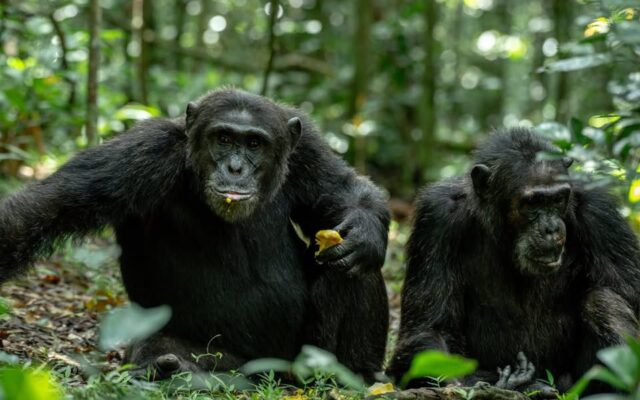
Kibale National Park is why most wildlife travelers sleep in Fort Portal. The park protects one of Africa's richest primate forests — chimpanzees headline, but red colobus, black-and-white colobus, L'Hoest's monkey, grey-cheeked mangabey, and olive baboon share the canopy. Forest elephants occur in Kibale's thicker sectors; buffalo and leopard are present but rarely seen on standard tourist trails.
Fort Portal supplies what Kibale's interior lacks at night: accommodation range, fuel, banking, and guide networks. Most chimp treks and forest walks start with a morning drive from a Fort Portal or crater-lakes lodge — see Kibale wildlife pages for trek detail.
Bigodi Wetland Sanctuary and Magombe Swamp
Bigodi Wetland Sanctuary on Kibale's eastern edge delivers community-guided walks through Magombe Swamp — red colobus, grey-cheeked mangabey, sitatunga potential, and strong bird lists including great blue turaco. It is the classic afternoon complement to a morning chimp trek: different habitat, different pace, same Fort Portal base.
Crater lakes and forest fragments
The Crater Lakes Region around Fort Portal — Lake Nkuruba, Lake Nyinambuga, Lake Lyantonde, and dozens more — holds forest patches, monkeys, butterflies, and birdlife on volcanic rims. Lake Nkuruba Nature Reserve combines crater scenery with primate viewing in a community-managed setting. Amabere Caves adds cultural geology and waterfall forest walks.
These sites are not Kibale's closed-canopy drama at scale, but they teach how Albertine Rift landscape fragments persist between tea fields and towns — critical context for photographers and ecologists.
Rwenzori foothills and Queen Elizabeth corridor
Fort Portal faces the Rwenzori Mountains — Africa's legendary Mountains of the Moon — whose foothill forests and streams support distinct ecology from lowland Kibale. Serious hikers route through Rwenzori Mountains National Park with multi-day programmes; casual visitors still gain Rwenzori views from crater rims and town viewpoints.
Southward, the road toward Queen Elizabeth National Park opens savannah wildlife — elephant, buffalo, hippo, lion in Ishasha sector for lucky schedules — making Fort Portal a pivot between forest primates and classic big-game Uganda.
Tea estates and living landscapes
Fort Portal sits in tea country. Estate drives reveal rolling green monoculture against rift valley mist and volcanic cones — not wilderness, but honest western Uganda working landscape. Birds use estate edges; photographers value contrast between cultivated hills and forest reserves.
Understanding tea, Tooro Kingdom land tenure, and community forest management explains why wildlife persists beside agriculture — the same tension visible at Mabamba Swamp near Entebbe, different crop, same region-scale story.
Wildlife expectations vs headline parks
If guaranteed lion and elephant density is the goal, prioritize Queen Elizabeth or Murchison Falls. Fort Portal adds primate depth, crater-lake ecology, and western route logic — not a substitute for savannah parks but the best base for combining them with Kibale on one itinerary.
Planning nature time from Fort Portal
Most travelers allow two to four nights: chimp day, Bigodi or crater lakes day, optional Rwenzori viewpoint or Amabere caves, then transfer to Queen Elizabeth or southwest gorilla routes. Birders extend for forest specialists and Albertine Rift list-building.
Tooro Kingdom cultural context
Fort Portal is the heart of the Tooro Kingdom — a constitutional monarchy whose cultural institutions, markets, and festivals colour town evenings between field days. The Karuziika Palace overlooks the city; respectful cultural tourism supports artisans and musicians rather than treating Tooro identity as backdrop only. Combining kingdom heritage with Kibale chimps gives western itineraries human depth that lodge-only routes miss.
See our Fort Portal guides on bird watching, best time to visit, getting there, and FAQs.