Wildlife and forest ecology at Mahale Mountains National Park
Mahale Mountains National Park is built around chimpanzees — an estimated 800 to 1,000 individuals across roughly 1,613 square kilometres of montane rainforest, miombo woodland, and lakeshore. The habituated Mimikere (M-group) community of approximately 60 chimpanzees anchors visitor trekking, studied since the 1960s by Kyoto University's Mahale Chimpanzee Research Project under TANAPA regulations.
The park's geography amplifies its ecological diversity. The Mahale range rises from Lake Tanganyika to 2,462 metres at Nkungwe, creating altitudinal zones from tropical lakeshore to montane forest and alpine bamboo. Wildlife shifts with elevation — lowland forest treks reveal habituated chimps and colobus troops; higher slopes hold wild unhabituated communities and species rarely seen on standard itineraries.
Chimpanzee trekking and the M-group
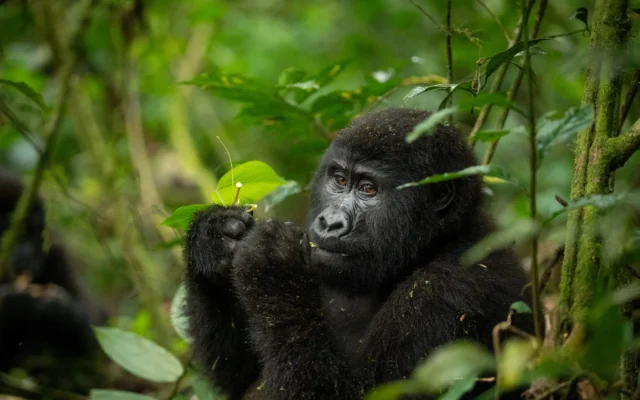
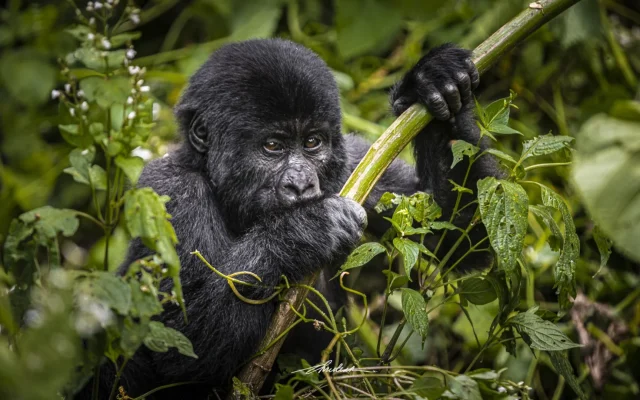
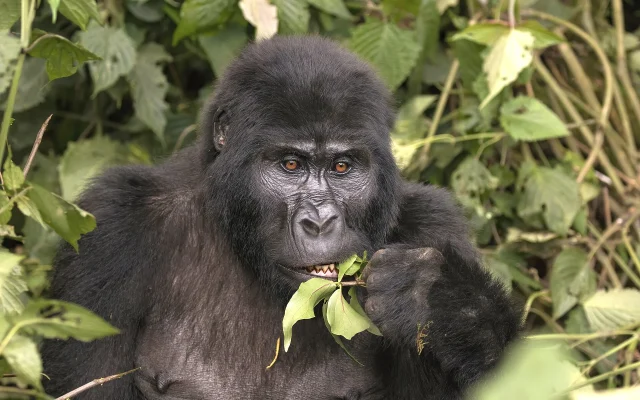
Mahale wildlife tourism centres on guided chimpanzee trekking through lowland forest. Dry-season months (May–October) bring groups to lower slopes, improving encounter reliability and reducing trek duration. TANAPA limits viewing to six visitors for one hour — disease-transmission protocols mirror gorilla rules at Bwindi Impenetrable National Park.
Guides at camps like Greystoke Mahale often know individual chimpanzees by name and life history — intimacy impossible at larger, less researched destinations. Allow multiple trekking days; groups follow fruiting patterns and may range high into mountains during wet months.
Primates beyond chimpanzees
Angola colobus and red colobus monkeys inhabit canopy levels alongside red-tailed monkeys, blue monkeys, and vervet monkeys. Primate diversity exceeds Gombe Stream National Park in species count across Mahale's larger altitudinal range. Baboons occur near lakeshore camps; forest treks focus on colobus and chimps.
Forest carnivores and shy mammals
Leopards inhabit Mahale's forest — research documents leopard predation on chimpanzees — though tourist sightings are exceptional. Bushbuck, bushpig, and various duikers occur in undergrowth. Unlike Serengeti National Park open-country game drives, Mahale mammal viewing demands forest patience and guide skill on foot.
Lake Tanganyika aquatic biodiversity
Lake Tanganyika harbours roughly 250 fish species in Mahale's waters, many endemic cichlids visible while snorkelling from white-sand beaches. Hippos and crocodiles occur regionally. The lake ecosystem provides a second wildlife dimension — morning forest treks paired with afternoon aquatic exploration create a safari rhythm unique in Tanzania.
Birds and montane forest life
Mahale records 350+ bird species across forest and lakeshore habitats — stronger list diversity than Gombe's 200+ species thanks to altitudinal range. Crowned eagles, trumpeter hornbills, and forest robins reward birders between chimp treks. See our bird watching at Mahale page for planning detail.
Conservation under TANAPA
TANAPA manages Mahale alongside research partners monitoring chimpanzee health, habitat boundaries, and tourism impact. Poaching and deforestation pressure park edges despite remoteness. Sustainable tourism through limited lodge capacity and permit revenue supports protection — community employment at lakeshore lodges links conservation to local livelihoods.
Mahale vs Gombe wildlife comparison
Gombe offers Jane Goodall's research legacy in a compact 52 sq km park with easier Kigoma boat access. Mahale delivers scale, beaches, larger chimp populations, and Greystoke Mahale's legendary lodge experience. Serious primate travelers benefit from both along Lake Tanganyika.
Great-ape safari combinations
Pair Mahale chimpanzees with Bwindi mountain gorillas and optionally Gombe for Tanzania's complete western chimp circuit — East Africa's definitive primate itinerary when combined with Serengeti savannah wildlife.
For deeper planning, see our guides on Mahale Mountains National Park bird watching, best time to visit, and getting there.