Wildlife at Kalinzu Forest Reserve
Kalinzu Forest Reserve is a mid-elevation forest block near Queen Elizabeth National Park in western Uganda's Bushenyi district — valued for chimpanzee tracking, guided forest walks, primates, butterflies, and birding at lower cost and lighter pressure than Kibale National Park. Travelers who treat Kalinzu as “cheap Kibale” miss its own ecology: a forest reserve corridor linking savannah landscapes with closed-canopy habitat, where colobus, red-tailed monkeys, and forest duikers share trails with researchers and community guides.
Unlike Queen Elizabeth's open Kasenyi plains or Kyambura Gorge's dramatic rift valley chimps, Kalinzu offers classic forest trekking on established paths — humid, leafy, and insect-rich. Fitness matters: slopes and mud are normal. The experience is intimate primate and forest ecology, not lion-and-elephant checklist safari.
Chimpanzee tracking
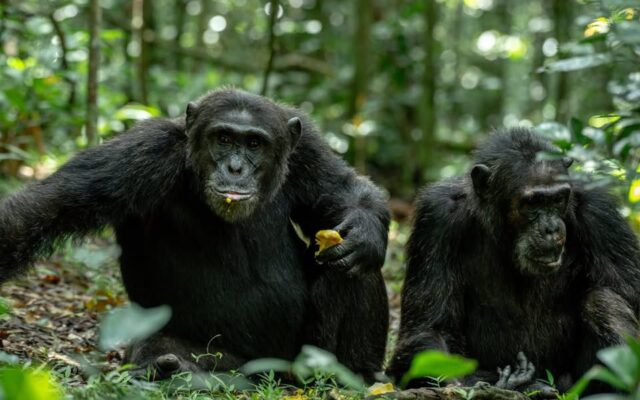
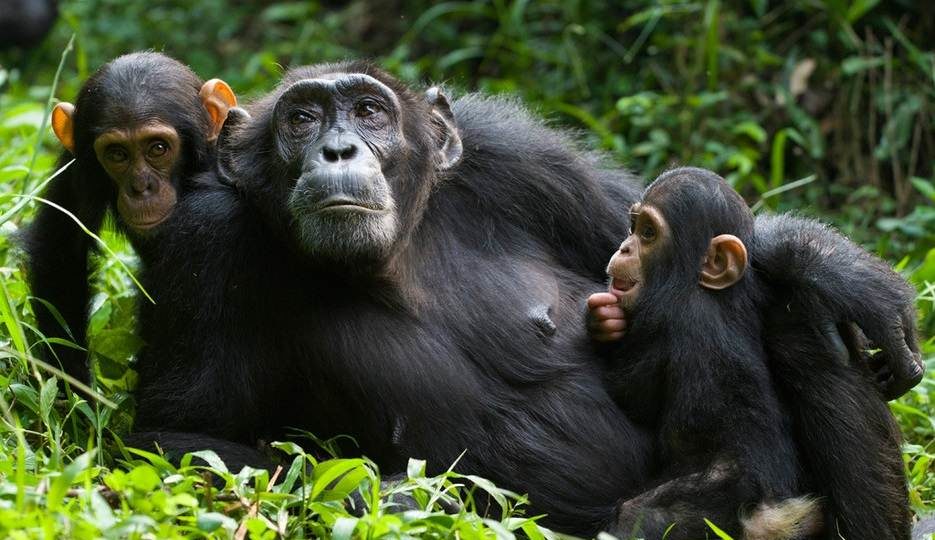
Chimpanzee tracking in Kalinzu is the main draw for many visitors. Habituated or semi-habituated communities are followed on foot with ranger guides who read nesting sites, vocalizations, and fruiting trees. Success rates vary by season and group movement — wild chimp viewing is never guaranteed. Compared with Kibale's premium permit demand, Kalinzu often suits travelers on Queen Elizabeth itineraries who want a chimp morning without repositioning to Fort Portal.
Compared with Kyambura's gorge setting, Kalinzu is full forest rather than canyon drama — different photography, similar primate adrenaline when chimps are found. Some travelers do both on long western routes; others choose one based on permit price, driving time, and fitness.
Other primates and mammals
Beyond chimps, Kalinzu holds black-and-white colobus, red-tailed monkey, blue monkey, L'Hoest's monkey where range overlaps, and olive baboon along edges. Nocturnal primates including potto and galago interest specialists on night walks if offered. Forest duikers and bush pigs occur but are shy. Leopard is possible in theory; visitors rarely see large predators on day trails.
Butterflies, reptiles, and forest floor life
Kalinzu is strong on butterfly diversity — swallowtails, charaxes, and forest-edge species sunning on paths after rain. Chameleons, geckos, and non-venomous snakes remind walkers this is living forest, not a manicured garden. Guides often pause for natural history that non-primate-focused travelers enjoy as much as chimps.
Forest ecology and corridor role
Kalinzu sits in a wider forest corridor between Queen Elizabeth savannah, Lake Edward rift landscapes, and southwestern forest networks toward Bwindi. Corridors let primates and birds move between fragments — conservation value beyond any single morning trek. Visitors who only chase chimps still benefit from understanding Kalinzu as connective habitat, not an isolated ticket booth.
Responsible trekking
Follow ranger distance rules around chimps, never feed primates, pack out litter, and stay on trails in wet conditions to reduce erosion. Yellow fever vaccination and malaria precautions apply as in other western forest sites. Sturdy footwear, long sleeves, and insect repellent are standard.
How Kalinzu fits Queen Elizabeth itineraries
Most visitors base at Queen Elizabeth lodges — Mweya, Katara, or Ishasha sectors depending on route — and drive to Kalinzu for a half-day chimp or forest walk. Pair with Kazinga Channel cruises, Kasenyi game drives, or Kyambura Gorge on multi-day park plans.
Queen Elizabeth contrast: savannah vs forest
Understanding Kalinzu requires contrasting it with open Queen Elizabeth savannah — Kasenyi plains lions and Kazinga Channel hippos versus closed-canopy chimps and colobus. Many travelers experience both habitats in one park week — morning chimps at Kalinzu, afternoon boat cruise — without driving to Fort Portal. That habitat stacking is Kalinzu's strategic value on western Uganda safaris.
Bird detail on bird watching at Kalinzu; seasons on best time to visit; access on how to get there.
Forest elephants and rare large mammals
Forest elephants occasionally use Kalinzu and wider corridor habitat — visitors rarely see them on standard chimp trails but their presence underscores conservation importance. Duikers, bush pigs, and giant forest hog sign appear for attentive guides. Treat any large mammal encounter as ranger-led, distance-respectful viewing — not a photo chase through dense undergrowth.
Colobus troops sometimes feed visibly near trail edges — pause quietly for photography without blocking chimp tracking pace when rangers prioritize primate objectives.