Wildlife along the Dian Fossey Grave trail
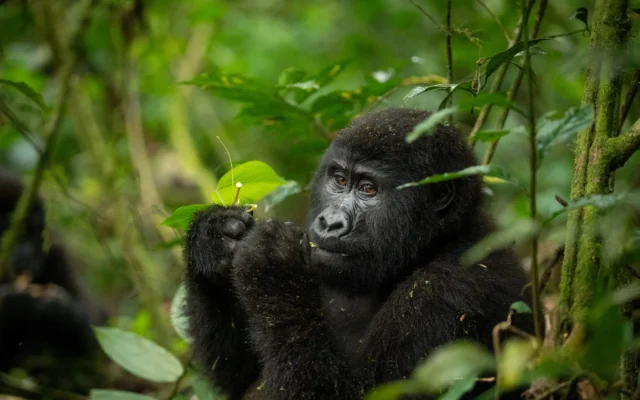
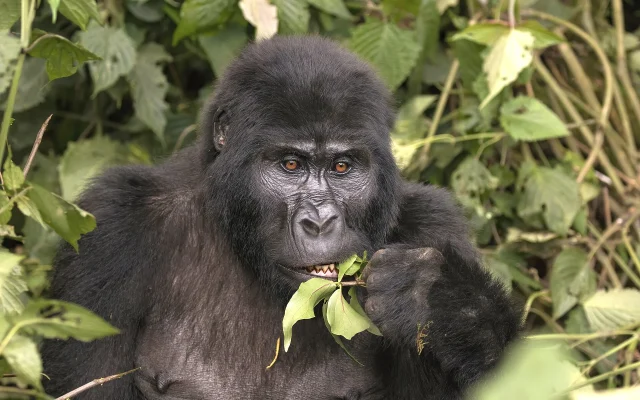
The memorial hike to Karisoke is remembered for conservation history, yet the trail itself passes through some of the most biologically significant forest in Rwanda. Within Volcanoes National Park, the route between Karisimbi and Bisoke volcanoes climbs mossy hagenia woodland and bamboo margins where mountain gorillas still range freely — including groups studied since Dian Fossey's era and habituated families visited on separate gorilla permits from Kinigi.
Unlike a vehicle safari at Akagera National Park, wildlife here is encountered on foot: nest sign, dung, broken vegetation, bird calls, and occasional mammal glimpses. Rangers interpret forest ecology while leading groups to the memorial — the hike is not designed as a species checklist tour, but attentive visitors see more than gravesite history alone.
Mountain gorillas and Karisoke research legacy
Fossey habituated gorillas for research at Karisoke long before today's regulated tourism model. Names like Digit, Uncle Bert, and Group 5 families appear in conservation literature and memorial graves at the site. Modern habituated troops — Susa, Kwitonda, Agashya, and others — descend from protection protocols refined across decades since her murder in 1985.
Unexpected gorilla contact on the Fossey trail is possible because the path crosses active range. Rangers apply the same health and distance rules as standard trekking: maintain roughly seven meters when contact occurs, no eating near animals, declare respiratory illness before forest entry. This is not a substitute for purchasing a gorilla permit — no regulated hour with a assigned family is included.
Golden monkeys and forest primates
The endemic golden monkey (Cercopithecus mitis kandti) inhabits bamboo zones overlapping parts of the broader Virunga trail network. Fossey hikers occasionally hear or glimpse troops, though golden monkey tracking permits target dedicated bamboo sectors with higher encounter rates. Other primates — including black-and-white colobus in forest patches — occur but are shy compared with habituated golden monkey tourism.
Forest mammals and sign
African buffalo, bushbuck, black-fronted duiker, and spotted hyena persist in Volcanoes forest — direct sightings on the Fossey trail are uncommon, but tracks, dung, and wallows reward attentive eyes. Forest elephants occur in low numbers across the Virunga Massif; sign is more likely than views. Giant forest hog and other large mammals recorded in the broader system are rarely seen on tourist paths.
Mammal ecology here rewards guide knowledge on steep trails — reading disturbed moss, broken saplings, and mud wallows — not open-plains scanning from a Land Cruiser.
Ecological zones on the ascent
Elevation shapes habitat rapidly. Farmland at the park edge gives way to dense montane forest, bamboo belts, and hagenia-hypericum woodland between roughly 2,500 and 3,000 meters at the memorial clearing. The Fossey route emphasizes mossy, epiphyte-laden forest rather than the bamboo-heavy sectors many gorilla treks favor — different understory light, different bird mix, different trekking texture underfoot.
Volcano silhouettes — Karisimbi rising to 4,507 m, Bisoke's crater rim — frame wildlife context: species distributions follow altitudinal bands compressed into short horizontal distances, which is why trails feel steep despite modest map distances.
Research continuity and protection today
Karisoke's scientific mission continues through the Dian Fossey Gorilla Fund and Rwandan partners. Ranger-led tourism on the memorial trail funds the same protection infrastructure — patrols, monitoring, veterinary response — that keeps gorillas in forest travelers hike through. Visiting the graves connects abstract permit fees to named animals and named researchers.
Communities at the forest edge
Musanze District communities farm volcanic soils at the park boundary. Tourism employs porters, guides, and lodge staff from highland villages. Revenue-sharing from Volcanoes permits and ancillary activities — including Fossey hike fees — channels into local schools and health projects, reducing poaching pressure that threatened gorillas during Fossey's patrol years.
Responsible wildlife behavior on the trail
Stay on ranger-led paths. Do not approach wildlife independently. Hire porters — local income and genuine help on muddy descents. If gorillas are encountered, follow briefing protocols exactly. Litter and plant collection harm habitat shared with critically endangered primates.
How the Fossey trail fits wider Volcanoes wildlife
Most travelers pair the memorial hike with gorilla trekking, golden monkey tracking, or volcano summits on multi-night Musanze itineraries. For species lists and permit detail beyond this trail, see Volcanoes National Park wildlife, bird watching, and best time to visit.