Wildlife and forest ecology at Bugoma Forest Reserve
Travelers who reach Bugoma Forest Reserve expecting Kibale National Park infrastructure should reset expectations before leaving Hoima. Bugoma is a tropical forest reserve on the edge of Uganda's Albertine Rift oil corridor — valued for chimpanzees, the endemic Uganda mangabey, forest birds, and butterflies, but managed with thinner tourism development than flagship primate parks.
That context matters. Bugoma's wildlife story runs through habitat fragmentation, community forest use, conservation litigation, and the question of how mid-elevation forest persists beside agriculture and energy infrastructure. Visitors who approach the reserve as a purposeful Lake Albert Region extension — not a casual roadside stop — gain a clearer picture of Albertine biodiversity under real-world pressure.
Chimpanzees and Uganda mangabeys
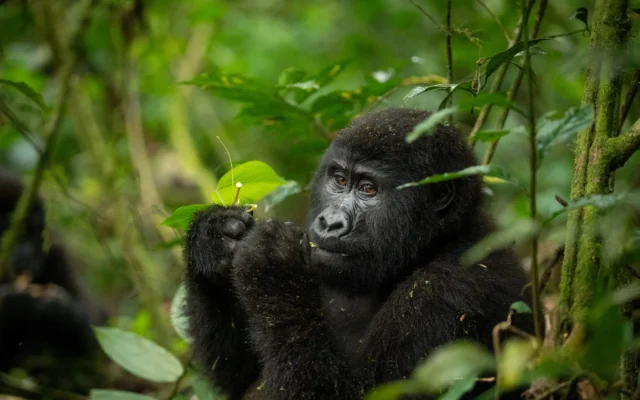
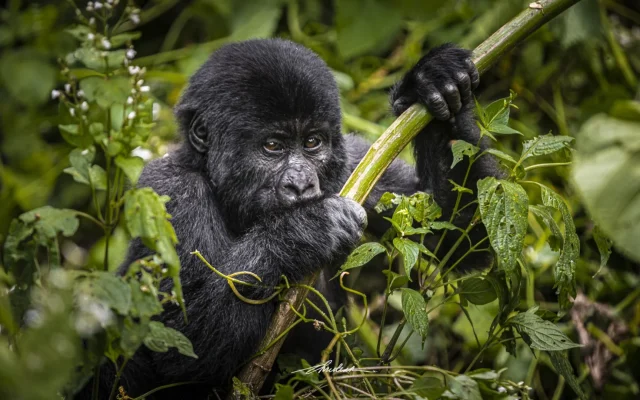
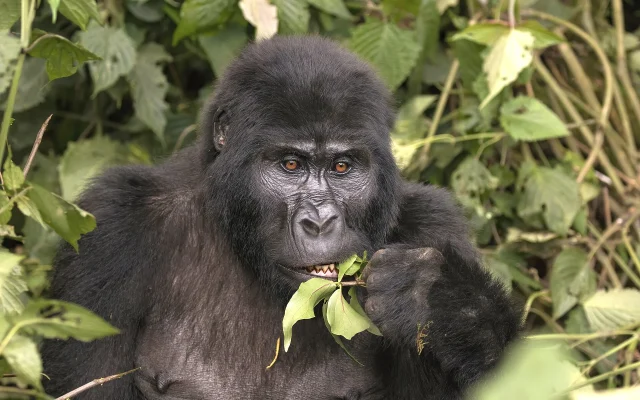
The flagship species of Bugoma Forest wildlife are chimpanzees and Uganda mangabeys (Lophocebus ugandae) — a primate endemic to a handful of western Ugandan forests. Chimpanzee communities use Bugoma's fruiting trees and forest streams; mangabeys move in social groups through mid-canopy, offering a distinctive primate encounter rare outside this region.
Tourism access depends on current community and UWA arrangements — confirm guided options and trail status before building an itinerary around Bugoma. Compared with habituated chimp sectors at Budongo Forest or Kibale, Bugoma may offer less polished trekking but stronger conservation-education value for travelers interested in forest protection debates.
Chimpanzee communities here are not always habituated to close human approach. Guides read nesting sites, fruiting figs, and vocalizations to locate groups — a slower, more interpretive style than guaranteed one-hour encounters at permit-only parks. Uganda mangabeys, by contrast, sometimes tolerate observation at forest edge when fruiting trees draw them within binocular range.
Forest mammals, birds, and smaller life
Beyond primates, Bugoma supports red-tailed monkeys, black-and-white colobus, duikers, bushpigs, and smaller forest mammals in suitable cover. Birdlife includes forest hornbills, turacos, greenbuls, and Albertine-influenced species — rewarding for binocular work on guided walks. Butterflies and forest-edge insects add interest for naturalists who slow down on trails.
Large savannah game belongs to nearby Murchison Falls National Park. Bugoma's role is forest specialization on routes linking Hoima, Lake Albert, and Murchison — similar to how Bugungu Wildlife Reserve adds savannah corridor context on the same broader itinerary.
Forest duikers and bushpigs leave subtle signs — hoof prints on muddy trails, browse marks on saplings — that guides interpret when mammals themselves stay hidden. Night sounds may include greater galagos and fruit bats, though most tourism focuses on daylight forest walks.
Albertine Rift context and habitat mosaic
Bugoma sits within the wider Albertine Rift biodiversity hotspot — a zone where elevation, rainfall, and rift geology produce forest patches that differ from lowland savannah at Murchison or montane systems at Rwenzori Mountains National Park. Mid-elevation tropical forest here connects conceptually to Semuliki National Park and Kibale on longer western circuits, but Bugoma's particular value is its position on the Hoima–Lake Albert oil-road corridor where forest meets development pressure in visible ways.
Agricultural margins, cattle corridors, and settlement edges surround parts of the reserve. Wildlife uses forest–farm ecotones for fruit and water — which is why guided walks often begin at agreed community entry points rather than anonymous trailheads. Understanding that mosaic helps visitors appreciate why intact canopy blocks matter for chimps and mangabeys that cannot simply relocate to the next hill.
Conservation landscape and community context
Bugoma sits in one of Uganda's most discussed conservation landscapes — where forest protection, community land rights, and development projects intersect publicly. A thoughtful visit weaves wildlife observation with awareness of why intact forest blocks matter for chimps, mangabeys, and watershed health feeding the Lake Albert basin.
Respect community guidelines, use authorized guides, and avoid off-trail movement that damages regenerating forest. Photography of people or homesteads near reserve edges requires permission — pastoral and agricultural life is not a performance for visitors.
Community forest associations and conservation NGOs have worked to balance livelihood needs with habitat protection — a dynamic that shapes which trails are open, which fees apply, and how guiding income reaches local households. Travelers who hire authorized local naturalists directly reinforce the economic case for keeping forest standing.
Responsible viewing and realistic planning
Carry insect repellent, rain gear, sturdy footwear, and binoculars. Forest walks may be shorter or less formal than UWA chimp briefings at major parks — flexibility helps. Most itineraries treat Bugoma as a half-day or day extension from Hoima en route to Murchison or Lake Albert viewpoints.
Yellow fever vaccination and malaria precautions apply on western Uganda routes as elsewhere. Leeches may appear on wet forest trails — long trousers and gaiters help. Do not feed primates or leave food scraps that alter wild behaviour.
Pair this page with bird watching at Bugoma, best time to visit, and getting there for season and route planning.