Best time to visit Bugoma Forest Reserve
Bugoma Forest Reserve does not sell gorilla-style permits that dominate calendar planning. Instead, travelers choose seasons based on road access from Hoima, forest trail conditions, heat and rainfall on western Uganda routes, and whether Bugoma sits on a same-day transfer to Murchison Falls National Park or a slower Lake Albert Region exploration.
Unlike Bwindi or Kibale, where permit availability locks travel dates months ahead, Bugoma flexes with your broader western Uganda schedule — provided you confirm guiding and trail access before committing lodge nights at Paraa or Hoima.
Dry season vs rainy season
Uganda's broadly drier windows — roughly June to September and December to February — usually simplify Hoima-area travel and forest footpaths. Tracks that feel manageable in dry weeks can turn slick after heavy rain, especially on approach roads to reserve edges.
Rainy periods centered on March to May and October to November bring lush forest scenery and strong bird activity after showers. Trade-offs include muddy trails, reduced walking comfort, and the need for rain jackets and flexible scheduling between Bugoma and Murchison lodges. Bugoma remains worthwhile in wet months if guides confirm access.
Western Uganda rainfall is localized — a storm over Hoima may not match conditions at Lake Albert an hour away. Build buffer time on transfer days rather than stacking Bugoma walks against fixed Paraa check-in deadlines.
Time of day: mornings for forest life
Early morning is the practical window for birds, primate movement, and comfortable walking. Afternoon heat and forest quiet reduce new sightings. Travelers combining Bugoma with long drives to Paraa or Lake Albert viewpoints should start forest walks early rather than as a late add-on.
Guides often recommend meeting at dawn or shortly after — when hornbills and turacos are active and chimpanzee vocalizations carry through cool air. By mid-morning, canopy activity slows and western sun through forest gaps raises humidity uncomfortably on long trails.
Pairing Bugoma with Hoima and Murchison
The strongest itineraries treat Bugoma as a western Uganda extension: overnight or stop in Hoima, forest morning at Bugoma, then continue to Murchison or Albert escarpment viewpoints. Dry-season Murchison game viewing and drier Bugoma access align well in June–September and December–February.
Holiday weeks increase demand for Murchison lodges and guides — book Hoima stops and forest guiding when confirming park nights, not the night before departure from Kampala.
Travelers routing from Fort Portal or Kibale toward Murchison may choose Bugoma when Hoima and Lake Albert storyline matter — a different western arc than the standard Kampala–Masindi–Paraa highway.
Primate and birding season notes
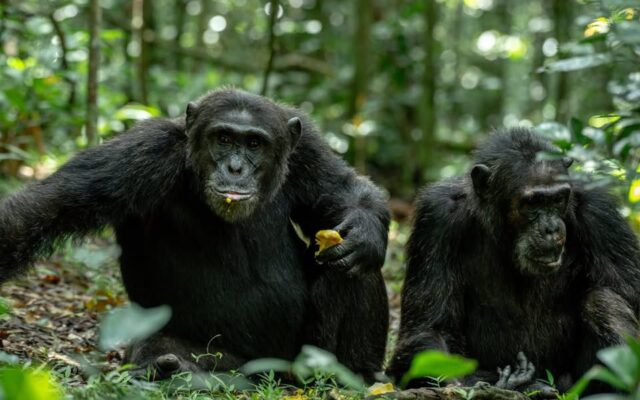
Chimpanzees and Uganda mangabeys use Bugoma year-round, but fruit availability shifts with season — guides adjust expectations when key trees are not fruiting. Birders gain migrant supplement roughly October–March within wider Uganda circuits, while resident hornbills and turacos remain continuous.
Butterfly and insect activity peaks in warmer post-morning hours — naturalists who want full-spectrum forest life may extend walks into late morning when trails stay passable.
Month-by-month snapshot
January–February: Often drier, good forest access, strong general birding.
March–May: Rainier trails; flexible timing helps.
June–August: Peak travel season; book Murchison and Hoima routing early.
September: Transition — confirm local road conditions.
October–November: Second rainy peak possible; migrant bird interest rising.
December: Holiday demand on western routes.
Pair with wildlife at Bugoma and getting to Bugoma Forest for species and route detail.