Overview of Serengeti National Park
Serengeti National Park protects approximately 14,763 square kilometres of savannah in north-western Tanzania. Established in 1951 and inscribed as a UNESCO World Heritage Site in 1981, the park is managed by the Tanzania National Parks Authority (TANAPA). UNESCO citation criteria (vii) and (x) recognise both the spectacular grassland–kopje scenery and the annual migration of vast herbivore herds followed by predators — one of the most impressive natural events in the world.
The park lies at the heart of the Greater Serengeti–Mara ecosystem, contiguous with Ngorongoro Conservation Area, Grumeti reserves, and Kenya's Maasai Mara. No fences block migration corridors — a conservation priority monitored by UNESCO and TANAPA.
Why Visit Serengeti National Park?
Migration drama, big-cat density, balloon safaris, and classic endless plains draw travelers from every continent. The Northern Circuit gateway Arusha links Serengeti with Tarangire and Lake Manyara in efficient safari loops.
Combines with Gorilla Trekking
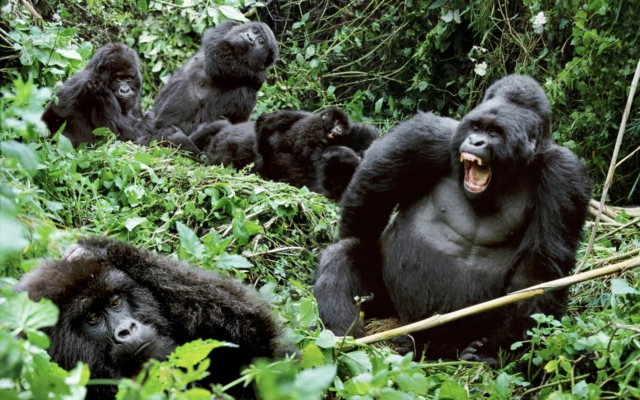
Mountain gorillas do not live in Tanzania. Travelers wanting both savannah and gorillas combine Serengeti safaris with Bwindi Impenetrable National Park in Uganda or Volcanoes National Park in Rwanda — regional flights connect the experiences when permits and dates align.
Continue planning Serengeti National Park with Serengeti National Park wildlife, Serengeti National Park bird watching, Serengeti National Park best time to visit, and Serengeti National Park getting there, or read the main Serengeti National Park destination guide.