Wildlife in Tsavo East National Park
Tsavo East wildlife thrives within Kenya's largest KWS-managed national park — approximately 13,747 square kilometres of semi-arid savannah, thorn-bush scrub, and Galana River corridor habitat. The park forms the eastern half of the greater Tsavo conservation area shared with Tsavo West National Park, allowing elephants, lions, and other large mammals to move across one of Africa's most significant continuous bush ecosystems.
Elephants & the Red Dust Phenomenon
Tsavo East is synonymous with elephants. KWS describes vast herds wallowing in the palm-shaded Galana River as among Africa's most evocative images. Iron-rich soils stain their hides red after dust baths and mud sprays — a photographic signature that distinguishes Tsavo from other Kenyan parks. Dry-season congregations at Aruba Dam and below Mudanda Rock can number hundreds of individuals.
Predators
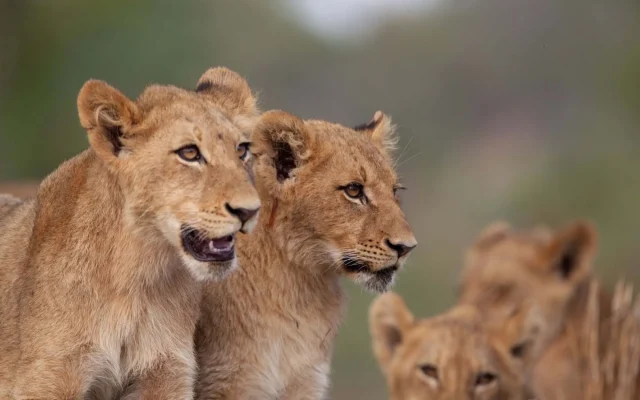
Lions occur throughout Tsavo East, with males often displaying reduced manes — a trait associated with thorn-scrub habitats and well documented in the Amboseli–Tsavo ecosystem. Leopards inhabit Galana riverine thickets. Cheetahs hunt open plains where visibility favours their approach. Spotted hyenas scavenge and hunt across the park's enormous territories.
Big Five & Large Mammals
African elephants and African buffaloes are reliably encountered. Lions and leopards reward patient game drives. Black rhino occur in low numbers and are rarely seen on standard tourist routes — Tsavo East should not be planned primarily as a rhino destination. Maasai giraffes, plains zebras, hippos, and Nile crocodiles are common along the Galana system.
Specialised Antelope
Lesser kudu and gerenuk — dry-country browsers — distinguish Tsavo East from wetter Kenyan parks. Waterbucks graze river margins. The broader Tsavo–Tana region supports hirola conservation efforts for one of Africa's most endangered antelope species.
Game Drive Tips
- Prioritise Galana River, Aruba Dam, and Mudanda Rock in dry season
- Start dawn drives early for predator activity and cooler temperatures
- Allow full-day circuits — Tsavo East's scale rewards unhurried exploration
- Combine with Tsavo West for ecosystem diversity
- Follow KWS track rules and maintain respectful elephant distances at waterholes
Combining Tsavo East with Amboseli National Park pairs bush wilderness with swamp elephant photography. Coast travellers often link Tsavo with Mombasa or Diani Beach for bush-and-beach Kenya holidays.
Continue planning Tsavo East National Park with Tsavo East bird watching, Tsavo East best time to visit, and Tsavo East getting there, or read the main Tsavo East National Park destination guide.