Bird watching from Musanze
Serious birders visiting Rwanda's northwest rarely ignore how closely forest treks and feathered targets overlap. Volcanoes National Park rises from bamboo foothills toward volcanic summits above 4,000 metres, stacking altitudinal bands where different species occupy bamboo, Hagenia woodland, and alpine zones within short distances. Twin Lakes Burera and Ruhondo north of town add open-water and shoreline lists. Musanze itself is the logistics hub where guides, transport, and lodge bases make those habitats reachable on a gorilla-focused safari.
The honest framing: Musanze is not a standalone wetland birding site. It rewards travelers who extend highland stays by a morning or two — or who hire birding-aware drivers on transfers toward Kinigi, Bisate, and crater-lake viewpoints.
Albertine Rift targets on Volcanoes trails
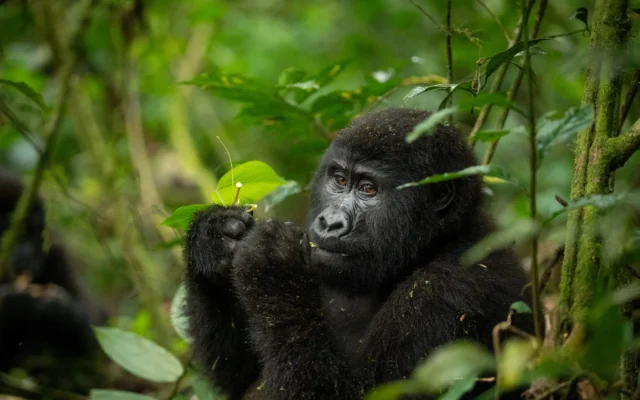
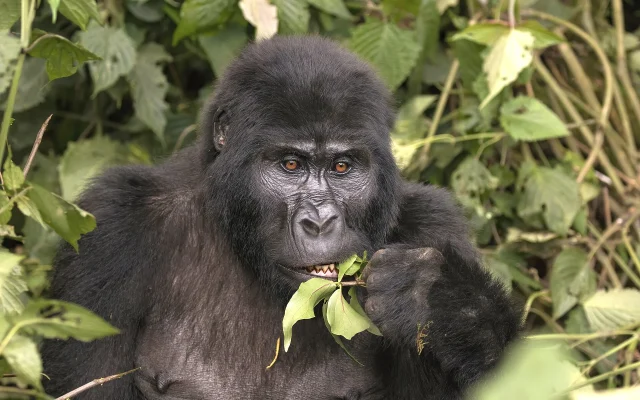
The Albertine Rift endemics and near-endemics drive expert interest here. Depending on season, elevation, and time in habitat, listers work toward species such as Rwenzori turaco, Archer's robin-chat, stripe-breasted tit, red-throated alethe, Grauer's warbler, and handsome sunbirds and boubou species associated with montane forest. Gorilla trekking itself produces incidental birds — turacos flushing from canopy, forest robins on mossy logs, raptors on ridge thermals — but permit groups move at tracker pace, not birder pace.
Dedicated birding walks on non-trek mornings, or full sessions on forest-edge trails near lodges, yield longer lists. Tell your operator at booking if Albertine targets matter; route and lodge choice shift accordingly. Golden monkey trekking paths overlap bamboo birding opportunities for travelers combining primate and species goals.
Twin Lakes Burera and Ruhondo
Crater lakes Burera and Ruhondo, north of Musanze, suit mixed groups seeking gentler half-days after steep forest hikes. Shoreline walks and community boat outings — when arranged locally — add kingfishers, herons, cormorants, swallows over water, and seasonal migrants along cultivated margins. Volcano backdrops at dawn and dusk help photographers even when daily lists stay modest compared with deep forest sessions.
Access and route quality vary by season; confirm conditions with guides rather than assuming every viewpoint matches lodge brochure angles.
Farm mosaic and eucalyptus edge species
Musanze District's farm–forest mosaic produces accessible sightings for casual birders: sunbirds on garden flowers, pied crow and black kite over markets, swallows under eaves, and augur buzzard perched on eucalyptus — ubiquitous in northern Rwanda highlands. These are not headline rarities, but they illustrate how agriculture and remnant forest patches coexist along the Volcanoes buffer.
Early-morning walks on lodge grounds or guided town-edge routes can add species without another park permit — useful when gorilla morning consumed the day's forest quota.
Musanze Caves and underground margins
Guided visits to Musanze Caves focus on lava-tube geology, yet guides often mention bat roosts and cave-edge species. This is niche birding — secondary to primate treks — but diversifies a rest afternoon when legs need recovery from Kinigi slopes.
When and how to bird Musanze country
Mornings suit forest and lake activity best — and align with gorilla briefing schedules when you bird on non-trek days. Carry 8×42 binoculars, rain protection, and a field guide covering Albertine Rift species. Elevation near 1,850 metres means cool starts even near the equator; layers matter more than lightweight lowland clothing.
Year-round resident forest birds are present throughout the calendar. Migratory supplements often strengthen lists in the broader October–March window familiar from other East African sites, though exact mixes vary annually. Dry-season road access (roughly June–September and December–February) simplifies reaching secondary lake tracks and viewpoint pull-offs.
Gear, guides, and pacing with gorilla permits
If gorilla trekking fills your prime mornings, protect at least one dedicated birding block before leaving Musanze District. Rushing to Lake Kivu the same afternoon you exit steep bamboo sacrifices habitats that justify northwest Rwanda's birding reputation. Photographers should expect low light under closed canopy — fast lenses and patience outperform flash near sensitive species.
Local birding guides with Albertine Rift experience add value beyond general safari drivers. They know calls, stakeouts, and ethical playback boundaries. Lodge naturalists on Bisate-style properties sometimes offer short walks tuned to guests' lists.
Building a Rwanda highland birding arc
Musanze pairs naturally with Volcanoes National Park treks, Dian Fossey forest hikes, and Lake Kivu waterbird margins on longer Rwanda routes. Cross-border travelers may continue to Bwindi Impenetrable National Park or Mgahinga in Uganda for additional Albertine overlap — permit logistics in both countries must be sequenced first.
See also our Musanze forest-edge ecology, best time to visit, and getting there pages for trek timing and route planning alongside birding time.