Best Time to Hike Mount Muhabura
Drier months, roughly June to September and December to February, usually provide better trail conditions and clearer viewpoints. Rain, mud, cloud, and cold are possible at any time. Altitude makes warm layers important even if the day begins in sunshine.
The park protecting Mount Muhabura, gorillas, golden monkeys, Batwa cultural interpretation, and Uganda's Virunga volcano scenery. See Mgahinga Gorilla National Park for route ideas.
The gentlest Mgahinga volcano hike, ideal before or after Muhabura for travelers comparing the three peaks.
A rugged ridge climb to the Uganda-Rwanda-DRC border point, offering a different challenge from Muhabura.
Continue planning Mount Muhabura with Mount Muhabura wildlife, Mount Muhabura bird watching, and Mount Muhabura getting there, or read the main Mount Muhabura destination guide.
Overview of Mount Muhabura
Mount Muhabura is the high point of Uganda's Mgahinga volcano trio. While Mount Gahinga is the gentlest and Mount Sabinyo is the most rugged, Muhabura is the peak that tests stamina most directly. The climb is steep, sustained, and exposed to altitude. Hikers who reach the summit are rewarded with a crater lake and some of the broadest views in the Virunga landscape.
The mountain sits within Mgahinga Gorilla National Park, part of the transboundary Virunga Conservation Area linking Uganda, Rwanda, and the Democratic Republic of Congo. The trail passes through montane habitats before reaching high-altitude vegetation and the summit zone. Weather can change quickly, and cloud can close views, but clear windows are unforgettable.
Why Visit Mount Muhabura?
Highest Mgahinga Volcano
At about 4,127 meters, Muhabura is the highest of the three Ugandan volcanoes in Mgahinga. It appeals to travelers who want a more demanding physical objective than Gahinga.
Summit Crater Lake
The small crater lake near the summit gives the climb a memorable endpoint. It also helps distinguish Muhabura from Sabinyo's border summit and Gahinga's gentler swamp-crater character.
Panoramic Views
When skies are clear, the summit can reveal Rwanda's volcanoes, Kisoro highlands, Lake Edward direction, and the broader Albertine Rift landscape.
Top Things to Do on Mount Muhabura
Climb to the Summit Crater Lake
The main experience is the official guided climb. Start early, pace carefully, and expect the ascent to feel steadily harder as altitude increases. The descent can also be tough on knees, so trekking poles are useful.
Pair With Gorilla or Golden Monkey Tracking
Mount Muhabura combines well with Mgahinga's primate experiences, but not on the same day. Plan rest between a hard volcano climb and gorilla trekking if possible.
Compare the Virunga Volcanoes
Travelers with several days can climb Gahinga for a softer introduction, Muhabura for altitude, and Sabinyo for ridges and the three-country summit. Rest days improve the experience.
Photograph Kisoro and the Virunga Skyline
The mountain's prominence makes it one of the best viewpoints in southwestern Uganda when weather cooperates. Bring protection for rain, mist, and cold summit winds.
Wildlife and Habitats
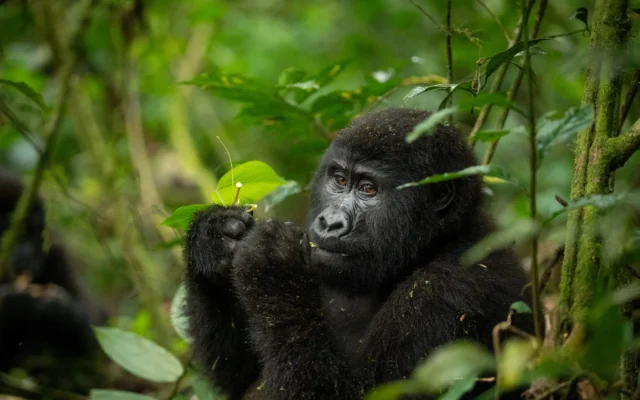
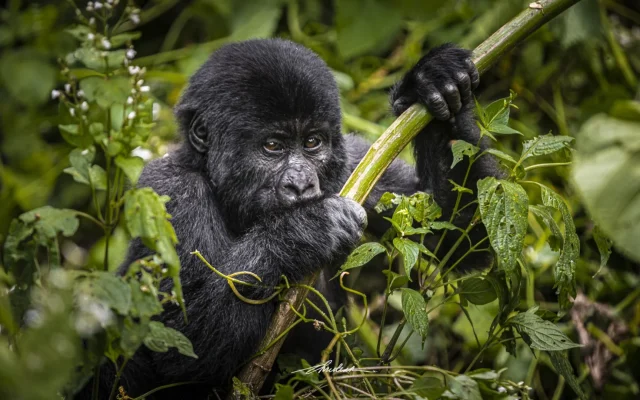
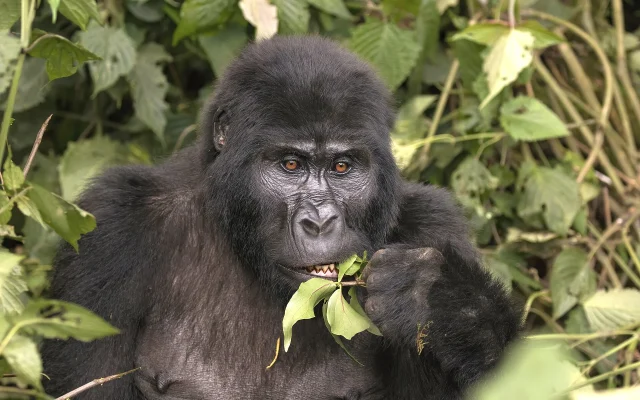
Mount Muhabura is part of the Mgahinga ecosystem, which protects mountain gorillas, golden monkeys, forest birds, bamboo, montane forest, and high-altitude vegetation. The hike itself is primarily a trekking experience rather than a wildlife-viewing activity, but the habitats are central to the park's conservation value.
Trekking, Safari, and Culture Route Planning
Mount Muhabura is best planned as a full day from Kisoro or nearby lodges. Because the climb is demanding, avoid scheduling it immediately after a long transfer. It pairs well with Mgahinga Gorilla National Park, Bwindi, Lake Bunyonyi, and Rwanda-border itineraries. Active travelers may build a southwestern Uganda hiking route around Muhabura, Sabinyo, Gahinga, and scenic lake recovery days.
Getting to Mount Muhabura
The mountain is accessed through Mgahinga Gorilla National Park near Kisoro. Travelers can reach Kisoro by road from Kampala, Entebbe, Kabale, Lake Bunyonyi, Bwindi, or Rwanda-side routes, depending on border and itinerary conditions. Official park booking is required for the hike.
Safety and Responsible Hiking
Mount Muhabura is strenuous. Hikers should be fit, hydrated, and prepared for altitude, rain, cold, mud, and a long descent. Follow ranger instructions, stay with the group, and do not push beyond safe limits. Carry water, food, waterproof layers, warm clothing, gloves, and proper boots.
Sample Itinerary Ideas
A focused Muhabura plan includes arrival in Kisoro, a rest or acclimatization afternoon, the volcano hike, then golden monkey tracking or Lake Bunyonyi recovery. A fuller primate-and-volcano itinerary can add gorilla trekking in Mgahinga or Bwindi and a separate day for Mount Sabinyo or Mount Gahinga.
Altitude, Endurance and Mount Muhabura Summit Goals
At about 4,127 metres, Muhabura is the tallest of Uganda's three Virunga volcanoes in Mgahinga Gorilla National Park. The climb is long, steep, and often cold near the top. Strong fitness, acclimatisation from time in Kisoro, and an early start are important.
Clear-weather views can stretch across the Virunga chain and surrounding highlands. Cloud and rain can arrive quickly, so waterproof layers are essential.