Nature, culture and regional ecology around Igongo Cultural Centre
Search results for Igongo wildlife can confuse first-time planners. You will not find elephant herds on the museum lawn or lion prides beside the restaurant terrace. What you will find is one of Uganda's most purposeful Ankole cultural gateways — a curated introduction to long-horned cattle heritage, traditional architecture, regional food, and the living landscapes of western Uganda that surround every drive toward Lake Mburo National Park, Kabale, and the Kigezi Highlands.
Think of Igongo as the interpretation layer for Ankole: exhibits and storytelling in the centre; cattle corridors, banana-shaded homesteads, seasonal wetlands, and acacia-dotted hills in the countryside beyond.
Long-horned cattle and Ankole pastoral ecology
The defining Ankole long-horned cattle (Bos taurus africanus) are not decorative props — they are a pastoral economy, a status symbol, a breeding science, and a landscape-shaping presence across Mbarara District and wider Ankole. Igongo's museum displays and outdoor installations explain how herds were managed historically, why horn span mattered socially, and how milk, blood products, and manure connected cattle to household nutrition and soil fertility.
On the road between Igongo and Mbarara, you will see working herds on hillsides and in paddocks — living context for what the centre teaches indoors. Photograph cattle only with herder permission; these are livelihood assets, not zoo exhibits. Responsible travelers treat roadside herds as cultural landscape, not a drive-by safari.
Lake Mburo and western savannah neighbours
Lake Mburo National Park sits roughly an hour's drive from Igongo depending on routing and stops — the closest classic wildlife park to the cultural centre. Mburo's zebra, impala, eland, buffalo, leopard (elusive), and rich birdlife give travelers the savannah chapter that Igongo itself does not provide. Many itineraries pair a morning at Igongo with an afternoon game drive or boat trip at Mburo, or reverse the sequence when overnighting near the park.
The ecological contrast is instructive: Igongo explains human–cattle–land relationships in Ankole; Mburo shows how protected savannah, lakes, and wetlands persist beside intensive agriculture. Together they form a coherent western Uganda day without duplicating content.
Everyday nature on the Mbarara corridor
Even without entering a park, peri-urban and rural nature appears along the Igongo–Mbarara axis: marabou storks near waste edges, cattle egrets following herds, weavers in gardens, raptors over farmland, and seasonal pools that attract herons and ducks after rain. Serious naturalists should not expect Queen Elizabeth densities here, but binoculars reward patient scanning at dawn before traffic and heat build.
Banana plantations, tea in cooler pockets toward Kigezi, and eucalyptus woodlots illustrate how Ankole land use layers over remnant grassland and wetland patches. Igongo helps you read that mosaic — why certain foods appear on the restaurant menu, why cattle dominate open hills, and why Lake Mburo feels abruptly wild after miles of mixed farming.
Cultural landscapes vs classic wildlife parks
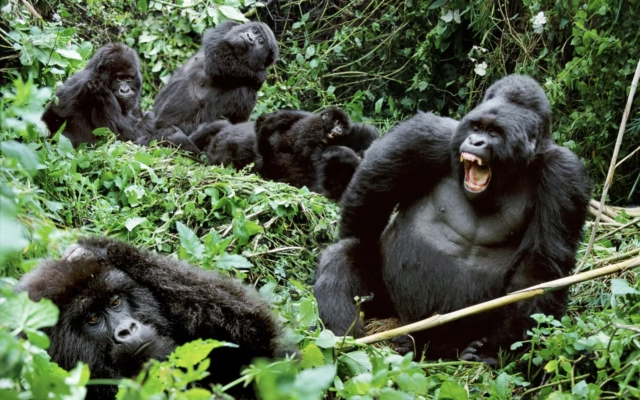
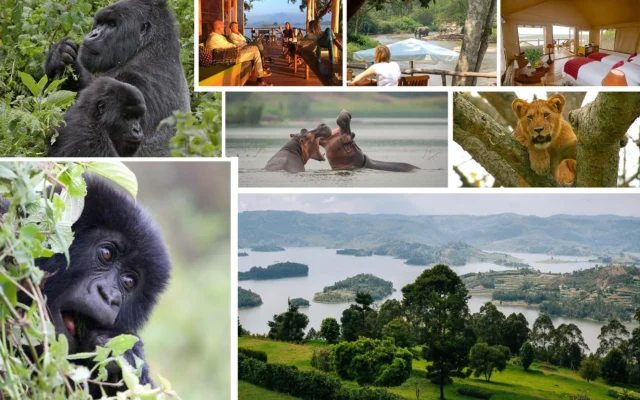
If your itinerary needs guaranteed elephant, tree-climbing lion, or mountain gorilla encounters, prioritize Queen Elizabeth, Bwindi Impenetrable, or Mburo before expecting Igongo to deliver wildlife drama. The centre adds regional depth — Ankole identity, crafts, food, museum interpretation — not a substitute for Uganda's headline fauna. The intelligent sequence is culture and context at Igongo, then wildlife at Mburo or onward drives toward Kigezi.
Crafts, food, and living heritage
Igongo's restaurant, craft shop, and architectural replicas connect visitors to Ankole material culture: milk vessels, hides, woven goods, and building forms adapted to cattle wealth and climate. Buying crafts on site supports the institution and associated community producers. Food tastings — millet, matoke, beef dishes tied to pastoral tradition — are ecology by another name: you taste the landscape that feeds Ankole.
Photograph people, dancers, and staff with permission. Igongo is a managed cultural venue, but respect still matters — especially when local performers or herders appear at events.
Planning nature time from Igongo
Most visitors allow one to three hours inside Igongo plus optional countryside observation on the same day. Birders can extend with early starts toward Mburo or wetland margins near Mbarara if a guide knows current access. Families often combine Igongo lunch with a short Mburo afternoon — confirm park gate hours before assuming a late entry.
For route logic, Igongo fits naturally between Kampala and southwest parks: break the long drive, stretch legs, eat well, then continue toward Kabale or overnight near Mburo. See our Igongo Cultural Centre bird watching, best time to visit, and getting there pages for complementary planning detail.