Crater Lakes Region is one of western Uganda’s most scenic soft-adventure landscapes, a rolling highland area around Fort Portal, Kibale National Park, Ndali, Kasenda, and surrounding villages where dozens of volcanic crater lakes sit among tea estates, banana gardens, forest patches, ridgelines, and views toward the Rwenzori Mountains. It is a peaceful but visually rich destination that pairs beautifully with chimpanzee tracking, community walks, cycling, birding, and relaxed lodge stays.
The region is often described through the Ndali-Kasenda crater field south of Fort Portal and the Fort Portal crater cluster north of town. Together they offer a different kind of Uganda safari experience: not big-game drama, but walking trails, viewpoints, crater rims, canoeing where permitted, swimming only where locally verified safe, primates around forested lakes, and quiet evenings above still water.
This destination combines naturally with Kibale National Park, Semuliki National Park, Rwenzori Mountains National Park, and Queen Elizabeth National Park in a well-planned Uganda safari route.
Quick Facts About Crater Lakes Region
| Feature | Details |
|---|---|
| Location | Western Uganda around Fort Portal, Kabarole District, and the Kibale/Ndali-Kasenda area |
| Landscape | Volcanic crater lakes, steep rims, tea estates, farms, forest patches, wetlands, and Rwenzori views |
| Lake Clusters | Ndali-Kasenda cluster south of Fort Portal and Fort Portal cluster north of town |
| Popular Lakes | Lake Nkuruba, Lake Nyabikere, Lake Nyinambuga, Lake Kifuruka, Lake Lyantonde, and others |
| Nearby Anchor | Kibale National Park for chimpanzee tracking and forest birding |
| Best For | Hiking, cycling, photography, chimpanzee extensions, birding, relaxation, and community walks |
| Travel Style | Slow scenic touring, lodge-based exploration, guided walks, and family-friendly soft adventure |
| Best Time | Generally good year-round; drier months make walking and road access easier |
Overview of Crater Lakes Region
The Crater Lakes Region was shaped by explosive volcanic activity thousands of years ago, leaving a necklace of steep-sided basins, many now filled with water and surrounded by fertile soils. Around Fort Portal and Kibale, these lakes create one of Uganda’s most photogenic rural landscapes. Some are deep and forested, others are ringed by gardens, lodges, trails, or viewpoints.
Travelers often add the crater lakes before or after chimpanzee tracking in Kibale National Park. This pairing works because the mood changes beautifully: the forest is intense, humid, and alive with primates; the crater lakes are open, calm, and scenic. A morning with chimpanzees can be followed by an afternoon walk along crater rims, or a restful lodge night overlooking water and hills.

Why Visit Crater Lakes Region?
Exceptional Scenic Variety
Few Uganda landscapes offer such a dense concentration of viewpoints. In a short drive or walk, travelers can see crater lakes, tea fields, forested slopes, farms, villages, and Rwenzori views.
Perfect Kibale Extension
The crater lakes are among the easiest and most rewarding additions to a Kibale chimpanzee safari. They add fresh air, soft adventure, and relaxation without requiring a major detour.
Walking and Cycling
Crater-to-crater walks, village paths, and cycling routes make the region excellent for active but non-technical exploration. Guided walks are best for interpretation and route confidence.
Top Things to Do in the Crater Lakes Region
Walk the Ndali-Kasenda Crater Lakes
The Ndali-Kasenda area south of Fort Portal is the classic crater lakes landscape. Trails connect viewpoints, farms, small settlements, and lakes such as Nkuruba, Nyinambuga, Kifuruka, Lyantonde, and Nyabikere depending on route.
Visit Lake Nkuruba
Lake Nkuruba is one of the better-known crater lakes, often associated with forested surroundings, primates, birds, and community-based tourism. It works well for walks and relaxed nature time.
Photograph Lake Nyinambuga and Viewpoints
Lake Nyinambuga is frequently photographed because of its striking shape and scenic setting. The wider region has many elevated viewpoints sometimes promoted as “Top of the World” style panoramas.
Combine With Kibale Chimpanzee Tracking
Kibale National Park is the essential nearby anchor. Chimpanzee tracking, Bigodi Wetland Sanctuary, forest birding, and crater lake walks can create a balanced three- to four-day western Uganda itinerary.
Explore Fort Portal and Amabere Area
The Fort Portal crater cluster and Amabere caves area add cultural, geological, and scenic interest north of town, with viewpoints over Lake Saka, Lake Kigere, and surrounding landscapes depending on route.
Learn more about things to do in Crater Lakes Region
Wildlife, Birds, and Nature
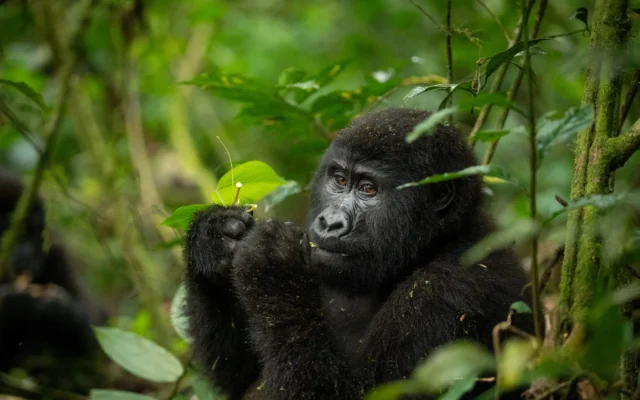
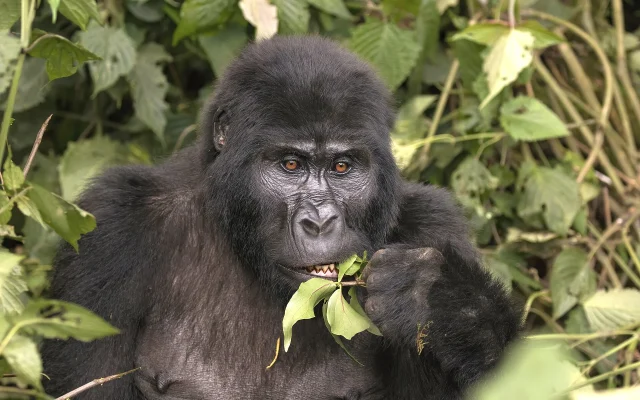
The Crater Lakes Region is not a big-game destination, but it is rich in smaller-scale nature. Forested lake edges can support monkeys, birds, butterflies, reptiles, and plant life. Nearby Kibale is one of Africa’s great primate forests, while Bigodi Wetland Sanctuary adds excellent birding and community-guided nature walks.
Swimming should never be assumed safe. Some crater lakes are deep, some may have steep banks, and local advice is essential regarding water quality, bilharzia risk, access rights, and safe activity zones.
Trekking, Safari, and Culture Route Planning
The crater lakes work best as a two-night scenic addition to Kibale, though one night is enough for a short taste. A strong route might include Fort Portal arrival, crater lake walk, Kibale chimpanzee tracking, Bigodi Wetland, and a second crater viewpoint before continuing to Queen Elizabeth National Park, Semuliki, Rwenzori, or Lake Bunyonyi.
For culture, choose guided community walks that include farms, food crops, tea landscapes, local stories, and conservation issues around lake-edge forests. This keeps the experience grounded in the people who live around the lakes.
Best Time to Visit Crater Lakes Region
The region can be visited year-round. Drier months are generally easier for walking, cycling, and road access, while wetter periods bring lush scenery and dramatic skies. Because western Uganda’s climate is variable, pack rain protection even during drier seasons.
{{SEC_GETTING_THERE}}
Best time to visit Crater Lakes Region — full guide
Getting to Crater Lakes Region
Fort Portal is the main gateway, reached by road from Kampala/Entebbe or by regional routing from Queen Elizabeth, Semuliki, Rwenzori, or Murchison depending on itinerary. The Ndali-Kasenda crater area lies south of Fort Portal toward Kibale, while the Fort Portal cluster lies closer to town and the Amabere area. A private vehicle or arranged lodge transfer is easiest.
Safety and Responsible Travel
Use guides for longer walks, respect private land and gardens, ask before photographing people, and follow local advice around swimming or canoeing. Crater rims can be steep and slippery after rain, so good shoes matter. Support community tourism initiatives where possible, and avoid litter around lake edges.
Kibale National Park
The essential nearby primate forest, offering chimpanzee tracking, forest birding, and easy crater lakes extensions.
Semuliki National Park
A western Uganda lowland forest and hot springs extension from Fort Portal and the crater lakes area.
Rwenzori Mountains National Park
A dramatic mountain extension for travelers moving from soft crater-lake walks into serious alpine trekking.
Queen Elizabeth National Park
A classic savannah and boat safari pairing south of Fort Portal, often combined with Kibale and the crater lakes.
Lake Bunyonyi
A peaceful lake extension farther south, useful for travelers comparing Uganda's highland lake landscapes.
Sample Itinerary Ideas
A short crater lakes stay can include one afternoon viewpoint walk and one relaxed lodge night before chimpanzee tracking in Kibale. A fuller Fort Portal itinerary can include two nights around Ndali-Kasenda, Bigodi Wetland, Kibale chimpanzees, Amabere caves, and a Fort Portal food or market experience.
The Crater Lakes Region is western Uganda at a slower rhythm: green hills, blue water, forest calls, tea fields, and enough gentle adventure to make a safari feel beautifully balanced.
Planning a Crater Lakes Region Itinerary
Most travelers anchor the crater lakes around Fort Portal or a lodge near Kibale National Park. A two- to three-night stay allows one day for chimpanzee tracking, one day for crater-lake walks or cycling, and a third day for Amabere Caves, Lake Nkuruba, or a scenic drive through tea estates.
Morning light is best for photography on crater rims. Afternoons can be used for canoeing where permitted, village walks, or lodge relaxation. Because roads between lakes are often unpaved or steep, private transport with a local guide is strongly recommended.
Lodges, Homestays and Route Timing
The region supports everything from budget homestays to boutique crater-lodge stays. Book ahead in peak chimpanzee season. Combine with Queen Elizabeth National Park for savannah wildlife, Semuliki for hot springs and forest birds, or Rwenzori foothills for mountain scenery.
Responsible Travel on Crater Rims
Stay on marked trails, respect private farmland, ask before photographing people, and follow local guidance on swimming because crater-lake safety varies. Avoid litter on steep paths and support community guides who know lake access rules.
Planning a Crater Lakes Region Itinerary
Most travelers anchor the crater lakes around Fort Portal or a lodge near Kibale National Park. A two- to three-night stay allows one day for chimpanzee tracking, one day for crater-lake walks or cycling, and a third day for Amabere Caves, Lake Nkuruba, or a scenic drive through tea estates.
Morning light is best for photography on crater rims. Afternoons can be used for canoeing where permitted, village walks, or lodge relaxation. Because roads between lakes are often unpaved or steep, private transport with a local guide is strongly recommended.
Lodges, Homestays and Route Timing
The region supports everything from budget homestays to boutique crater-lodge stays. Book ahead in peak chimpanzee season. Combine with Queen Elizabeth National Park for savannah wildlife, Semuliki for hot springs and forest birds, or Rwenzori foothills for mountain scenery.
Responsible Travel on Crater Rims
Stay on marked trails, respect private farmland, ask before photographing people, and follow local guidance on swimming because crater-lake safety varies. Avoid litter on steep paths and support community guides who know lake access rules.
- Where is the Crater Lakes Region in Uganda?
-
The Crater Lakes Region is mainly around Fort Portal, Kabarole District, Kibale National Park, and the Ndali-Kasenda area in western Uganda.
- How many crater lakes are near Fort Portal?
-
Sources commonly describe more than 50 crater lakes in the wider Fort Portal and Ndali-Kasenda landscape.
- Can I combine the crater lakes with Kibale?
-
Yes. The crater lakes are one of the best and easiest scenic extensions to Kibale chimpanzee tracking and Bigodi Wetland walks.
- What are the best crater lakes to visit?
-
Popular lakes include Lake Nkuruba, Lake Nyabikere, Lake Nyinambuga, Lake Kifuruka, Lake Lyantonde, and several viewpoints around Ndali-Kasenda and Fort Portal.
- Can you swim in Uganda crater lakes?
-
Do not assume swimming is safe. Always ask local guides or lodge staff about water quality, bilharzia risk, depth, access, and permitted activity areas.
- How long should I spend in the Crater Lakes Region?
-
One night gives a scenic taste, while two nights allow better time for walks, viewpoints, Kibale, Bigodi Wetland, and relaxed lodge time.